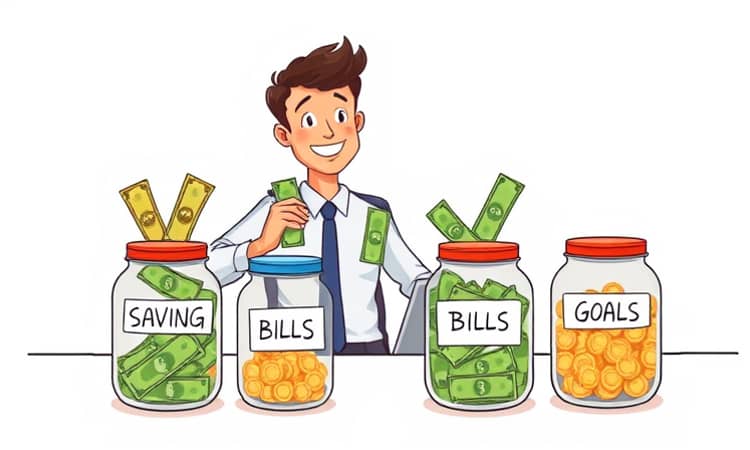
In a world where money often slips through our fingers unnoticed, zero-based budgeting offers a powerful, intentional approach to managing your finances.
It challenges you to rethink how you allocate every cent, ensuring that each dollar serves a specific purpose and nothing is left to chance.
This method isn't just about cutting costs; it's about aligning your spending with your deepest values and goals, turning financial stress into clarity and confidence.
By starting from scratch each month, you can break free from old habits and build a budget that truly reflects your current priorities.
What is Zero-Based Budgeting?
Zero-based budgeting, or ZBB, is a method that requires you to justify every expense anew for each budgeting period.
Instead of basing your budget on what you spent last month or last year, you begin with a clean slate, as if you had never budgeted before.
This means starting each budgeting period from a zero base, where every dollar of your income must be assigned a job until your income minus your expenses equals zero.
The core idea is simple: no money should go unallocated, which helps prevent wasteful spending and ensures that your funds are directed toward what matters most to you.
It's a proactive way to take charge of your financial life, fostering mindfulness and accountability in every transaction.
The History and Evolution of ZBB
Zero-based budgeting was developed in the 1970s by Pete Pyhrr, a former manager at Texas Instruments.
He created this approach to challenge the automatic carryover of past spending, which often led to inefficiencies and misalignment with strategic goals.
Initially used in corporate settings to reduce costs and improve resource allocation, ZBB has since been adopted for personal finance, helping individuals and families achieve greater financial control.
Its popularity has grown as people seek more flexible and goal-oriented ways to manage their money, especially in times of economic uncertainty.
Core Principles of Zero-Based Budgeting
Understanding the key principles can help you grasp why ZBB is so effective in transforming your financial habits.
- Start from zero: Reset all budgets to zero for each period, requiring justification for every line item without relying on historical data.
- Justification required: Explain the necessity and impact of each expense, ensuring it aligns with your current goals and priorities.
- Strategic alignment: Tie all spending to specific objectives, such as saving for a home or paying off debt, rather than continuing legacy costs.
- No automatic increases: Prevent the pitfalls of incremental budgeting, where spending can creep up unchecked over time.
These principles work together to create a budget that is dynamic, purposeful, and directly tied to your life aspirations.
How to Implement Zero-Based Budgeting: A Step-by-Step Guide
Implementing zero-based budgeting might seem daunting at first, but breaking it down into manageable steps can make it accessible and empowering.
- Reset to zero: Begin by clearing all prior budgets, giving yourself a fresh start for the upcoming month or period.
- Identify goals: Determine your current financial priorities, such as building an emergency fund, investing for retirement, or funding a vacation.
- List and justify expenses: Build your budget from the ground up, detailing every expected cost and explaining why it's necessary for your goals.
- Review and prioritize: Analyze your spending categories, eliminating non-essential items to focus resources on high-impact areas.
- Allocate based on necessity: Fund only the expenses that are justified, directing money toward what truly adds value to your life.
- Monitor and match: Ensure that your total income equals your total expenses plus savings, leaving no remainder, and adjust as needed throughout the period.
This process encourages regular reflection and adjustment, making your budget a living document that evolves with your needs.
ZBB vs. Traditional Budgeting: A Clear Comparison
To appreciate the benefits of zero-based budgeting, it helps to contrast it with traditional budgeting methods, which often rely on past spending patterns.
This table highlights how ZBB promotes adaptability and goal-oriented spending, unlike traditional methods that can lead to stagnation.
The Advantages of Embracing Zero-Based Budgeting
Adopting zero-based budgeting offers numerous benefits that can transform your financial well-being and bring peace of mind.
- Cost savings and efficiency: By justifying every expense, you uncover redundancies and reduce waste, freeing up money for more important things.
- Strategic allocation: Funds are directed to high-impact areas, improving your return on investment and helping you achieve goals faster.
- Accountability and transparency: This method forces you to own your spending decisions, enhancing financial literacy and reducing stress.
- Flexibility and adaptability: Ideal for those with variable incomes or changing life circumstances, as it allows for monthly adjustments.
- Goal achievement: Provides a clear roadmap for your money, minimizing "mystery money" and ensuring every dollar contributes to your dreams.
These advantages make ZBB a powerful tool for anyone looking to take control of their financial future.
Challenges and Considerations
While zero-based budgeting has many strengths, it's important to be aware of potential drawbacks to implement it effectively.
- Time-intensive: The detailed justification process requires significant effort, which might be overwhelming for beginners or busy individuals.
- Resource-heavy: Upfront planning can strain small teams or households, necessitating patience and commitment.
- Not always ideal: Less suitable for stable, predictable environments where incremental changes might suffice.
- Potential for cuts: If not approached strategically, it can feel like pure cost-cutting, leading to frustration or missed opportunities.
By acknowledging these challenges, you can plan ahead and use ZBB in a way that balances rigor with practicality.
Real-World Examples and Applications
Zero-based budgeting isn't just theoretical; it has proven effective in various contexts, from corporate boardrooms to family kitchens.
- Corporate use: Companies like Texas Instruments have used ZBB to control costs in stagnant industries, such as healthcare, or during economic downturns like inflation periods.
- Personal finance: Individuals apply ZBB by fully allocating their take-home pay—for example, assigning $2,000 to needs, $1,000 to wants, $1,000 to savings, and $1,000 to debt from a $5,000 income.
- Industry applications: Startups benefit from its fluidity for evolving goals, while mature firms use it to drive efficiencies and reinvest savings.
These examples show how adaptable and impactful ZBB can be across different financial scenarios.
Tips for Successful Implementation
To make zero-based budgeting work for you, consider these practical tips that can ease the transition and enhance your experience.
- Use budgeting software or apps, such as Prophix or personal finance tools, for scenario modeling and tracking to ensure a zero balance each month.
- Tie your budget to key performance indicators or personal milestones, reviewing it regularly to stay aligned with your goals.
- For personal use, track expenses diligently via apps or spreadsheets, adjusting categories as your income or priorities change.
- If transitioning from traditional budgeting, start small—perhaps with one month—and seek expert advice if needed to build accuracy and confidence.
- Celebrate small wins, like sticking to your budget or reallocating saved money to a dream fund, to stay motivated and inspired.
These strategies can help you overcome initial hurdles and turn zero-based budgeting into a sustainable, rewarding habit.
Conclusion: Taking Control of Your Finances
Zero-based budgeting is more than a financial technique; it's a mindset shift that empowers you to live with intention and purpose.
By giving every dollar a job, you transform money from a source of anxiety into a tool for achieving your deepest aspirations.
Whether you're striving to pay off debt, save for a big purchase, or simply gain clarity in your spending, ZBB offers a structured yet flexible path forward.
Embrace this approach with patience and persistence, and watch as your financial confidence grows, paving the way for a brighter, more secure future.