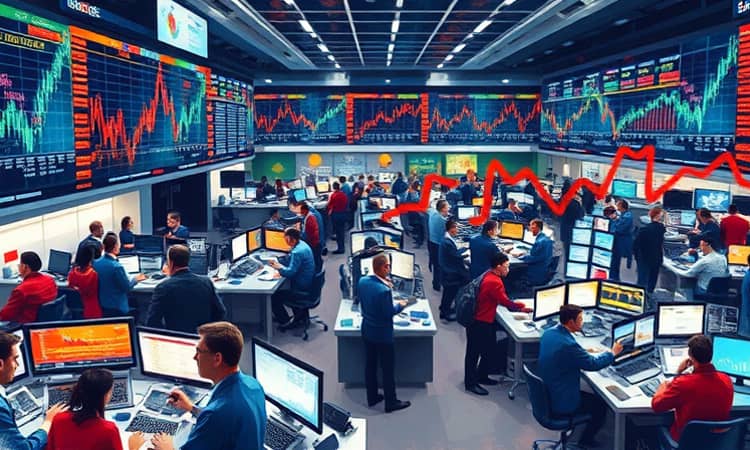
The floor is alive with the hum of screens and rapid-fire decisions. In 2025, insider trading patterns reveal hidden market price efficiency signals that shape investor sentiment. This article peels back the curtain, blending quantitative data with firsthand anecdotes to show how executives buy and sell in volatile times.
From volatility, high interest rates to regulatory changes, we explore the forces driving insider behavior. Traders and CEOs alike navigate a landscape where every trade tells part of a larger narrative.
Setting the Scene: The Modern Trading Floor
Walk onto any major institution’s floor and you enter a self-contained, high-pressure environments brimming with activity. Opaque to the outside, the trading floor bristles with tension as video walls display real-time P&L, market depth, and global news feeds.
In New York, 200–400 traders and salespeople operate in concert, responding in milliseconds to earnings surprises and macroeconomic shifts. The mood oscillates between cautious optimism and outright anxiety, reflecting the psychological toll of volatile markets.
Decoding the Numbers: Insider Buy/Sell Ratios
Quantitative data offers a window into executive thinking. As of June 2025, the U.S. market’s insider buy/sell ratio stands at 0.29, down 12% year-over-year. CEOs show a slightly higher ratio of 0.44, yet remain below the long-term average of 0.42.
- Overall ratio: 0.29 vs. historical average 0.42
- CEO-specific ratio: 0.44 vs. median 0.34
- Year-over-year decline suggests caution among insiders
Sector analysis reveals contrasting patterns: energy and advertising insiders have been accumulating shares, while technology and consumer cyclicals experience heavy selling after strong runs.
Regulatory Shifts and Their Impact
2025 has ushered in stringent disclosure requirements. Public companies must now publish their insider trading policies, elevating transparency and making it easier for investors to track executive behavior. Changes to Rule 10b5-1 have reduced opportunistic trading under plans and sparked increased SEC enforcement.
While some insiders have merely shifted trades to follow-up periods, data show that 10b5-1 plan terminations often coincide with positive subsequent stock returns. Companies that terminate these plans signal renewed faith in fundamentals.
Beyond the Data: Anecdotes from the Floor
Data tells one story; the floor mood tells another. Traders note, “Every trader’s win or loss is up on the ‘big board’ instantly—there’s nowhere to hide.” That intense transparency fosters both competition and collaboration.
Another veteran remarks, “Since the SEC tightened the rules, people are more careful, but you see a cluster of activity once the blackout lifts.” Such bursts of trading often align with quarterly earnings or regulatory announcements.
Insider Trading as a Market Signal
Not all insider activity is created equal. Opportunistic trades—those executed outside pre-scheduled 10b5-1 plans—offer the strongest signals of future performance. Executives typically accumulate shares when they perceive undervaluation and offload when markets peak.
- Large, non-routine purchases often precede rallies
- Routine selling may reflect diversification or personal events
- Context is key: combine insider moves with fundamentals
Sector Spotlight: Winners and Losers
Small-cap and growth companies have seen notable insider buying as valuations dipped earlier this year. Meanwhile, in tech and consumer cyclicals, insiders have been selling into strength, capitalizing on recent gains.
Energy and advertising executives, by contrast, have been snapping up shares during downward cycles, indicating confidence in sector rebounds as demand stabilizes.
Best Practices for Investors
Experts advise treating insider trading data as one component in a multifaceted investment thesis. Analyze non-routine trades in conjunction with company fundamentals, technical indicators, and macro context.
- Focus on large, opportunistic trades for strong buy/sell signals
- Verify the trade context: blackout periods, upcoming announcements
- Use analytics platforms to track policy disclosures and cluster trades
By combining these approaches, investors can glean actionable insights rather than react to noise.
Navigating Uncertainty: Lessons from 2025
The past year has underscored the intricate dance between regulation, market volatility, and insider psychology. Legal insider trading continues to enhance market price efficiency, even as new rules slightly dampen immediate signal strength.
Insiders on the floor echo a shared sentiment: data is vital, but the floor’s collective mood often reveals subtle shifts in confidence and fear. As one trader muses, “The data tells part of the story, but the mood on the floor tells the rest.”
Conclusion: Listening to the Whispers
In 2025’s choppy markets, whispers from the trading floor carry profound weight. Quantitative ratios, regulatory changes, and personal anecdotes converge to form a narrative of caution and opportunism.
Investors who learn to decode these signals—balancing numerical data with human insight—can navigate uncertainty with greater clarity. Ultimately, the true art of interpretation lies in blending hard metrics with the floor’s intangible pulse, ensuring decisions are informed, strategic, and resilient in the face of volatility.