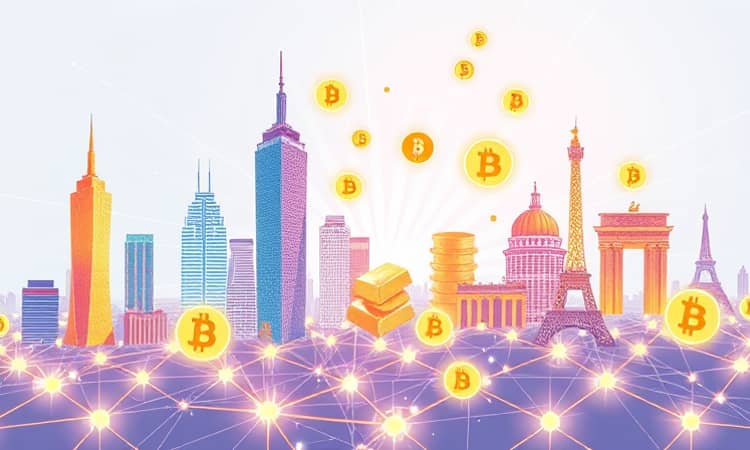
Imagine a world where owning a piece of prime real estate is no longer reserved for the wealthy elite, thanks to fractional ownership enabled by digital innovation.
This is the core promise of asset tokenization, which converts tangible and intangible assets into blockchain-based tokens for seamless global trading.
It represents a fundamental shift in finance, democratizing access and enhancing efficiency on an unprecedented scale.
By digitizing ownership, we can unlock trillions in dormant value and create new economic opportunities for everyone.
The process is not just a technological advancement but a revolution in how we perceive and interact with wealth.
The Essence of Asset Tokenization
Asset tokenization is the process of transforming ownership rights into digital tokens stored on a distributed ledger.
These tokens act as certificates of ownership for a wide range of assets, from physical properties to digital creations.
They enable assets to be traded, held, or used as collateral in a decentralized manner.
This innovation bridges the gap between traditional finance and the digital age, offering immutable records and enhanced security.
Diverse Assets Ready for Tokenization
The scope of tokenizable assets is vast, covering almost anything of value in our economy.
- Real-world assets (RWAs): Include physical items like residential properties, commercial buildings, gold, oil, and agricultural products.
- Digital assets: Encompass cryptocurrencies, stablecoins, non-fungible tokens (NFTs), and governance rights in decentralized organizations.
- Intangible assets: Cover intellectual property, data sets, identity verification, and environmental credits like carbon offsets.
This diversity means that tokenization can apply to bearer assets similar to traditional warrants or deeds.
However, it leverages blockchain technology for more efficient storage and transfer.
Step-by-Step: How Tokenization Works
The journey from asset to token involves several critical steps to ensure security, compliance, and functionality.
- Identify and appraise the asset to establish its market value, often with professional valuation services.
- Ensure legal and regulatory compliance, classifying the token appropriately under securities or commodity laws.
- Choose a suitable blockchain platform and decide on the token type, whether fungible for shares or non-fungible for unique items.
- Select third-party auditors or oracles, like Chainlink, to verify off-chain data and maintain integrity.
- Create a legal entity if necessary, such as for real estate shares, to hold the underlying asset securely.
- Issue tokens through smart contracts, which automate management tasks like interest payments or dividend distributions.
- Secure physical assets in custody solutions when applicable, ensuring their safety and accessibility.
- Distribute tokens to investors via digital wallets and enable trading on exchanges or secondary markets for liquidity.
- Handle ongoing servicing, including regulatory reporting, tax compliance, and data reconciliation to maintain transparency.
Smart contracts play a crucial role in automating these processes, reducing human error and operational costs.
For example, in real estate, a legal entity might own the property, with tokens representing shares that entitle holders to rental income or appreciation.
This allows for peer-to-peer trading without traditional intermediaries.
Unlocking Value: Key Benefits Explored
Tokenization brings numerous advantages that can revolutionize investment landscapes and unlock immense value.
- Fractional ownership: Allows assets to be divided into small, affordable tokens, enabling participation from a broader audience.
- Increased liquidity: Tokens can be traded 24/7 on global exchanges, bypassing traditional intermediaries and expanding market access.
- Enhanced accessibility: Democratizes investments, making high-value assets available to global users regardless of their financial status.
- Transparency and security: Blockchain provides immutable records of ownership and transaction history, reducing fraud and increasing trust.
- Efficiency and cost savings: Automates processes through smart contracts, streamlining origination, trading, and settlement.
- Additional utility: Tokens can be used as collateral in decentralized finance (DeFi) or for other financial applications, adding flexibility.
These benefits collectively contribute to a more inclusive and efficient financial system.
This table highlights how tokenization transforms various aspects of asset management.
Risks and Challenges to Consider
Despite its potential, tokenization faces several hurdles that must be addressed for widespread adoption.
- Regulatory uncertainty: Compliance varies across jurisdictions, and tokens may be classified as securities, requiring strict oversight.
- Technological complexity: Relies on oracles for off-chain data, and smart contracts must be secure to prevent exploits and failures.
- Security and fraud risks: Blockchain is not immune to hacks, and custody solutions for physical assets need robust protection mechanisms.
- Infancy stage: The technology is still evolving, and widespread adoption may take time to replace traditional systems fully.
Weighing these pros and cons is essential for stakeholders navigating this emerging field.
For instance, regulatory frameworks are gradually adapting, but clarity is needed to foster trust and innovation.
The Future Landscape: Trends and Examples
Tokenization is gaining momentum with institutional adoption and real-world applications that signal a transformative shift.
- Market potential: Estimated to bring over $100 trillion in real-world assets on-chain annually, transforming global finance.
- Current examples: Include tokenized treasuries by institutions like BlackRock, real estate shares, gold-backed tokens, and carbon credits.
- Industry disruption: Replaces traditional deeds and titles with digital tokens, enabling security token offerings (STOs) for various assets.
- Future shift: Promises 24/7 operations and peer-to-peer trading, making finance more efficient and inclusive for all.
Supporting technologies like blockchain, smart contracts, and oracles are integral components driving this evolution.
As more assets move on-chain, we can expect a more connected and transparent financial ecosystem.
The journey has just begun, but the possibilities are limitless for those willing to embrace change.