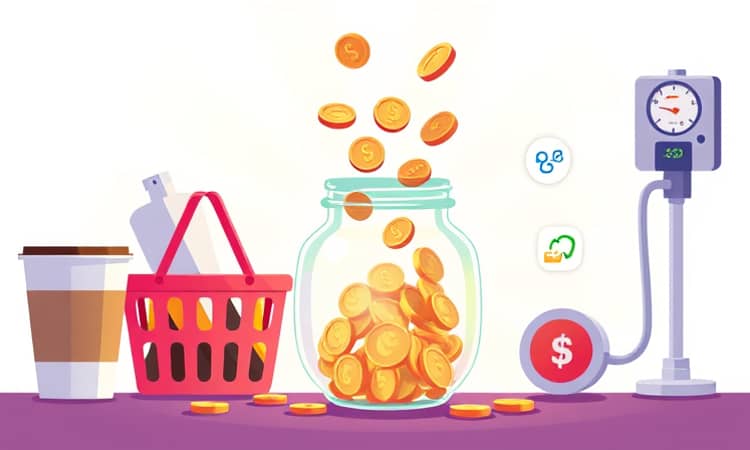
Every day, unseen costs undermine our ability to grow our nest egg. While dramatic lifestyle changes grab headlines, most savings come from subtle, often-overlooked shifts in daily routines. These “hidden savings” may seem insignificant in isolation, but collectively they can drive your savings rate from a bare 4.5% toward meaningful wealth building.
Why Hidden Savings Matter
In 2025, the average personal savings rate stands at just 4.5% of income. At the same time, Kaplan’s research reveals that households with access to a $3,000 “financial safety net” were vastly more likely to consistently spend below their income and build true savings habits. The contrast between a sliver of savings and a modest buffer underscores a powerful truth: even small changes shift financial trajectories.
Most people fixate on raw numbers—interest rates, account balances, percentages. Yet studies on micro-savings emphasize that it is the truly tiny, consistent actions—round-up transfers, spare-change jars, automated deposit triggers—that transform mindsets and minimize reliance on high-interest credit cards when emergencies strike.
Consider the daily latte: at about $6 a pop, skipping just three barista coffees each week represents roughly $780 in annual savings. In isolation this feels trivial, but when you multiply across months and add other similar decisions, the total becomes impossible to ignore.
Hidden savings aren’t punitive cuts; they are frictionless optimizations. They align spending with values, reduce waste, and foster a sense of control. Ultimately, they empower you to focus on larger financial goals without sacrificing quality of life.
The real question then becomes: if most households are only saving a sliver of earnings, where exactly is the rest going? By mapping out common “budget leaks” and addressing them with targeted, low-effort strategies, you can unlock thousands of extra dollars each year.
Budget Visibility: Where Leaks Live
You cannot fix what you cannot see. Budget visibility means shining a spotlight on every dollar flowing through your accounts, from major bills to tiny digital charges.
Step 1: Collect data by exporting or downloading at least 90 days of statements, including every bank and card account.
Step 2: Categorize expenses. Tag each transaction as a need, a want, or miscellaneous, using color codes, labels, or simple spreadsheets.
Step 3: Analyze patterns. Flag miscellaneous categories averaging above $150 monthly as potential silent budget leaks revealed.
Tools range from pen-and-paper journals to intuitive apps that auto-categorize purchases. The goal is clear: identify recurring outflows you barely notice. Once exposed, these leaks become repairable.
Once your data is organized, apply a budgeting framework to surface opportunities. The 50/30/20 rule divides net income into essentials (50%), wants (30%), and savings or debt repayment (20%). Envelope budgeting assigns every dollar a purpose by dividing cash into labeled envelopes, preventing overspending. Zero-based budgeting ensures each dollar is given a job before the month begins, uncovering everyday powerful behavior-driven choices that silently erode your balance.
Everyday Hidden Savings by Category
Below are some of the most common categories where subtle adjustments translate into substantial annual savings. Each tactic has been battle-tested by millions aiming to boost their savings without radical lifestyle changes.
Groceries & Food
Supermarket spending is a major silent leak. From impulse snacks to branded staples, small premiums add up rapidly. To fight back:
- Plan meals around typical weekly sale cycles and existing pantry items.
- Use detailed shopping lists and stick to them to avoid temptation.
- Embrace generic or store brands, which often match quality at a fraction of the cost.
- Batch-cook and freeze meals to cut down on takeout orders and reduce avoidable food waste costs.
- Compare unit prices carefully; bulk is not always the cheapest per ounce.
Families who adjust in these ways frequently save $100–$200 monthly, purely by optimizing grocery runs.
Coffee & Everyday Treats
Daily indulgences may feel too minor to merit attention, yet they compound fast. Simple strategies include:
- Skip 3 café coffees per week—approximately $780 in annual savings.
- Invest in a quality home brewer or travel mug to replicate the cafe experience cheaply.
- Automate micro-deposits equal to each skipped treat to your savings account, reinforcing good habits.
Over time, these micro-savings build momentum and shift spending patterns toward more deliberate choices.
Subscriptions & Digital Services
From streaming platforms to cloud storage, unused or overlapping services silently drain accounts. Combat subscription creep by:
- Conducting a monthly audit of credit card and bank statements.
- Canceling or pausing services you haven’t used in the last 30 days.
- Rotating entertainment apps instead of maintaining multiple active subscriptions.
- Negotiating family or bundled plans for discounted group rates.
Just three canceled $12 subscriptions frees up over $400 annually—equivalent to a virtual automatic pay raise.
Utilities & Energy Efficiency
Many believe utility bills are fixed, but behavior and simple upgrades drive large savings. Adjust the thermostat by one to two degrees, switch to LED bulbs, seal drafts, run full appliance loads, and unplug standby electronics. Households adopting these measures often see energy bills drop by 10–20% per season, translating to $200–$400 saved yearly.
Transportation & Commuting
Beyond major shifts like buying a fuel-efficient car, everyday driving habits influence long-term costs. Keep tires properly inflated, plan multi-stop errands, carpool with coworkers, or choose walking and cycling for short trips. Combined with maintenance like regular oil changes and air filter replacements, smart commuting can save $300–$600 annually on fuel and repair costs.
Invisible Financial Products: Plans, Fees & Terms
Beyond day-to-day expenses, long-term service plans, bank fees, insurance deductibles, and credit terms often get set and forgotten. These invisible financial products can erode wealth silently.
Bank account fees—maintenance charges, overdraft penalties, or ATM surcharges—are negotiable. A courteous call to customer service, citing competitive fee structures, can result in immediate fee waivers or account upgrades.
Credit card interest rates and penalty APRs represent another hidden cost. Monitoring statements, shifting balances to zero-percent promotional offers, or consolidating debt into a lower-rate personal loan can save hundreds or thousands of dollars in interest annually.
Insurance premiums for auto, home, and renters policies typically renew each year. Use renewal periods to shop quotes online, bundle coverage, or adjust deductibles for a lower premium. A mere 5% decrease in combined premiums delivers significant annual savings.
Internet and phone providers likewise rely on promotional periods. Calendar reminders for renewal dates empower you to negotiate for loyalty discounts, upgrade packages, or switch providers for better deals—unlocking hidden savings at every contract anniversary.
Patching dozens of small leaks creates a powerful cumulative effect. By focusing on powerful effective low-friction optimizations, you conserve energy and build savings without drastic sacrifices. The key is consistent review and incremental improvement.
Begin by automating savings transfers: even $10 weekly—equal to one specialty coffee—yields over $500 per year. Schedule quarterly financial check-ins to revisit subscriptions, utility rates, and account fees, ensuring no expense goes unnoticed.
Above all, shift from a mindset of deprivation to one of empowerment. Each dollar reclaimed through hidden savings is a dollar you choose to redirect toward your ambitions—whether it’s a down payment, debt payoff, or dream vacation.
Hidden savings reside in plain sight, in the small, recurring choices we make daily. Uncover them, harness them, and watch your financial landscape transform, one savvy decision at a time.