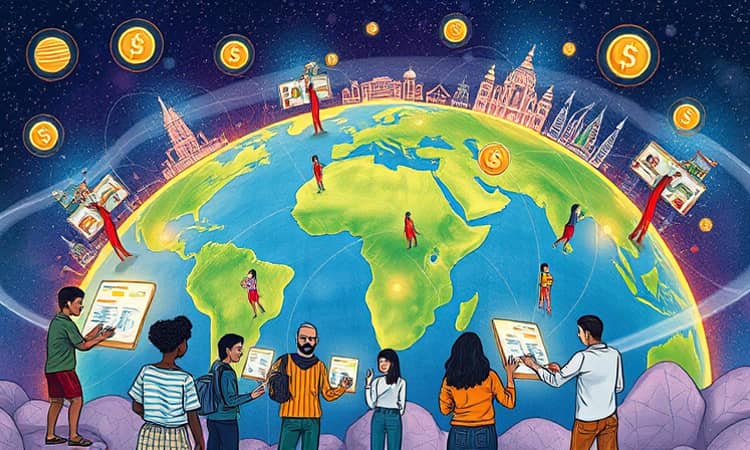
In an era defined by rapid technological change and global connectivity, the concept of banking is undergoing a profound transformation. From sleek mobile apps to decentralized finance platforms, a new paradigm—borderless, always-on, embedded, and increasingly decentralized finance—is reshaping how individuals access and manage their money. This evolution, often called “unbounded banking,” promises to break down the geographic, institutional, and regulatory barriers that have long kept billions excluded or underserved.
What Is Unbounded Banking?
Traditional banking operates within fixed branches, regulated networks, and national boundaries. Unbounded banking, by contrast, leverages digital tools, innovative architectures, and alternative data to extend financial services beyond those confines. It encompasses a spectrum of models—from mobile-first digital banks to blockchain-based protocols—aimed at creating an inclusive, efficient, and resilient ecosystem.
Key segments within the unbanked, underbanked, and out-of-banking populations include:
- Unbanked: Individuals with no checking or savings account, relying on cash and alternative services.
- Underbanked: Those holding an account but dependent on high-cost solutions like payday loans and check-cashing.
- Out of banking by choice: People uninterested in traditional banks, seeking privacy, autonomy, or novel financial models.
The Scale of Financial Exclusion
Despite global economic growth and widespread mobile phone adoption, roughly 1.7 billion adults globally unbanked. Millions more are underbanked, trapped in cycles of high fees, limited credit, and insecure savings. This exclusion stifles entrepreneurship, impedes poverty reduction, and widens inequality.
Yet the digital revolution offers a pathway forward. When harnessed effectively, new platforms can deliver affordable accounts, instant cross-border payments, and credit products calibrated to real behavior rather than legacy credit scores.
Pain Points of Bounded Banking
To understand the promise of unbounded banking, it helps to examine the friction points that plague traditional models:
- High and opaque fees: Minimum balances, overdraft charges, and maintenance costs deter low-income customers.
- Exclusion feedback loops: Negative records in systems like ChexSystems can bar account opening for years.
- Rigid branch-centric models: Physical access limits services in rural or underserved areas.
- Strict documentation hurdles: KYC requirements often exclude migrants, informal workers, and transient populations.
- Trust and literacy gaps: Distrust of institutions and limited financial education hamper adoption.
The Rise of Digitally Native Finance
Most banks now offer app-based experiences, automated budgeting tools, and remote account opening. These digital-first services provide no fee accounts with high APYs to attract customers who once avoided banking. By eliminating branch overheads and leveraging data analytics, these platforms reduce costs while enhancing transparency.
Remote onboarding, biometric authentication, and instant notifications empower users to manage money on their own terms. Mobile wallets and digital payment networks further reduce cash dependency, increasing security and convenience.
Fintech Innovations Fueling Inclusion
Specialized fintech firms have emerged as champions of financial inclusion. By integrating alternative data—such as mobile usage patterns and transaction histories—they underwrite microloans and build credit profiles for those without traditional scores. Their design priorities include:
- Intuitive interfaces with local-language support and offline functionality.
- Micro-savings and micro-credit options tailored to irregular income streams.
- Instant remittances with low-cost settlement across borders.
Such solutions address both the unbanked—who aspire to financial tools—and the out-of-banking population seeking autonomy and privacy.
Embedded Finance: Banking Without Banks
Embedded finance blurs the line between financial and non-financial services. Ride-share apps, e-commerce platforms, and social networks now host wallets, lending, and insurance offerings directly in their interfaces. Underpinned by trusted digital identity and credential verification services, these integrations allow users to transact without ever visiting a bank or switching apps.
Banking-as-a-Service (BaaS) partnerships enable brands and telecoms to deliver full-fledged financial products, expanding reach into communities historically beyond banking’s footprint.
Cross-Border and Multi-Currency Solutions
Legacy remittances and wire transfers suffer from high fees and slow settlement times. Modern platforms pool local accounts, leverage blockchain rails, or use real-time FX engines to deliver near-instant, low-cost transfers. Multi-currency wallets further let users hold, exchange, and spend money globally with minimal friction—a true escape from geographic and regulatory borders.
Decentralized and Programmable Finance
The advent of blockchain and DeFi introduces programmable money and automated contracts. Smart contracts can disburse loans, execute trades, or distribute grants without intermediaries, reducing costs and increasing transparency. Tokenization of assets—from real estate to commodities—enables fractional ownership, opening new investment channels for everyday participants.
While regulatory clarity remains a work in progress, the core promise is clear: an open, permissionless financial layer that anyone with internet access can join.
Comparing Bounded and Unbounded Banking
How to Embrace Unbounded Banking Today
Whether you’re an individual seeking better tools or a business aiming for global reach, here are actionable steps:
- Research reputable digital banks and fintechs with transparent fee structures.
- Use multi-currency wallets for international spending and remittances.
- Explore DeFi platforms for yield-generating opportunities—but start small and learn security best practices.
- Leverage embedded finance in daily apps to streamline payments and automate savings.
By diversifying across these channels, you gain resilience, lower costs, and greater financial freedom.
Looking Ahead: Building a More Inclusive Future
The unbounded banking movement is not a distant vision—it’s unfolding now. From remote villages to megacities, individuals are reclaiming control over their finances through technology. Policymakers, technologists, and community leaders must collaborate to ensure these innovations deliver financial inclusion and economic empowerment for all.
As barriers dissolve, we move closer to a world where everyone can save, borrow, invest, and transact on fair terms, regardless of geography or income. That’s the promise—and the power—of unbounded banking.