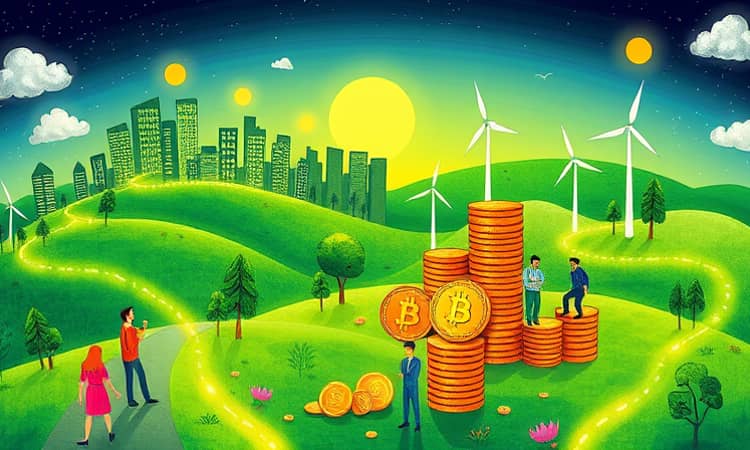
In today’s evolving financial landscape, the concept of wealth goes beyond mere accumulation of assets. It embraces a holistic vision where prosperity aligns with planetary and social well-being. This article explores how investors can become true generators of sustainable financial growth by channeling capital into transformative opportunities.
Understanding the Sustainable Finance Landscape
The sustainable finance market has witnessed unprecedented growth. With sustainable fund assets soaring to $3.7 trillion and the green, social, and sustainability bond market reaching €3 trillion, investors are recognizing that impact and returns need not be mutually exclusive.
Green bonds alone have ballooned from €30 billion a decade ago to €1.9 trillion today, illustrating the scale of capital ready to fund renewable energy, green buildings, and low-carbon transport. Moreover, Q2 2025 saw $4.9 billion in net inflows to ESG portfolios globally, driven in large part by European investors who added €8.6 billion.
Three Pillars of Sustainable Growth
To navigate this expanding market, investors can focus on three primary pillars: green bonds, decarbonization strategies, and climate and nature solutions. Each offers a distinct pathway to harness measurable environmental outcomes while seeking competitive financial returns.
Green Bonds: Financing the Low-Carbon Future
Green bonds have established themselves as one of the most transparent and risk-aligned sustainable instruments. Their proceeds fund projects in renewable energy, low-carbon transport, and energy-efficient buildings, offering similar risk profiles to conventional bonds but with added impact reporting.
Although 2025 issuance may dip slightly from 2024’s record €420 billion, European green bonds continue to gain traction. Investors benefit not only from financial performance but also from the confidence of knowing where their capital goes, backed by clear frameworks and certifications.
Decarbonization: From Pledge to Action
Asset owners are moving beyond broad pledges to concrete actions using frameworks such as the Net Zero Investment Framework and TCFD recommendations. Strategies now target opportunities in the low-carbon transition, reducing exposure to high-emission industries, and capitalizing on emerging clean technologies.
Climate and Paris-Aligned Benchmark ETFs have witnessed surging interest as carbon pricing extends to cover 28% of global emissions. This acceleration underpins a growing recognition that reducing emissions is not just ethical but economically prudent.
Climate and Nature Solutions: Investing in Resilient Systems
The third pillar encompasses investments in sustainable agriculture, resilient infrastructure, water management, and nature-based solutions. Here, investors allocate capital to scalable, financially sound companies delivering real-world environmental benefits.
As more than half of global economic value generation depends on healthy natural systems, directing funds to restoration and conservation initiatives presents a compelling dual opportunity: mitigating physical climate risks while unlocking new markets in previously underserved regions.
Emerging Trends Driving the Next Wave
Several emerging trends are reshaping the sustainable finance arena, creating fresh avenues for growth and impact.
Adaptation & Resilience: No longer seen solely as defensive measures, adaptation investments are recognized as engines of growth. With a $9 trillion opportunity by 2050 and financing needs 12–14 times current flows, early movers can secure substantial advantages.
Nature Finance: Once niche, nature finance is now entering mainstream capital markets. Initiatives such as the Tropical Forests Forever Facility aiming for $4 billion annually, and the One Ocean Finance Facility launched in 2025, exemplify blended public-private approaches meeting conservation targets.
Transition & Water Finance: Transition finance guidelines for high-emitting sectors are set to break out in 2026, while water-focused instruments offer tangible entry points into nature-related investing. Together, these trends respond to systemic challenges, from biodiversity loss to water scarcity, while generating attractive risk-adjusted returns.
How to Begin Your Journey
Whether you’re an individual investor or represent an institutional fund, practical steps can help you embark on a sustainable investing path today:
- Assess your portfolio’s current environmental and social footprint.
- Define clear impact objectives aligned with personal or institutional values.
- Leverage established frameworks like the EU’s SFDR or the UN’s PRI.
- Incorporate a mix of instruments—green bonds, climate ETFs, nature finance vehicles.
- Monitor and report impact metrics regularly to ensure capital allocation opportunities stay on track.
Addressing Challenges with Innovation and Collaboration
Despite impressive growth, the sustainable finance market faces challenges: regulatory fatigue, political headwinds in some regions, and transition risks. Governments are simplifying directives—such as the EU’s Omnibus streamlining CSRD and SFDR—to maintain ambition without overwhelming corporates.
Innovation in blended finance, carbon credit markets, and AI-driven ESG analytics is reducing barriers and de-risking investments. Collaboration among pension funds, insurers, banks, and development agencies is key to scaling solutions that deliver both profit and purpose.
Conclusion: A Call to Action
Creating sustainable financial growth is more than a trend; it is a strategic imperative for 2026 and beyond. As Europe, Asia-Pacific, and other regions double down on sustainability, investors have a historic chance to align wealth creation with global stewardship.
By focusing on green bonds, decarbonization strategies, and climate and nature solutions—and by embracing emerging trends such as adaptation and nature finance—you can become part of the next generation of wealth generators. It is through informed, inclusive investment strategies that we can transform financial markets into engines of positive change for people and planet.