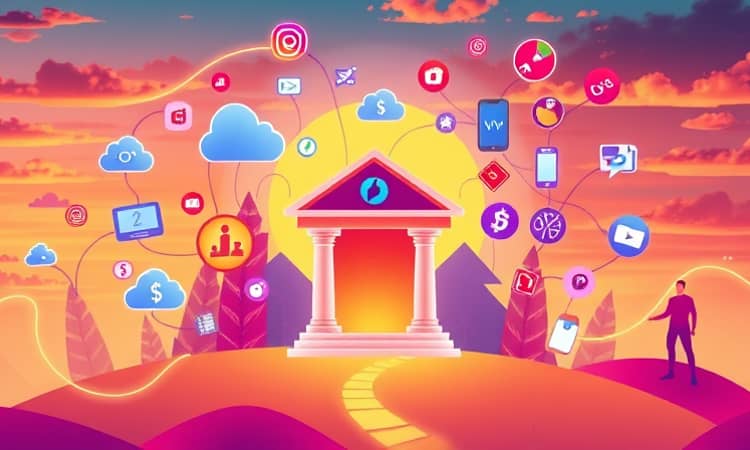
In an era defined by digital transformation, finance leaders stand at the threshold of a profound shift. The subscription economy is rewriting the rules of commerce, offering institutions the chance to move beyond one-off transactions and cultivate lasting relationships.
By embracing recurring payments, banks and fintech firms can forge predictable, stable cash flow streams and transform customer experiences with tailored offerings that evolve over time.
Understanding the Subscription Economy
The subscription economy replaces one-time ownership with ongoing access through periodic billing. This model prioritizes convenience, flexibility, and sustained engagement rather than a single purchase event.
- Recurring revenue model: Delivers consistent income through monthly or annual fees.
- Access over ownership: Empowers users to pause or cancel services seamlessly.
- Continuous value delivery: Ensures software updates, personalized content, or exclusive perks.
- Customer-centric focus: Strengthens loyalty by adapting to evolving needs.
Rooted in cloud computing and digital ecosystems, this model gained traction as businesses sought deeper real-time personalization capabilities. Pioneering indices like Zuora’s Subscription Economy Index track its rapid expansion, highlighting the outsized growth of recurring services compared to traditional firms.
Market Size and Growth Projections
The numbers paint a compelling picture: the global subscription market has grown by over 437% since 2012, outpacing major stock indices by nearly 5x. Cloud services alone account for nearly half of a $1.5 trillion total market.
In the United States, consumers spend an average of $924 per year on subscription products. E-commerce subscriptions are forecasted to exceed $900 billion by 2026, growing more than 65% annually.
For finance, these figures signal an opportunity to embed subscription management directly within banking platforms, capturing both transaction fees and subscription-related interchange revenue—a dual benefit that extends beyond interest margins.
Business Models in the Subscription Economy
Subscription-driven firms typically adopt one of two pricing frameworks:
- Consumption-based pricing: Charges per usage unit, ideal for cloud resources or pay-as-you-go mobile data.
- Flat-fee subscription pricing: Bundles unlimited access or tiered features under fixed monthly or annual plans.
Financial institutions can leverage both models. A bank might offer basic account services under a flat fee, while charging per-transaction or per-API-call fees for premium digital tools.
Advantages for Financial Institutions
By embedding subscriptions, banks harness data-driven retention and engagement strategies fueled by usage analytics and customer preferences. This creates a feedback loop where insights inform personalized recommendations, reducing churn and boosting lifetime value.
Subscription offerings also generate lower customer acquisition costs as retention replaces constant new-sales efforts. Predictable MRR (monthly recurring revenue) smooths cash flow, enabling precise forecasting and allocation for R&D, compliance, and marketing.
Interchange fees on recurring payments, coupled with streamlined dispute resolution and reduced chargebacks, contribute to enhanced profitability. Financial firms that integrate subscription management within their apps build frictionless experiences that foster long-term subscriber loyalty growth.
Adapting to Shifting Consumer Behavior
Modern consumers increasingly favor convenience and budgeting certainty. Fixed monthly fees simplify expense tracking and remove the burden of large upfront costs.
Subscriptions automate everyday purchases—from groceries and grooming products to software and streaming entertainment—while generating rich preference data. This insight allows finance providers to craft targeted micro-loans, savings boosters, or loyalty rewards aligned with usage patterns.
Strategies for Success
To thrive in this landscape, finance organizations should consider these action steps:
- Implement robust billing and payment processing platforms to handle high-volume recurring transactions.
- Leverage AI and machine learning for churn prediction and customized retention campaigns.
- Offer dynamic pricing tiers or pausing options, giving customers control and reducing cancellations.
- Partner with leading SaaS and fintech vendors to embed third-party subscriptions seamlessly within digital banking portals.
- Use real-time analytics to iterate on features, ensuring each subscription tier delivers continuous incremental value.
Future Trends and Challenges
As competition intensifies, maintaining engagement becomes more complex. Companies will rely on advanced AI-driven personalization to tailor offers in real time and preemptively address churn risks.
Economic volatility may test subscription budgets, making flexible pause-and-resume capabilities critical. Meanwhile, regulatory scrutiny around recurring billing disclosures will rise, demanding transparent communication and compliance safeguards.
Financial institutions that embrace innovation—integrating subscription insights into lending, savings, and investment products—will unlock new revenue streams and strengthen customer trust.
Conclusion: Embracing a Recurring Future
The subscription economy is more than a billing model; it represents a philosophy of ongoing value exchange. For finance leaders, now is the moment to pivot from transactional relationships toward membership-driven ecosystems.
By deploying subscription-based offerings, banks and fintechs can cultivate embedded subscription management tools, deepen customer connections, and secure resilient revenue streams. The journey demands strategic vision, data fluency, and operational excellence—but the returns promise a future of sustained growth and unwavering loyalty.