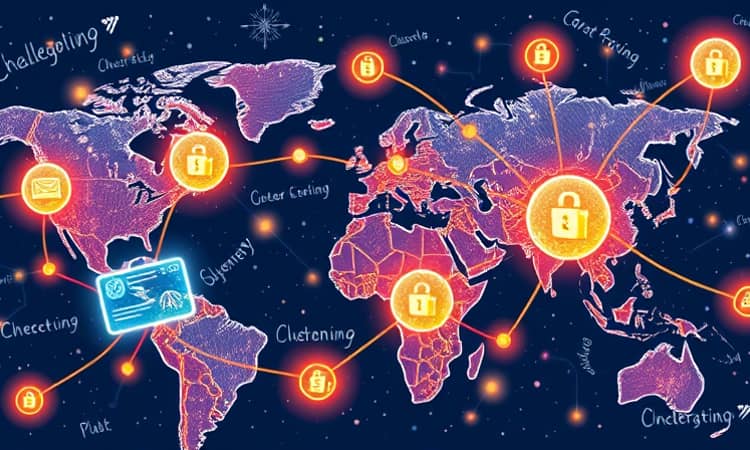
In today's fast-paced world, the heartbeat of finance is accelerating with every second. Real-time payments are reshaping how we move money, making transactions instantaneous and seamless.
The explosive growth of real-time payments is not just a trend; it's a revolution that touches every corner of the globe. From businesses to individuals, the demand for speed is driving unprecedented change.
This transformation empowers economies by reducing barriers and enhancing accessibility. Technological innovations are at the core of this shift, ensuring that finance keeps pace with our digital lives.
The Global Surge of Instant Payments
Instant payment systems are spreading rapidly across the world. By 2026, over 80 countries are expected to have operational real-time schemes.
This expansion is supported by a forecasted 289% growth in transaction values from 2023 to 2030. Such metrics highlight the accelerating adoption of these systems.
In 2023, RTP volumes grew by 42% year-over-year. The United States alone processed more than 33 billion ACH payments in 2024.
This growth integrates instant methods into daily operations. Payroll corrections and liquidity management now rely on real-time capabilities.
- Global adoption reduces transaction times from hours to seconds
- Adoption metrics show upward trends in diverse markets
- Operational integration makes instant payments standard for various uses
Breaking Borders: Interoperability and Cross-Border Innovation
Interoperability is becoming essential for global payments. Regional projects link systems to cut cross-border settlement times.
Settlement can now occur in minutes instead of days. ISO 20022 messaging standards enable cleaner data flows with structured remittance information.
This innovation makes international payments faster and more affordable. Businesses of all sizes benefit from reduced delays and costs.
Legacy system integration remains critical for stability. Real-time payments must coexist with traditional banking infrastructure.
- Reduced settlement times enhance global trade efficiency
- Data standards improve payment quality and reduce errors
- Policy efforts support seamless cross-border connectivity
Finance Invisible: The Rise of Embedded Payments
Embedded finance weaves payments into non-financial platforms. Transactions become background activities in everyday life.
Consumers no longer think about making payments. They simply happen during shopping, commuting, or healthcare visits.
This invisibility increases risk. Flawless fraud detection and compliance mechanisms are vital for trust and security.
Reliability becomes the key differentiator in this seamless experience. Robust testing across all touchpoints ensures consistency.
- Integration into transportation, retail, and government services
- Risk management focuses on preventing issues before they occur
- Technical requirements prioritize uptime and user experience
AI: The Brain Behind Modern Transactions
AI is deeply embedded in payment systems for multiple functions. It enhances fraud prevention, customer support, and transaction routing.
AI models make better use of structured data for accuracy. Predictive risk management shifts from reactive to proactive approaches.
Chatbot integration allows for real-time payment assistance. Agentic AI in e-commerce optimizes requests and anticipates needs.
System precision is crucial as automation grows. Accurate legacy platform configuration supports AI-driven decisioning.
- AI improves anomaly spotting and routing efficiency
- Structured data fields enable better context and risk assessment
- Automation requires meticulous setup to avoid errors
Compliance at the Speed of Light
Regulators demand real-time visibility into transaction flows. Compliance must operate as fast as the payments themselves.
Continuous monitoring is supported by explainable AI models. Nacha's 2026 updates strengthen fraud monitoring across networks.
All participants must prevent unauthorized transactions actively. Data governance ensures clean data and preemptive action.
- Real-time oversight is essential for digital currencies
- Granular audit trails enhance transparency and accountability
- Speed and reliability are prioritized in regulatory frameworks
Programmable Payments: Automation Through APIs
Programmable payments embed conditional logic into workflows. APIs enable automation based on invoices, delivery, or contracts.
Request for Pay gains traction in commercial payments. It reduces card reliance and improves cash flow efficiency.
Use cases include retail investing and wallet fundings. This allows for faster trades and eliminates transaction delays.
Infrastructure development involves clear rules for messaging. Implicit conventions ensure smooth integration and troubleshooting.
- Conditional logic automates payments based on triggers
- RFP enables real-time, pay-by-bank experiences
- APIs facilitate seamless connectivity and error handling
Bridging the Gap: Financial Inclusion and Hybrid Models
Financial inclusion is a priority, especially in emerging economies. Governments invest in infrastructure for unbanked populations.
Hybrid digital-physical models, like ATMs, extend access. Affordability and simplicity matter more than advanced features.
Modern tools applied to legacy architectures have the biggest impact. Practical focus ensures uptime and reliability for all users.
This approach makes finance accessible to underserved communities. It balances innovation with real-world needs.
Practical Applications Transforming Business
Real-time payments revolutionize business operations from payroll to treasury. Early wage access and instant payroll corrections enhance employee satisfaction.
Just-in-time supplier payments optimize cash flow. Vendor payouts improve operational efficiency and reduce costs.
Merchant payments benefit from real-time payouts. Same-day settlement frees up capital for growth and investment.
Securing the Instant: Fraud Prevention in Real-Time
Instant settlement removes the margin for error in transactions. Fraudsters exploit speed gaps with social engineering tactics.
Pre-transaction validation and live monitoring are essential. Enriched data from RTP facilitates better fraud detection.
Real-time invoicing and remittance messaging aid prevention. Risk-based approaches are mandated by regulations for comprehensive protection.
This ensures security keeps pace with innovation. Businesses must prioritize vigilance to safeguard assets.
Building the Backbone: Technology and Infrastructure
The infrastructure supporting real-time payments must be resilient. Legacy system modernization addresses integration challenges.
Biometric authentication and tokenization enhance security. ISO 20022 adoption improves payment flow quality with richer data.
Downtime and misconfiguration carry growing economic risk. Infrastructure becomes a strategic priority for reliability.
Technology and security work hand in hand. This synergy supports the seamless operation of payment systems.
From Hype to Reality: The Industry's Maturation
The payment industry shifts from novelty to practicality. Scalable and secure solutions take center stage over hype.
Interoperability becomes a core driver of global growth. Regulation shapes every part of modern operations.
As we look ahead, the pulse of payments will accelerate further. Innovations will make finance more accessible and efficient for everyone.
This journey inspires us to embrace change. By understanding these trends, we can navigate the future with confidence and purpose.