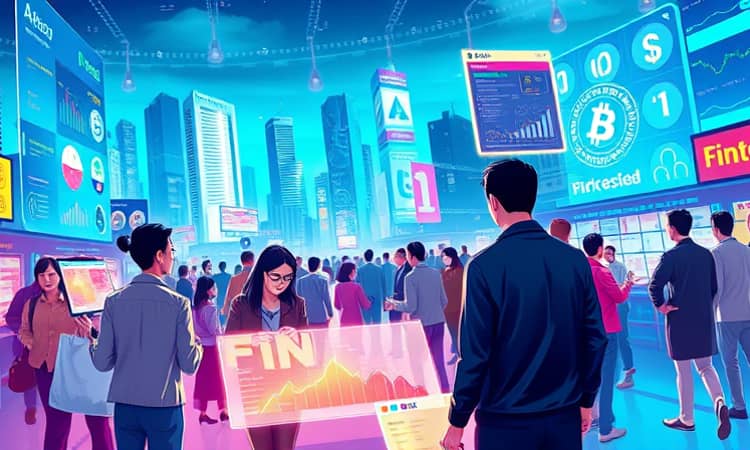
In an era of rapid digital transformation, marketplaces are redefining how finance operates.
From peer-to-peer lending to embedded finance, these platforms harness technology to connect users with tailored services.
Market Size and Growth
Global fintech expenditures surged to unprecedented levels in 2024, reaching $340.10 billion worldwide.
By 2025, the niche of fintech marketplaces alone is projected to account for $165.40 billion in revenue, demonstrating robust demand for interconnected solutions.
The broader fintech-as-a-service sector climbed from $358.49 billion to $416.85 billion between 2024 and 2025.
Such numbers underscore a sustained double-digit compound annual growth trajectory fueled by innovation and consumer adoption.
Key Segments and Use Cases
FinTech marketplaces span diverse categories that address specific financial needs. Platforms differentiate themselves by technology, end-use, and application.
- Payment platforms dominating forty-one percent of the 2024 market share, powering global transactions.
- Emerging lending and microloan marketplaces connecting borrowers with alternative credit sources.
- Insurance aggregation forums offering tailored policies at competitive rates.
- Wealth management platforms leveraging data analytics to optimize portfolios.
- Compliance and regulatory marketplaces automating risk assessment processes.
These varied use cases illustrate how fintech ecosystems coalesce around specialized digital financial services that enhance efficiency and access.
Business Model Evolution
At their core, fintech marketplaces enable seamless connections between diverse participants. Whether linking lenders and borrowers or buyers and sellers, they streamline value exchange.
Innovations in disaggregation and rebundling have fragmented traditional offerings into component services that can be recombined dynamically.
For instance, an e-commerce storefront may embed payments, credit underwriting, and insurance into a unified checkout experience, exemplifying embedded finance reshaping commerce models.
Network effects fuel these platforms: every additional user enhances the value proposition for all participants, often resulting in rapid consolidation and increased market power for leading players.
Drivers of Growth
Multiple powerful forces propel the expansion of fintech marketplaces:
- Rampant smartphone adoption across emerging markets boosting digital inclusion.
- Consumer demand for instant, convenient financial transactions on mobile devices.
- Cost efficiencies from automation, AI, and streamlined compliance frameworks.
- Open banking APIs enabling marketplaces to embed services into third-party apps.
- Advanced data analytics powering personalized product offerings in real time.
Together, these drivers create an environment where innovative platforms can scale rapidly and meet evolving customer expectations.
Risks and Challenges
Despite their promise, fintech marketplaces face several headwinds that require careful navigation.
- Cybersecurity threats and data breaches undermining user trust.
- Regulatory uncertainty as authorities adapt to novel business models.
- Potential conflicts of interest in fee-driven recommendation engines.
- Platform failures that can disrupt critical financial services for consumers.
- Market concentration risks as dominant players exploit network effects.
Addressing these challenges demands robust governance frameworks, advanced security protocols, and ongoing collaboration with regulators to ensure sustainable growth.
Trends and Innovations
Emerging technologies are reshaping the fintech landscape at an accelerating pace. Artificial intelligence stands out as a transformative force, set to grow from $30 billion in 2025 to $83.1 billion by 2030.
Blockchain and decentralized finance introduce new paradigms for trustless transactions, digital tokenization, and cross-border settlements.
Buy Now Pay Later (BNPL) models democratize access to credit, while micro-investing platforms lower barriers to entry for retail investors.
Embedded finance continues to blur lines between financial and non-financial services, as APIs allow seamless integration of credit, payments, and insurance into everyday applications.
Future Projections and Outlook
With a forecasted compound annual growth rate of over 16% for fintech-as-a-service through 2034, the industry’s expansion shows no signs of slowing.
Payments will remain the largest single category, but lending, compliance, and wealth management verticals are poised for the fastest gains.
Regionally, North America leads the charge with a 34–35% market share and over 12,000 fintech firms. Meanwhile, Asia-Pacific emerges as the most dynamic landscape, driven by massive digital adoption in China, India, and Southeast Asia.
Companies that can combine data-driven personalization with robust security standards will capture new audiences and deepen engagement. Strategic partnerships and open ecosystem models will define the winners in an increasingly competitive marketplace.
Conclusion
The rise of fintech marketplaces marks a fundamental shift in how financial products are created, distributed, and consumed. By lowering costs, enhancing transparency, and opening new channels for credit and investment, these platforms empower both consumers and businesses.
To harness the full potential of this revolution, stakeholders must balance innovation with risk management, forging collaborative frameworks that protect users while fostering growth.
As fintech marketplaces continue to evolve, their ability to transform the global financial system will depend on agility, inclusivity, and a steadfast commitment to trust.