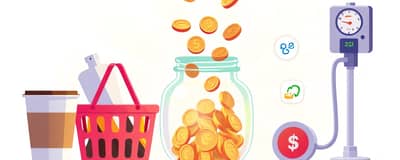
When we think of financial growth, the idea of compounding often feels mysterious. Yet its essence is simple: time, consistency, and reinvestment unlock exponential growth beyond imagination. This article will guide you through clear definitions, vivid examples, and practical steps to harness the true power of compounding in every aspect of life, not just money.
Whether you’re saving for retirement, building an emergency fund, or striving for a personal project, understanding compounding transforms tiny inputs into remarkable outcomes. Read on to learn how small, steady actions can lead to life-changing long-term results.
Understanding Compound Interest
Compound interest means you earn returns on both your initial investment and on prior earnings. In contrast, simple interest pays returns only on the original principal. The fundamental formula for compound growth is:
A = P (1 + r/n)^(n t)
Where A is the future value, P the initial principal, r the annual return rate, n the number of compounding periods per year, and t the time in years. When you reinvest interest or dividends, your balance accelerates like a snowball gathering mass.
This concept has been called the most powerful force in finance, often compared to gravitational pull for money: once it starts, it keeps accelerating if left undisturbed.
Pure Compounding in Action
To build intuition, examine these straightforward examples of compounding without extra contributions:
- $1,000 at 10% annually grows to $1,100 in Year 1, then $1,210 in Year 2—interest on top of interest.
- $1,000 at 8% for two years becomes $1,166.40, demonstrating how even modest rates compound significantly over time.
- $5,000 invested at 8% for 25 years swells to approximately $34,242—nearly seven times the original amount.
- At 5% annual return, $10,000 over 20 years becomes about $26,533, more than 2.5× the starting capital.
These numbers highlight how time multiplies small investments into substantial sums, even without adding new money.
Compounding vs Simple Interest
Compounding outperforms simple interest over long horizons. Consider $1,000 at 10% for 10 years:
While a high simple rate can sometimes beat a lower compound rate in the short term, compounding invariably wins over extended periods by steadily amplifying returns.
Small Steps: Ongoing Contributions
Adding regular contributions further turbocharges compounding. Imagine these scenarios:
- $200 per month at 8% yields approximately $36,000 in 10 years from $24,000 contributed, and over $280,000 in 30 years.
- $100 per month at 6% for 30 years can surpass $100,000, even with modest savings.
- An initial $10,000 plus $500 monthly at 6% grows far beyond the total $70,000 invested over 10 years.
Starting earlier offers an extraordinary advantage. Two individuals investing the same total amount can end up with vastly different outcomes simply based on their time horizon.
Behavioral Keys to Compounding Success
Compounding is as much about behavior as mathematics. Remember these guiding principles:
- Time in the market beats timing the market: consistent investing matters more than perfect entry points.
- Start early, even with small amounts: the first years yield the biggest proportional gains.
- Consistency over brilliance: steady contributions outperform sporadic large investments.
- Automate your savings: schedule transfers like a monthly bill to your future self.
Removing emotional decisions and avoiding unnecessary withdrawals preserves the momentum of your growing balance.
Practical Tips to Get Started
Ready to harness compounding? Here are concrete actions you can take today:
1. Open a high-yield savings or tax-advantaged retirement account to maximize your interest rate. Even a 0.5% improvement can add thousands over decades.
2. Set an automatic transfer of at least $10 per week from your checking account to savings or investments. Gradually increase that amount as your confidence grows.
3. Treat windfalls—tax refunds, bonuses, gifts—as turbo boosters. Deposit them directly into your compounding vehicle rather than spending impulsively.
4. Reinvest all dividends, interest, and capital gains. Let your earnings become the seed for new growth rather than pulling them out.
5. Review and adjust annually. As your salary rises or expenses shrink, redirect extra funds into your compounding plan to keep the momentum alive.
Beyond Money: Compounding in Life
The principle of small steps leading to big gains applies to skills, relationships, and health. Learning a new language for 15 minutes daily can lead to fluency in months. Consistent exercise or meditation compounds mental and physical well-being over years.
By embracing tiny, repeatable actions each day, you create upward spirals in every dimension of life. The key is to believe that every small effort matters immensely when sustained over time.
Conclusion: Embrace the Journey
Compounding transforms fear of complexity into a roadmap of simple, consistent steps. Whether your goal is financial freedom, personal growth, or lifelong learning, begin today. Make your next small contribution, reinvest every return, and trust the process. Over time, you’ll witness the extraordinary power of compounding in action—small steps leading to big gains that shape your future.
Start now, and let time and compounding carry you toward achievements you once thought impossible.