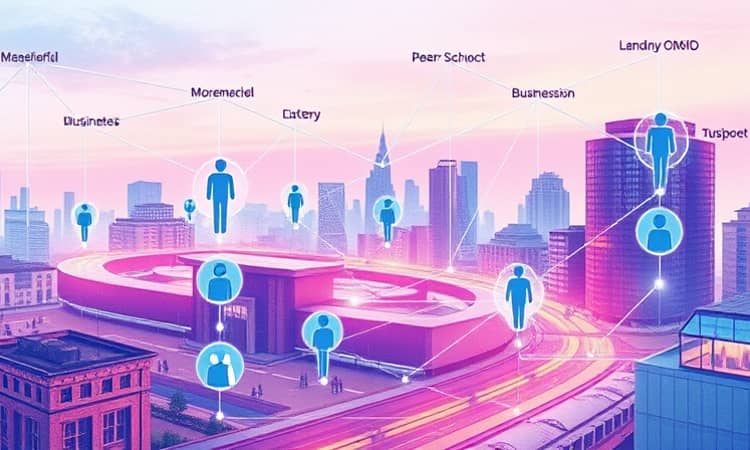
Imagine a world where lending is no longer confined to traditional banks, but instead flows directly between people, driven by technology and trust.
This is the reality of peer-to-peer lending, a rapidly expanding global financial revolution that is reshaping how we access and provide capital.
From personal loans to business funding, P2P platforms are unlocking new opportunities for growth and investment.
The global P2P lending market is projected to grow at astonishing rates, with estimates varying but all pointing towards massive expansion.
This article will guide you through the current landscape, key drivers, and future trends to help you navigate this exciting space.
Whether you are a borrower seeking alternatives or an investor looking to diversify, understanding this wave is crucial for financial empowerment.
Understanding the P2P Lending Landscape
Market projections highlight the dynamic nature of P2P lending, with significant growth expected in the coming years.
Sources provide varied estimates due to different methodologies and scopes, but all agree on strong upward trends.
For instance, some reports forecast the market to reach over USD 1,380 billion by 2034, driven by technological advancements.
This growth is not uniform, with regions like North America leading in market share, while Asia Pacific shows the fastest growth.
To grasp the diversity of projections, consider the following key estimates from various sources.
- Precedence Research values the market at USD 176.50 billion in 2025, with a CAGR of 25.73% to 2034.
- SkyQuest projects a higher base of USD 319.36 billion in 2025, growing to USD 1,950-2,526 billion by 2032-2033.
- Fortune Business Insights offers a conservative view at USD 7.29 billion in 2025, reaching USD 33.81 billion by 2034.
- Coherent Market Intelligence estimates USD 176.52 billion in 2025, with a 21.7% CAGR to 2032.
- An optimistic outlier suggests the market could exceed $4 trillion by 2032, reflecting robust loan facilitation.
These discrepancies often arise from differing definitions, such as platform revenue versus total loans facilitated.
Despite variations, the consensus is clear: P2P lending is here to stay and grow exponentially.
Market Segments: Where Growth is Happening
P2P lending spans various loan types, with consumer lending currently dominating the market.
However, business lending is the fastest-growing segment, driven by SMEs seeking capital for expansion.
Consumer loans, including personal and debt consolidation, make up a significant portion of the volume.
Niche segments like green loans and medical loans are also seeing increased demand, with growth rates over 15% annually.
To better understand the revenue distribution, here is a breakdown by end-user from recent years.
- Consumer credit loans grew from USD 31.0 billion in 2022 to USD 49.2 billion in 2024.
- Small business loans increased from USD 23.5 billion to USD 37.4 billion over the same period.
- Student loans rose from USD 19.1 billion to USD 30.1 billion.
- Real estate loans saw a jump from USD 14.4 billion to USD 29.4 billion.
Unsecured loans lead the market due to their convenience and lower barriers, enabled by digital tools.
This segmentation shows how P2P lending caters to diverse needs, from everyday expenses to major investments.
Business Models and Technological Drivers
The evolution of P2P lending is fueled by innovative business models and cutting-edge technology.
Marketplace lending, which leverages AI for risk assessment, is expected to see the highest growth in the coming decade.
Traditional P2P models still hold a significant share, but automation and institutional partnerships are transforming the landscape.
Key drivers include the demand for faster, more accessible alternatives to banks, with minimal paperwork and competitive rates.
Technology integration, such as AI and data analytics, enhances creditworthiness evaluation and reduces risks.
- Fintech adoption is accelerating, offering instant approvals and lower interest rates.
- Web 3.0 and cryptocurrency-backed loans are emerging as growth areas with double-digit increases.
- Investor appeal is rising due to diversification opportunities and better portfolio management.
- Democratization of finance serves underserved markets, including SMEs and emerging economies.
These factors combine to create a more inclusive and efficient lending ecosystem.
Key Challenges to Overcome
Despite its potential, P2P lending faces several challenges that need addressing for sustainable growth.
Regulatory uncertainty varies across regions, creating hurdles for cross-border expansion and standardization.
Rising default rates require sophisticated risk management strategies to protect both borrowers and investors.
Economic conditions can affect confidence, making the market vulnerable to downturns and volatility.
To mitigate these risks, platforms are investing in advanced analytics and regulatory compliance tools.
- Developing robust credit models to predict and manage defaults effectively.
- Engaging with policymakers to advocate for clear and supportive regulations.
- Building resilient systems that can withstand economic fluctuations and maintain trust.
Overcoming these challenges is essential for the long-term success of P2P lending.
Beyond P2P: The Future of Lending
The next wave of lending extends beyond traditional P2P models into innovative areas that redefine finance.
AI and Web 3.0 are paving the way for enhanced risk assessment and decentralized finance (DeFi) solutions.
Real estate crowdfunding and impact investing are gaining traction, offering social returns alongside financial gains.
Alternative lending as a whole is projected to grow at a CAGR of 26.4% to 2030, with P2P as a key subset.
Emerging niches like crypto-backed loans and eco-loans are experiencing high growth, driven by increasing demand.
Global expansion, particularly in Asia Pacific, is accelerating, supported by regulatory harmonization efforts.
Future projections suggest the market could redefine finance by providing lower rates and rapid funding solutions.
To illustrate the diverse projections, here is a comparison table of key sources.
This table highlights the optimistic outlook for the industry, encouraging users to explore opportunities.
For practical help, consider these steps to engage with P2P lending effectively.
- Research platforms that align with your financial goals, whether borrowing or investing.
- Diversify your investments across different loan types to manage risk better.
- Stay informed about regulatory changes in your region to ensure compliance and safety.
- Utilize technology tools like AI-based risk assessments to make informed decisions.
- Monitor market trends, such as growth in green loans or SME lending, for niche opportunities.
Embracing this next wave can lead to financial empowerment and contribute to a more inclusive economy.
The journey of P2P lending is just beginning, with innovations poised to transform how we think about money and connection.