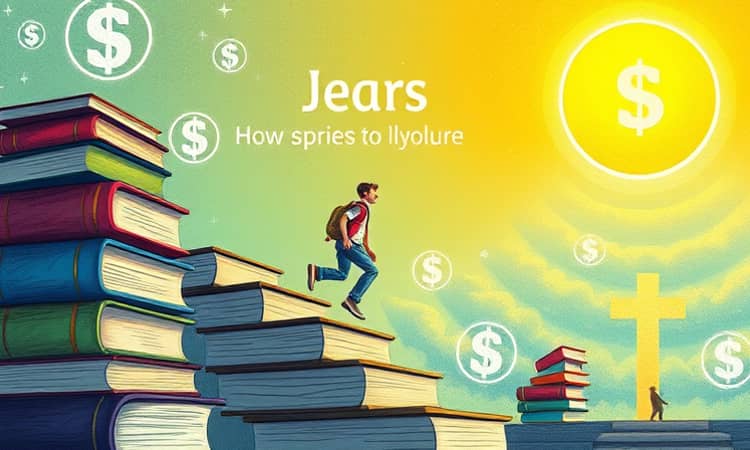
In today’s rapidly shifting economic landscape, pursuing higher education can feel like a leap into the unknown. Yet beneath the surface of tuition invoices and student loans lies a reservoir of potential that far exceeds what meets the eye. When evaluated over a lifetime, the financial dividends of a college degree become unmistakably clear, transforming intangible aspirations into tangible prosperity.
Uncovering the True Value of a Degree
Early career earnings for bachelor’s degree holders often start at a deficit when weighed against initial costs. However, as time unfolds, the trajectory of growth becomes remarkable. By year 20 in the workforce, a bachelor’s graduate typically has accumulated over $597,000 in degree-based earnings, with a 134.09% return on investment.
By year 30, this return surges to 348.69%, and by year 40 it explodes to a staggering 681.95%. Such figures underscore the average lifetime ROI for a bachelor’s degree and reveal the compounding earnings over decades that create lasting wealth.
Behind these numbers lies a simple truth: education is an engine of opportunity. Even when short-term returns appear modest or slightly negative, the long-range view illuminates the deep wells of value that continue to grow and reshape personal and societal fortunes.
Majors That Yield the Highest Returns
Not all fields of study produce identical financial outcomes. STEM and business disciplines frequently dominate lifetime return charts thanks to robust demand and above-average starting salaries. For instance, finance majors see a lifetime ROI exceeding 1,800%, while computer science and engineering professionals often begin with salaries above $85,000, recouping educational investments swiftly.
Conversely, certain humanities and education majors may face longer payback periods or modest lifetime returns. Yet even these fields can deliver earnings that outpace a high school diploma over a full career span.
- Business (Finance): 1,842.38% lifetime ROI
- Computer & Information Sciences: 1,752.59% ROI; $85,961 starting salary
- Computer Engineering: 1,743.81% lifetime ROI
- Economics: 1,707.80% ROI
- Management Information Systems/Statistics: robust growth and high earnings potential
Navigating the Financial Landscape: Public vs. Private Institutions
Institutional choice can dramatically shape total investment and subsequent returns. Today, public colleges enjoy a built-in advantage: state funding helps lower sticker prices, resulting in lower tuition costs from state funding that directly boost graduate ROI.
By 2025-2035, data predicts that public institutions will surpass private median ROI by roughly 24%. This advantage is especially pronounced in states like Utah, where public tuition ranks among the nation’s most affordable. However, top-tier private schools with generous financial aid still deliver competitive outcomes, often propelled by strong post-graduation earnings.
Harnessing Your Investment: Practical Steps
To maximize the hidden financial gains of higher education, students can adopt strategic practices that clarify costs, streamline debt, and align academic choices with market realities.
- Use net price calculators to estimate true out-of-pocket expenses
- Consider state-funded public colleges for public colleges project median ROI advantages
- Balance passion with market demand to protect future earnings
- Apply for scholarships and work-study opportunities early
- Create a multi-decade financial projection to track progress
Beyond Dollars: The Intangible Rewards
While monetary returns are persuasive, the non-financial benefits of college enrich lives in enduring ways. Graduates often enjoy higher job security, broader professional networks, and personal growth that transcends paychecks. Critical thinking, leadership skills, and lifelong learning habits foster resilience in an ever-changing world.
Every lecture attended, research project completed, and campus community joined becomes part of a larger narrative—one that elevates self-efficacy and cultivates the confidence to navigate uncharted paths with vision and purpose.
Embracing the Journey
The decision to pursue higher education is not merely a financial calculation; it is a testament to one’s belief in potential and growth. Amid rising tuition, evolving job markets, and the weight of student debt, it can be easy to question the value of a degree. Yet, when viewed through a long-term lens, the picture is clear: education remains one of the most powerful vehicles for social mobility and financial empowerment.
By acknowledging both the challenges and rewards, students, families, and policymakers can shape pathways that foster equity, sustain innovation, and honor the profound transformation that learning ignites. In doing so, we unlock not only personal prosperity but the collective advancement of communities and generations to come.
Ultimately, the invisible investment of education—measured not only in dollars but in opportunity, influence, and purpose—reveals itself over a lifetime. With thoughtful planning, informed choices, and unwavering resolve, every learner can harness the extraordinary power of knowledge to illuminate a brighter future.