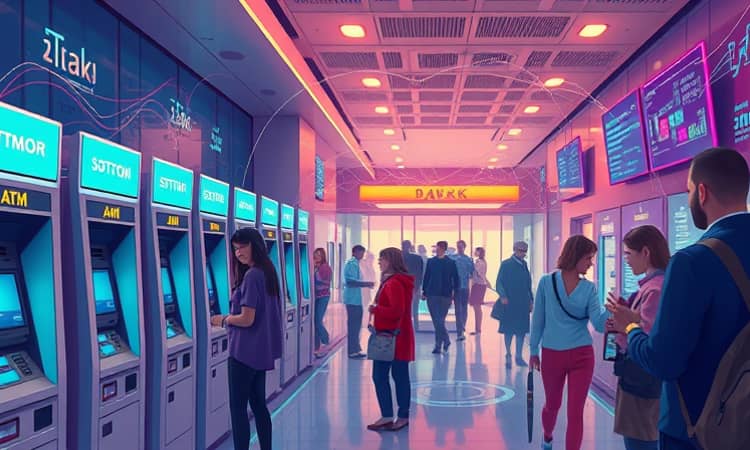
The Internet of Things (IoT) is transforming banking by linking devices, sensors, and infrastructure into a seamless network. Financial institutions leverage this connectivity to drive automation, enhance security, and elevate the customer journey. This article explores market dynamics, real-world applications, technological enablers, and the future outlook for IoT in banking.
Introduction: A New Era of Connectivity
IoT represents a paradigm shift in how banks operate and interact with customers. By embedding sensors and smart devices across the financial ecosystem, banks gain real-time operational insights and deliver highly tailored services.
From smart branches that anticipate customer needs to automated fraud detection that responds instantly, IoT blends the physical and digital realms. Stakeholders must understand its scope, benefits, and challenges to harness its full potential.
Market Size and Growth Trajectory
The IoT banking market is experiencing explosive growth fueled by AI, embedded payments, and 5G networks. Key figures include:
- Global market size in 2025: USD 39.16 billion
- Forecast for 2030: USD 180.61 billion at a CAGR up to 32.8%
- Retail banking share (2024): 42.7%
- Security applications revenue: USD 14.17 billion (36.2% share)
Such growth is driven by a shift toward sensor-rich operations and the proliferation of connected endpoints. Insurance applications are poised for the fastest rise, jumping from USD 6.2 billion in 2025 to nearly USD 29.8 billion by 2030.
Transforming Customer Experience
IoT empowers banks to provide personalized banking services at scale. Wearables and mobile apps feed continuous data streams that inform real-time offers and spending alerts.
- Wearable Payments: Contactless transactions via smartwatches, fitness bands, and RFID-enabled devices.
- AI-Driven Advice: Personalized recommendations based on transaction patterns and sensor data.
By connecting everyday devices, banks can send timely notifications—such as low-balance warnings or tailored loan offers—when customers are most receptive.
Fortifying Security and Preventing Fraud
As IoT expands the attack surface, banks are deploying sophisticated countermeasures. Biometric authentication—including facial recognition and behavioral analytics—adds layers of protection.
Smart surveillance systems monitor branches and ATMs around the clock. Edge-based cameras and motion sensors trigger predictive maintenance alerts to prevent physical tampering and equipment failures.
On the transaction side, IoT sensors detect unusual patterns—such as rapid location changes or atypical spending—to block fraud in real time. This continuous monitoring reduces losses and builds trust.
Boosting Operational Efficiency through Automation
IoT-driven automation optimizes resource use across branches and back offices. Smart ATMs report temperature, shock events, and cash levels remotely, enabling predictive maintenance and minimizing downtime.
Within branches, sensors track foot traffic and queue lengths. Banks use this data to reallocate staff dynamically, improve service times, and lower operational costs by up to 40% in some regions.
Data analytics platforms ingest device metrics, unlocking insights into usage patterns and guiding strategic decisions on branch layouts and service offerings.
Innovating Financial Products and Services
Connected devices are giving rise to novel financial solutions. Usage-based insurance, for instance, relies on telematics from vehicles and homes to tailor premium rates according to actual risk profiles.
Smart contracts combined with IoT sensors automate payments in trade finance. Devices verify shipment conditions and trigger invoicing once contractual criteria are met, reducing settlement times.
Meanwhile, augmented reality (AR) applications are emerging. Customers wearing AR glasses can visualize account balances, interact with virtual bank advisors, and navigate self-service options within a mixed-reality branch environment.
Challenges and Risks in IoT Adoption
Despite its promise, IoT in banking faces significant hurdles. Data privacy regulations vary globally, requiring banks to invest heavily in compliance tools and protocols.
Security vulnerabilities are a constant concern. Many IoT endpoints lack built-in encryption or robust firmware protection, making them targets for cyberattacks.
Standards remain fragmented across devices and platforms. Banks advocating for unified frameworks can accelerate interoperability and reduce integration complexity.
Technological Ecosystem and Future Trends
IoT’s success hinges on several core technologies:
- Edge Computing: Processing data near the source to reduce latency.
- 5G Networks: Enabling high-bandwidth, low-latency connectivity.
- Blockchain: Securing transaction transparency and auditability.
Machine learning models refine their predictions as device-generated data volumes grow, supporting advanced use cases such as dynamic credit scoring and intelligent cash forecasting.
Regional Insights and Market Segments
North America leads the IoT banking market with 38.5% revenue share, thanks to early fintech collaborations and mature cybersecurity practices. Europe follows closely, with strong regulatory support for data privacy.
Emerging markets are innovating in remote banking and micro-lending. IoT sensors in rural areas enable asset-backed loans and crop insurance, fostering financial inclusion where traditional infrastructure is sparse.
Future Outlook and Investment Landscape
Banks plan to boost technology budgets by around 9% annually, prioritizing IoT, AI, and cybersecurity initiatives. Patent filings are shifting from hardware-centric inventions to API ecosystems and compliance toolkits.
Investment in super apps—platforms that blend IoT, mobile banking, and third-party services—is on the rise. These all-in-one solutions promise seamless customer journeys and new revenue streams.
As IoT matures, collaboration among banks, regulators, and technology providers will be crucial. Establishing common standards, sharing best practices, and fostering innovation hubs can ensure a secure, scalable future.
Ultimately, the Internet of Things holds the key to a more connected, efficient, and customer-centric banking landscape. By embracing its full potential, financial institutions can unlock unprecedented value and reshape the way we interact with money.