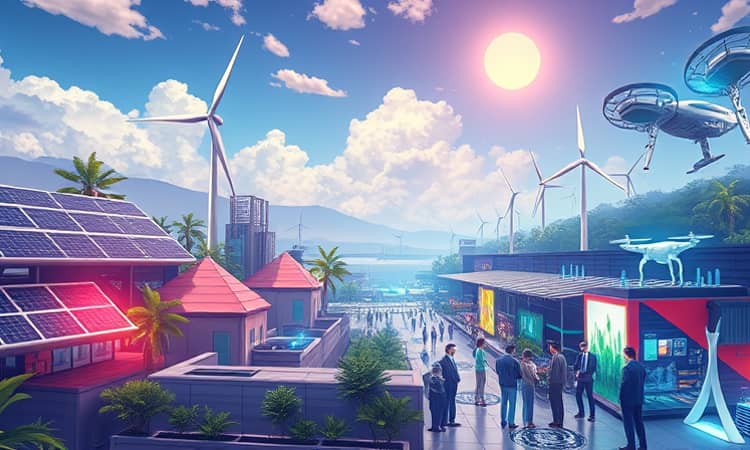
In recent years, the world has witnessed an unprecedented surge in sustainable finance as investors, institutions, and governments rally to address climate change and social inequity. From bustling trading floors to remote solar farms, a new narrative is emerging—one where profit and purpose converge to reshape our global economy.
At the heart of this transformation is the integration of ESG considerations into every facet of investment strategy. Driven by regulatory mandates and stakeholder demands, sustainable finance is no longer a niche segment but a cornerstone of modern capital markets.
Market Momentum and Projections
The sustainable finance market has expanded from USD 5.87 trillion in 2024 to an estimated USD 7.95 trillion in 2025, fueled by a shift to a low-carbon economy and robust policy support. Analysts project a compound annual growth rate (CAGR) of nearly 20% through 2034, with the market surging to over USD 38 trillion.
Similarly, the green finance segment—focused specifically on environmental impact—grew from USD 4.18 trillion in 2023 to a projected USD 28.71 trillion by 2033 at a 21.25% CAGR. ESG finance, encompassing broader governance and social factors, is expected to climb from USD 8.71 trillion in 2025 to USD 14.98 trillion by 2030.
These numbers reflect not only capital flows but also a fundamental reorientation of investment philosophy—where long-term sustainable economic activities become the norm, not the exception.
Core Instruments Driving Change
Innovation in financial instruments has been pivotal to sustainable finance’s rise. Green bonds, sustainability-linked loans, social bonds, and transition bonds offer tailored vehicles for funding impactful projects.
- Green bonds: Representing over 65% of ESG debt, these issuances finance renewable energy, clean transport, and water infrastructure.
- Sustainability-linked loans and bonds: Tied to net-zero targets, they reward borrowers for meeting specific ESG benchmarks.
- Social bonds: Focused on community development, healthcare, and education, though growth is constrained by benchmarking challenges.
- Transition bonds: Designed to fund decarbonization pathways, including pilot coal phase-out and just transition initiatives.
- Innovative solutions: Nature-based credits, parametric climate insurance, blended finance for emerging markets, and tokenized green bond platforms.
These instruments collectively channel hundreds of billions of dollars annually into projects that mitigate climate risk, foster social equity, and ensure transparent governance structures.
The Green Frontier in Technology
Technology is the backbone of sustainable finance—enabling data-driven decisions, rigorous verification, and scalable innovation. From blockchain for transparency to satellite-enabled monitoring, the toolkit is vast and rapidly evolving.
- ESG Data Platforms: Bloomberg ESG, Refinitiv, MSCI and others aggregate corporate disclosures for robust analysis.
- Impact Measurement Tools: IRIS+ and the Impact Management Project standardize metrics across asset classes.
- Climate Risk Solutions: Moody’s Climate Solutions and Climate X models physical and transition risks.
- Blockchain and DLT: Securely track green bond proceeds, verify carbon credits, and enable tokenization and blockchain ESG instruments.
- Advanced Sensors: IoT devices and satellites provide real-time environmental impact monitoring for supply chains and assets.
Emerging technologies such as AI/ML are unlocking deeper insights. Cutting-edge AI and ML capabilities analyze unstructured data, forecast climate scenarios, and optimize capital allocations towards impactful projects.
Key Trends Shaping the Future
Several megatrends will define sustainable finance in 2025 and beyond. First, transition finance will scale as corporations commit more aggressively to net-zero pathways. Engineered carbon dioxide removal and bio-based solutions will attract new pools of capital.
Second, regulatory frameworks are tightening worldwide. The EU’s green taxonomy is evolving to eliminate greenwashing, Canada’s Bill C-59 refines fund labeling, and China’s taxonomy will launch in 2025. These measures increase accountability and drive capital towards truly sustainable assets.
Third, regional dynamics vary. The Asia-Pacific region is the fastest-growing market at a 13.5% CAGR, while North America leads in absolute issuance. Middle East and Africa are strengthening green finance through renewable energy strategies and frameworks like EMSTEEL’s Green Finance Framework introduced in May 2025.
Finally, systemic risks such as climate extremes and supply chain vulnerabilities underscore the need for resilient portfolios. Investors who proactively integrate climate resilience can capitalize on lower long-term risks and superior returns.
Challenges and Opportunities Ahead
Despite robust growth, sustainable finance faces hurdles. Data quality and standardization remain inconsistent, and stringent EU criteria raise compliance costs. Social bonds struggle without clear benchmarks, and greenwashing crackdowns create legal risks.
Yet the opportunities are profound. Early adopters enjoy first-mover advantages, securing high-quality assets and attracting sustainability-conscious capital. Blended finance structures open doors in emerging markets, and private-public partnerships mobilize additional resources.
By adopting best practices, investors can harness a projected USD 920 billion in sustainable finance growth by 2025, while contributing to a more equitable and resilient global economy.
Embracing the Green Frontier
The journey toward a sustainable future demands collaboration, innovation, and unwavering commitment. By leveraging advanced technologies and innovative financial instruments, stakeholders can drive measurable impact at scale.
Whether you are an asset manager, policymaker, or individual investor, the green frontier offers a powerful opportunity: to align your financial goals with the well-being of our planet. As we navigate this transformative landscape, let us seize the chance to build a thriving economy that supports both people and the planet for generations to come.