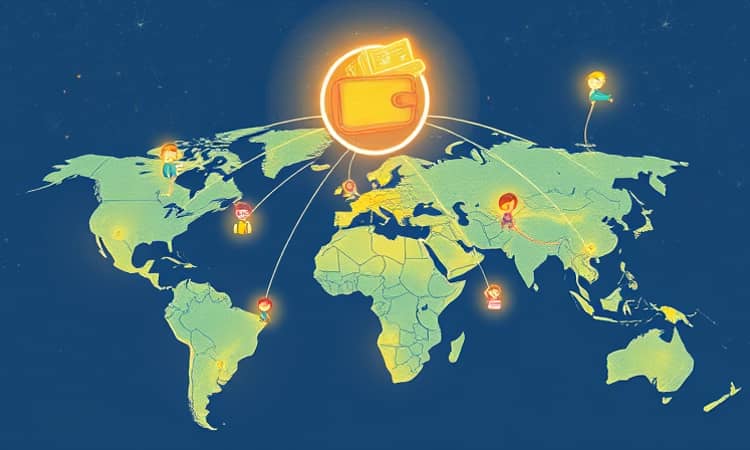
In 2026, the mechanism of sending money across borders is undergoing a profound metamorphosis. What once felt like a cumbersome journey—laden with hidden fees, unpredictable delays, and opaque processes—has evolved into a symbol of the digital age: swift, visible, and user-centric. With more than 70+ countries live with instant schemes and the G20’s ambitious benchmarks guiding progress, the global wallet revolution has truly begun.
Every stakeholder—individuals sending remittances, small businesses importing goods, multinational corporations managing treasury—now expects an experience as seamless as email. The fusion of real-time processing and transparent fees is reshaping trust, fostering inclusion, and unlocking opportunity for millions worldwide. The promise is clear: cross-border payments that match the agility of our interconnected world.
Behind the scenes, regulators and standards bodies are racing to keep pace with innovation. The promise of low-barrier global financial platforms hinges on seamless coordination across jurisdictions. Each regulatory milestone, from ISO 20022 mandates to stablecoin consultations, represents not just compliance, but a catalyst for inclusive growth and financial empowerment.
Evolution of Cross-Border Payments
For decades, cross-border transactions depended on legacy correspondent banking systems. Funds traversed multiple intermediaries, accumulating fees and delays that ranged from days to weeks. However, industry players have rallied around transformative standards like ISO 20022, which enforces structured international payment formats and enriches data fields for compliance, fraud detection, and reconciliation.
Simultaneously, distributed ledger technologies are redefining settlement. Solutions such as Kinexys and SWIFT’s digital ledger facilitate around-the-clock global payment settlement, eliminating batch windows and enabling funds to move continuously. This shift not only accelerates transaction speed, but also bolsters security and transparency.
- Mandatory ISO 20022 adoption by November 2026
- EU Instant Payments Regulation: 10-second euro transfers
- BIS Project Nexus: linking regional fast rails globally
- Tokenized assets and sterling stablecoin consultations
The Rise of the Wallet Era
Digital wallets have transcended their roots as simple payment instruments. In emerging markets, they serve as central hubs for commerce and finance, weaving together payments, savings, credit, and commerce into one intuitive interface. By integrating real-time rails, QR code networks, and stablecoin corridors, wallets have become the primary on-ramp to the financial ecosystem.
Leading wallet providers now offer features like instant currency conversion, in-app FX rate locks, and multilayered identity verification. These enhancements guarantee unparalleled access to financial inclusion for unbanked and underbanked populations, empowering users to transact, save, and borrow with confidence.
Regulatory Momentum and Global Standards
Regulators and global forums are aligning their efforts to ensure cross-border payments meet four core objectives: lower costs, faster speeds, universal access, and full transparency. The Financial Stability Board’s retail payment targets encapsulate this vision:
- Global average cost below 1%
- 75% of transactions credited within one hour
- Universal access to at least one electronic option
- Over 90% traceability with upfront fee disclosure
In Europe, the Instant Payments Regulation enforces ten-second processing for euro transfers, while the Verification of Payee standard curtails fraud by confirming recipient identities in real time. These measures, once envisioned as pilots, are now fully mainstream regulatory requirements shaping the future of global money movement.
Technologies Driving the Transformation
Interoperability has shifted from aspiration to reality. Real-time account-to-account corridors now connect domestic instant schemes across Asia, Europe, and beyond, while smart routing engines and payment orchestration platforms dynamically select the most efficient path for each transaction.
Banks and corporates leverage tools like Bank of America’s Guaranteed FX Rates, which provide predictability against currency volatility by locking exchange rates for up to 180 days. Complementary solutions—Multicurrency Netting and Auto Convert—aggregate payables and receivables, reduce settlement cycles, and automate pre-send currency conversion to minimize costs.
- Blockchain-enabled corridor links for nonstop settlement
- Local acquiring to improve approval rates and settle domestically
- Advanced payment orchestration for seamless integration
Measuring Progress: Challenges and Targets
Despite significant advancements, hurdles persist. Legacy infrastructures still create bottlenecks, currency volatility remains a risk, and true end-to-end transparency continues to escape many corridors. The following table juxtaposes current challenges against global targets:
Industry experts caution that failing to meet these benchmarks risks undermining user trust and stalling adoption. Accelerated collaboration between banks, regulators, and fintech innovators remains essential to close these gaps.
Envisioning the Future: A Truly Global Wallet Network
Imagine a reality where sending money abroad is no more complex than sharing a social media post. By 2027, users will fluidly move between fiat currencies and stablecoins, access instant credit lines in multiple jurisdictions, and transact under unified compliance frameworks. This is the promise of a digital wallet ecosystems and global standards seamlessly intertwined.
Peter De Caluwe, CEO of Thunes, captures the spirit: “Leadership belongs to those bridging banks, wallets, digital assets with compliance.” Mathieu Limousi, Thunes’ CMO, adds, “Real growth is connecting ecosystems seamlessly for users, robustly for regulators.” Their words remind us that collaboration, not competition, will define success.
As we stand at this pivotal moment, the call to action is clear: embrace interoperability, invest in user-centric design, and champion transparency at every step. Whether you’re a fintech founder, a treasury professional, or a small business owner, the tools and standards exist today to bring the global wallet vision to life.
Ultimately, the global wallet is more than a technological evolution—it is a beacon of economic inclusion and a testament to human ingenuity. By uniting behind shared standards and innovative platforms, we can ensure that value flows freely, securely, and affordably across every border, uplifting communities and fueling the next wave of global prosperity.