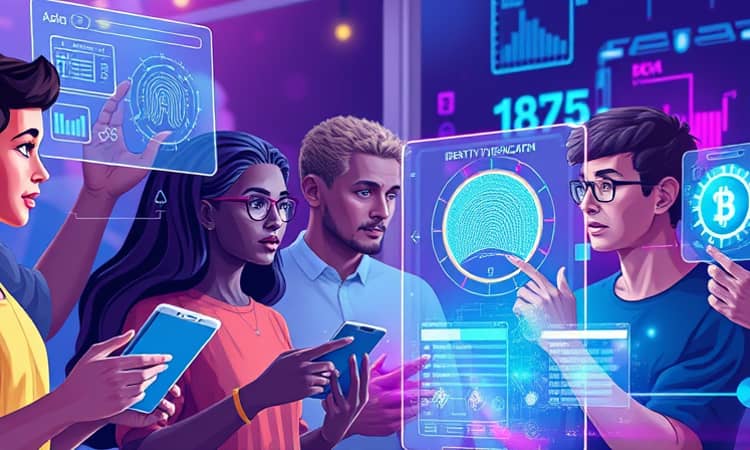
In an era defined by rapid technological evolution, identity verification stands at the crossroads of security, privacy, and user experience. Organizations and individuals alike face increasing challenges from sophisticated fraud, deepfakes, and synthetic identities. By 2026, a new paradigm will emerge—one that is both highly secure and remarkably frictionless.
This article explores how secure and seamless systems powered by advanced AI, biometrics, decentralization, and privacy-focused design will redefine the way we prove who we are.
AI-Powered Governance and Fraud Detection
Artificial intelligence has become the bedrock of identity governance and fraud defense. As malicious actors deploy deepfake factories and automated identity scams, organizations turn to AI to stay one step ahead.
Modern AI engines analyze thousands of subtle cues in real time, from micro-environmental lighting to behavioral anomalies, enabling:
- Automated document and biometric checks that validate authenticity in seconds
- Deepfake detection through reinforced neural networks and provenance verification
- Behavioral analysis that monitors typing patterns, device usage, and location signals
By integrating machine learning with hardware watermarking and device metadata, these platforms can detect deepfake and synthetic identity threats at scale, shortening onboarding times and reducing manual review burdens.
Advancing Biometrics with Liveness Detection
Biometric verification has evolved beyond static photo scans. Today’s systems incorporate dynamic liveness detection techniques—multi-frame facial analysis, muscle movement tracking, and vocal pattern recognition—to ensure a live person is present.
Combined with continuous behavioral monitoring, this approach thwarts presentation attacks and emulator-based spoofing. Organizations now deploy hardware attestation technologies and C2PA standards to confirm device integrity before any biometric exchange.
Below is a snapshot of industry trends driving biometric innovation by 2026:
Decentralized and User-Controlled Identities
The rise of self-sovereign identity empowers users with user-controlled data ownership and privacy. Digital wallets now store verifiable credentials—government IDs, educational certificates, employment records—on blockchain or distributed ledgers.
These wallets use Decentralized Identifiers (DIDs) and verifiable credential frameworks to reduce centralized data storage risks and give individuals full control over which attributes they share. Age assurance, for example, can be delivered without exposing full birth dates or addresses, satisfying both privacy expectations and regulatory mandates.
Adaptive, Risk-Based Verification
Static, one-size-fits-all checks are being replaced by adaptive, risk-based flows that tailor verification steps based on context. Low-risk interactions may require only an email confirmation, while high-risk transactions trigger multi-layered checks, including device attestation, biometric validation, and behavioral re-authentication.
This continuous identity assurance model means threats are caught not just at onboarding but throughout the user lifecycle, dramatically lowering account takeover and social engineering success rates.
Designing for Privacy and Human-Centric Experiences
At the heart of next-gen identity solutions lies a commitment to privacy and human-centric design. Companies embrace principles like data minimization, encryption-at-rest, and zero-knowledge proofs to ensure user trust.
Interfaces are streamlined to reduce friction: clear explanations guide users through each step, accessibility considerations ensure inclusive design, and fallback options accommodate diverse devices and data conditions.
Navigating Regulatory and Market Shifts
Governments and standards bodies are tightening the noose around identity verification. By 2026, NIST’s digital identity guidelines, REAL ID enforcement for air travel, and the EU’s EUDI Wallet framework will set global benchmarks.
Organizations must also reckon with biometric privacy laws like Illinois’s BIPA, age-verification mandates across digital platforms, and emerging quantum-resistant ePassport standards from ICAO and ENISA. Compliance requires continuous monitoring of legislative changes and proactive alignment with best practices.
Preparing for Tomorrow: Strategies for Organizations
No single technology can defeat the evolving threat landscape. Instead, a multi-layered strategy is essential:
- Combine biometrics, document checks, device intelligence, and behavioral analytics
- Invest in quantum-resistant cryptography and test PQC algorithms now
- Adopt decentralized identity frameworks to minimize data centralization risk
- Design user journeys that are clear, inclusive, and adaptable to risk levels
By orchestrating these components within a unified identity platform, organizations can deliver continuous identity assurance as baseline service, fostering both security and user satisfaction.
Conclusion
The future of identity verification hinges on striking the right balance between robust security and seamless user experiences. Through AI-driven fraud defense, advanced biometrics, decentralized control, and adaptive risk management, we are building a world where identities are both protected and empowered.
As technology and regulation continue to evolve, those who embrace a human-centric, privacy-first approach will lead the charge toward a more trustworthy digital ecosystem—one where individuals confidently engage, transact, and connect across borders.