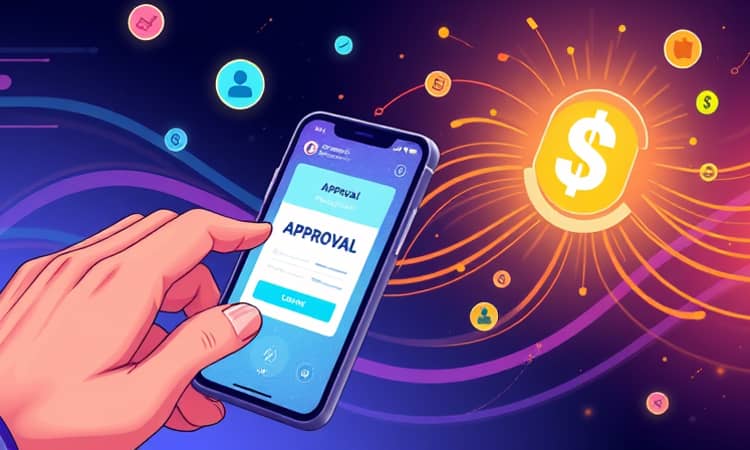
In today’s fast-paced world, consumers expect rapid, efficient financial services. Traditional lending models, burdened by manual verification and paperwork, often leave borrowers waiting days or weeks for approval. Enter the era of frictionless loans, where instant credit decision making and minimal barriers redefine how credit reaches people and businesses.
Evolution from Frictionless Payments
Frictionless payments revolutionized commerce through tap-to-pay, one-click checkouts, and digital wallets. By minimizing clicks and removing manual entry, merchants saw reduced cart abandonment and higher conversion rates. Lending innovators recognized similar principles could transform credit approval and funding, extending automation to every stage of the loan lifecycle.
Just as contactless payments evolved from magnetic stripes to NFC technology, lending has progressed from branch visits to fully digital experiences. This shift satisfies modern consumers’ desire for instantaneous financial interactions and empowers fintechs to compete with established banks.
How Frictionless Loans Work
At its core, a frictionless loan leverages technology to eliminate unnecessary steps. Borrowers submit minimal information—often just a consented bank login or a few data points—while AI and machine learning handle the rest. The process typically follows these steps:
- Data aggregation via Open Banking or alternative sources
- Real-time income and cash flow analysis without paystubs
- Automated fraud detection and risk scoring
- Instant approval and one-click disbursement
By integrating directly with customer relationship management, accounting, and inventory systems, lenders can fund loans without human intervention. This no-human-touch completion not only accelerates speed but also reduces operating costs significantly.
Technologies Powering Frictionless Lending
A convergence of advanced tools underpins the rise of frictionless loans. Each technology plays a vital role in creating a seamless experience while maintaining robust security and compliance:
- Artificial Intelligence and Machine Learning for income verification and predictive risk modeling
- Open Banking and alternative data sources for real-time cash flow analysis
- Tokenization, encryption, and biometric authentication to protect user data
- Automation platforms orchestrating end-to-end loan workflows
Together, these components enable lenders to approve low-risk applicants almost instantly, while high-risk cases receive targeted manual review, striking a balance between speed and security.
Benefits for Lenders and Borrowers
Both sides of the transaction stand to gain from frictionless lending:
- Increased conversion rates through simplified application flows
- Enhanced operational efficiency and lower administrative overhead
- Better fraud mitigation via continuous monitoring and AI-driven detection
- Expanded access to credit for underbanked or thin-file consumers
Lenders often report up to a 50% lift in originations when adopting frictionless processes. Meanwhile, borrowers enjoy speedy approvals and disbursements without stepping foot in a branch or scanning endless documents.
Comparing Frictionless Payments and Loans
While frictionless payments focus on transaction speed at checkout, frictionless loans extend automation through origination, underwriting, and funding. The table below highlights their distinctions:
Real-World Applications
Several platforms and financial institutions showcase the power of frictionless lending:
- IncomePass by Point Predictive: Bypasses paystub collection for low-risk applicants, boosting conversions by 50%.
- BNPL providers like Zip and Klarna that integrate instant credit into online and in-store purchases.
- Fintech lenders utilizing Open Banking to underwrite loans based on real-time account activity rather than traditional credit scores.
- Cash advance apps offering small-dollar loans instantly repaid via digital wallets or direct account deductions.
Even law firms have adopted pay-later models, giving clients upfront financing and structured installment plans without lengthy approval waits.
Challenges and Risk Management
Despite its advantages, frictionless lending faces hurdles that require careful mitigation:
- Potential fraud if AI models misclassify high-risk applicants
- Regulatory scrutiny around consumer protection and data privacy
- Risks of over-lending to vulnerable populations without credit history
Successful lenders implement multi-layered defenses, combining real-time fraud detection, manual spot checks on flagged applications, and ongoing portfolio monitoring to maintain a secure, compliant operation.
Future Outlook and Trends
The market momentum behind frictionless loans shows no sign of slowing. As AI models become more sophisticated and Open Banking expands globally, lending platforms will harness even richer data and finer risk differentiation. We can expect:
Hyper-personalized credit offers delivered via mobile apps, deeper integration with e-commerce platforms, and on-demand financing layered into everyday transactions. Embedded finance will blur the lines between merchant, bank, and lender, making credit an invisible yet powerful enabler of commerce.
Companies that embrace a fully digital, automated lending journey will gain a competitive edge, capturing market share while delighting customers with unparalleled convenience and transparency.
Conclusion
Frictionless loans represent the next evolution of consumer and business credit. By leveraging AI, automation, and alternative data, financial institutions can deliver instant credit access without barriers, driving growth, efficiency, and customer loyalty. As technology advances and regulations adapt, the frictionless lending model will become the new standard, setting the stage for a truly digital financial ecosystem where credit is accessible anytime, anywhere.