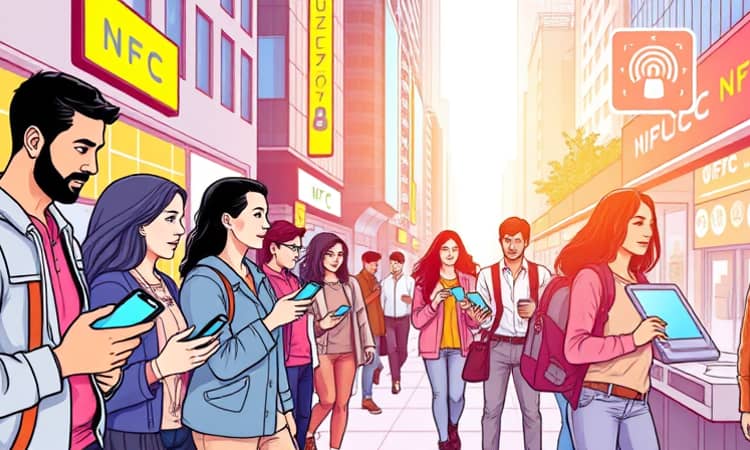
Imagine a world where paying for your coffee is as effortless as breathing, where transactions happen in the blink of an eye without fumbling for cash or cards.
This is the promise of frictionless payments, a revolution reshaping how we interact with money every day.
Driven by consumer demand for speed and convenience, this shift is accelerating globally, with technologies making payments intuitive and secure.
In today's fast-paced society, long lines and cumbersome checkouts are becoming relics of the past.
Frictionless payments eliminate barriers, allowing us to focus on experiences rather than transactions.
The post-COVID era has turbocharged this trend, with cashless adoption soaring and merchants rapidly adapting.
Now, let's explore what this seamless future entails and how it benefits us all.
What Are Frictionless Payments?
Frictionless payments refer to intuitive, barrier-free transactions that run smoothly in the background.
They are designed to be seamless and integrated into daily routines, from dining out to shopping online.
Historically, this concept began with simple contactless cards and has evolved into a multifaceted ecosystem.
Key drivers include consumer impatience, with 75% of U.S. consumers abandoning purchases due to lines.
This evolution is not just technological; it's a cultural shift towards efficiency and personalization.
The Rise of Frictionless Payments
The acceleration of frictionless payments has been dramatic in recent years.
Post-pandemic, adoption rates have skyrocketed, with one in five consumers using contactless in 2021.
Merchant deployment increased by 40% from 2019 to 58%, showcasing a rapid embrace of new methods.
Convenience now prioritizes speed, and 96.5% of merchants offer contactless or tap-to-pay options.
This trend is fueled by a desire for hassle-free experiences that save time and reduce stress.
Key Technologies Making It Possible
Several innovations are powering the frictionless payment revolution, each adding a layer of ease and security.
- Contactless Cards and NFC: Tap or wave a card or phone over a reader; secured by EMV technology, with 1 in 10 U.S. Visa store transactions now contactless.
- Mobile Wallets: Apps like Apple Pay and Google Wallet have seen usage rise from 38% to 49% (2021-2022), expected to reach 5 billion global users by 2026.
- Biometric Authentication: Facial recognition, fingerprints, and palm vein scans are becoming standard, with a CAGR of 49% projected to $15.59 trillion by 2027.
- QR Codes: Simple scanning for mobile checkouts, often used on receipts for serverless payments in restaurants and retail.
- Emerging Technologies: Includes Tap-to-Pay, SoftPOS (turning phones into terminals), voice payments, and IoT integrations for automated transactions like cars paying at gas stations.
These methods are redefining how we think about payments, making them invisible and intuitive.
Market Statistics and Growth Projections
Understanding the data behind frictionless payments reveals their explosive growth and global impact.
From 2024 to 2034, the global digital payments market is projected to grow from $125.94 billion to over $700 billion.
Mobile payments alone are expected to reach $8.1 trillion in 2024, highlighting the shift towards handheld devices.
The contactless market is set to exceed $12 trillion by 2027, with a 19% CAGR, driven by consumer and merchant adoption.
Regional variations show APAC leading with 82% adoption, thanks to QR codes and super apps.
In the euro area, contactless transactions grew by 13.2% in volume in H1 2024, indicating widespread acceptance.
Cash usage is declining, with digital transactions expected to comprise 66% of all payments globally soon.
Security Innovations and Future Trends
As payments become more seamless, security is paramount to protect users and build trust.
- AI and Biometrics: Predictive fraud detection in milliseconds, using standard fingerprint, facial, and voice recognition to ensure safety without losing convenience.
- Blockchain and CBDCs: Enabling instant cross-border payments, smart contracts, and reduced intermediaries for enhanced transparency and speed.
- Agentic AI: Invisible transactions that anticipate needs, embedding security directly into systems, such as eliminating card entry for automated payments.
- A2A and Real-Time Payments: Rising adoption for direct transfers, powered by open banking to streamline contactless experiences.
- BNPL Integration: Growing in ecommerce and retail, with wallet-integrated options that boost ticket sizes and customer loyalty.
These innovations ensure that security evolves alongside convenience, making frictionless payments both safe and efficient.
Benefits for All Stakeholders
Frictionless payments offer advantages for consumers, merchants, and businesses alike, creating a win-win ecosystem.
For consumers, the benefits are immediate and tangible.
- Faster checkout times reduce wait and eliminate the need to carry wallets or phones constantly.
- Personalization and loyalty programs are integrated seamlessly, enhancing the shopping experience.
- Globally, 42% of adults paid digitally in 2024, up from 35% in 2021, showing widespread acceptance.
For merchants, the advantages translate to operational efficiency and increased revenue.
- Streamlined throughput allows for handling more customers with fewer staff, boosting conversion rates.
- Attracting tech-savvy customers by offering modern payment methods enhances competitiveness.
- Integration with legacy systems provides a solid ROI, making upgrades worthwhile.
Businesses benefit from automation and global reach.
- B2B automation cuts errors and saves time through electronic invoicing and ERP integrations.
- Competitiveness is enhanced by supporting multi-wallet and local payment methods across regions.
- Building ecosystems with personalization, security, and rewards positions winners in the market.
These benefits highlight how frictionless payments drive economic growth and improve daily life.
Challenges and Implementation
Despite the promise, there are hurdles to overcome in adopting frictionless payments fully.
- Network delays and POS costs can be prohibitive for small merchants, requiring upfront investment.
- Integration expertise is needed to connect new technologies with existing systems, which may lack in-house skills.
- Publicity and education are crucial for achieving ROI, as consumers and merchants need to understand the benefits.
- Regulatory challenges, such as BNPL transparency and SCA mandates, add complexity to implementation.
- Cash reliance persists in some regions, and over-indebtedness risks from easy credit options must be managed.
Addressing these issues requires collaboration between industry leaders and regulators to ensure smooth transitions.
Looking Ahead to 2026 and Beyond
The future of frictionless payments is bright, with 2026 poised as a landmark "contactless year."
AI agents will further automate transactions, making them even more invisible and anticipatory.
POS evolution will continue, with over 91,900 contactless firms expected to grow by 2.11%, driving innovation.
Banks are prioritizing frictionless checkout, building ecosystems that blend personalization, security, and rewards.
APAC leads the charge, with examples like Hong Kong's 88% wallet penetration, setting a global benchmark.
Ultimately, the goal is a world where payments are so simplified and secured that they fade into the background of our lives.
This interconnected development promises a future where every transaction feels effortless, empowering us to focus on what truly matters.