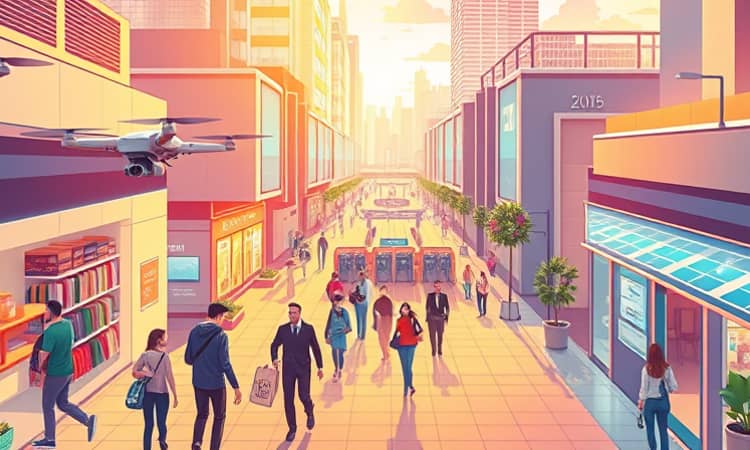
Imagine walking into a corner store, picking up your items, and simply walking out—no checkout line, no cards, no cash. That is the promise of the frictionless economy, where everyday transactions become as effortless as breathing.
From Physical Hurdles to Digital Freedom
Friction in economics describes the effort required to move through systems. From queuing at toll booths to fumbling with credit cards, every delay chips away at our time and focus. The frictionless economy aims to minimize these barriers, transforming the way we exchange goods, services, and value.
In payments, this vision translates to instant, barrier-free transfers—no intermediaries, no delays, no frictional cost. As more aspects of life digitize, seamless exchanges become not just a luxury but a necessity for efficiency and well-being.
Technologies Driving Frictionless Payments
Today’s innovations pave the way for a world where transactions happen in the blink of an eye. Consider these advances:
- Electronic toll collection and tap-to-pay transit cards, eliminating manual fare payments.
- One-swipe car rentals and app-based ride-hailing services, removing rental desks and paperwork.
- Autonomous package delivery by drones and robots, cutting last-mile delays to minutes.
Emerging infrastructure further accelerates this trend:
- On-site solar panels and batteries providing localized energy resilience.
- Urban food production and on-demand local manufacturing via 3D printing.
- AI-driven nudges and preference-logged auto-pay systems for truly seamless digital transactions.
Mapping the Domains of Friction Reduction
To understand the breadth of the frictionless economy, consider three interconnected domains:
Economic Benefits and Real-World Impact
Organizations and individuals reap profound benefits when friction fades:
74% of institutional investors expect a 10%+ boost in returns by integrating frictionless tech. Companies deploy AI and unified workflows to capture operational alpha, trimming costs and accelerating revenue growth.
- 3D printing firm Carbon raised $260M at a $2.4B valuation, showcasing on-demand manufacturing.
- Tech megacaps plan over $300B in AI investments for 2025, fueling further automation.
- Same-day and two-hour delivery services becoming the norm in major cities.
- Public infrastructure investment near a two-decade low, highlighting urgent policy needs.
Challenges and Policy Imperatives
Despite its promise, the frictionless economy brings risks. When interfaces smooth over costs, burdens often shift to underfunded infrastructure and overtaxed workers—think air traffic controllers managing automated flight plans with outdated equipment.
Without thoughtful policies, elite zones may hoard friction removal, deepening inequalities. To prevent this, governments and businesses must:
- Invest in resilient public infrastructure, ensuring broad access to automated services.
- Encourage tech firms to internalize social costs rather than externalize them.
- Promote digital literacy and equitable AI deployment across demographics.
Future Outlook: Post-AGI and Beyond
Looking ahead, the fusion of AI and blockchain could birth trustless, on-chain labor markets where human-AI teams eliminate temporal frictions altogether by 2030. Imagine financial tools updating in real time, guided by predictive analytics that anticipate needs before they arise.
Urban resilience will flourish through microgrids and transparent supply chains. As Nobel laureates emphasize innovation-driven growth, policymakers must adapt social contracts to support this transition, ensuring that progress uplifts everyone.
Conclusion: Seizing the Opportunity
The frictionless economy is not a distant fantasy—it is unfolding in our toll booths, transit systems, and retail aisles. By embracing these innovations and shaping policies that spread benefits widely, we can build a world where barriers fall and prosperity rises.
Start by auditing your organization’s processes for hidden delays, advocating for infrastructure upgrades, and experimenting with pilot programs in frictionless payments. Together, we can usher in a future where every transaction feels as natural as a heartbeat.