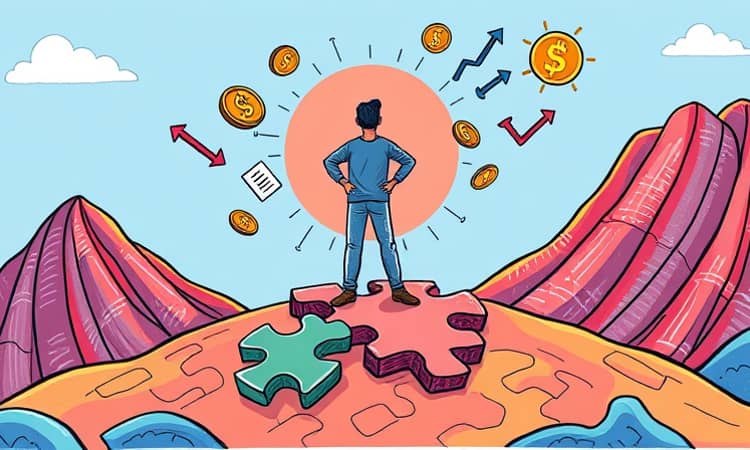
As we step into 2026, the global economy presents a complex tapestry of opportunities and risks, demanding a new breed of financial agility.
With inflation concerns at 56% among leaders, individuals must rethink traditional strategies to safeguard their futures.
This era calls for a flexible approach, where adaptability becomes the cornerstone of personal and professional resilience.
Economic forecasts highlight persistent headwinds, from slowing GDP growth to rising unemployment rates.
Understanding these dynamics is the first step toward mastering your financial destiny in turbulent times.
Economic Uncertainty in 2026: The Headwinds We Face
Inflation remains a top concern, eroding purchasing power and straining household budgets across the board.
Tariffs and labor market issues compound these challenges, with 39% of experts worried about employment stability.
Consumer sentiment has plummeted to 53.3, reflecting a 21% year-over-year decline in confidence.
This drop signals widespread anxiety about job security and economic prospects.
- Inflation concerns at 56% among finance leaders.
- Tariff impacts affecting 56% of economic outlooks.
- Labor market instability noted by 39% of analysts.
- GDP growth showing signs of moderation in key sectors.
These factors create a perfect storm, necessitating proactive measures to avoid financial pitfalls.
Staying informed about these trends can empower you to make timely adjustments.
Recession Preparation: Insights from the Data
A staggering 89% of finance leaders express concern about the economy, with many bracing for negative impacts.
Among them, 48% anticipate a moderate downturn, while 14% fear significant disruptions in the coming year.
This outlook drives organizations to implement defensive strategies, such as building cash reserves and cutting costs.
For individuals, it underscores the importance of financial cushioning and risk management.
This table highlights critical data points that can guide your decision-making process.
By monitoring these metrics, you can anticipate shifts and act preemptively.
Personal Finance Impacts: Navigating Daily Challenges
Inflation directly affects your buying power, making essentials more expensive and savings harder to grow.
Interest rate fluctuations influence borrowing costs and saving returns, requiring careful planning.
Unemployment rates, currently at 4.6%, threaten job security and wage growth for many workers.
Housing market strains further complicate affordability, pushing families to rethink their living situations.
- Inflation erodes disposable income over time.
- Interest rates dictate loan affordability and investment yields.
- Unemployment risks destabilizing household finances.
- GDP changes impact job availability and economic stability.
Adapting to these impacts means reassessing budgets and exploring alternative income streams.
Embracing flexibility can turn challenges into opportunities for growth.
Institutional and Market Trends: The Shifting Landscape
Buy now, pay later debt has soared to $24.4B, a tenfold increase since 2019, signaling changing consumer habits.
Neobanks are challenging traditional institutions, with global markets projected to reach $560B by 2025.
Bank deposits stand at $18.41 trillion, yet many remain in low-yield accounts, missing out on higher returns.
Gas prices at $2.99 per gallon add to daily expenses, highlighting the need for efficient spending.
These trends reflect a broader move toward digitalization and personalized financial services.
Leveraging technology can help you stay ahead in this evolving environment.
The Adaptability Toolkit: Strategies for 2026
Building cash reserves is a critical first step, with 42% of leaders prioritizing liquidity.
Cutting discretionary spending allows for greater financial flexibility during uncertain times.
Upskilling in tech and data analysis, highlighted by 53% and 38% respectively, enhances career resilience.
Diversifying investments into stocks, real estate, and inflation-protected assets mitigates risk.
- Re-evaluate budgets to identify non-essential costs.
- Refinance debt in low-rate environments to reduce interest burdens.
- Seek high-yield savings accounts to maximize returns.
- Explore side gigs or freelance work to bolster income.
- Use AI tools for personalized financial planning and automation.
These actionable steps form a comprehensive guide to navigating economic shifts.
Implementing them gradually can build long-term stability and confidence.
Investment and Policy Responses: Staying Informed
Monitoring Federal Reserve rates and tax regulations is essential for adapting investment strategies.
Diversification into stocks and real estate provides a hedge against market volatility.
Inflation-protected assets, such as TIPS, safeguard purchasing power in rising price environments.
Policy changes, including tariffs and geopolitical shifts, require vigilant attention to avoid surprises.
Staying proactive with these elements ensures your portfolio remains resilient.
Regular reviews and adjustments align your finances with the broader economic context.
Consumer and Psychological Angles: The Human Element
Rising repossessions and delinquencies point to increasing financial distress among lower-income groups.
Multi-job juggling becomes common as individuals seek to offset wage stagnation and insecurity.
Financial worries are closely linked to psychological distress, affecting mental health and well-being.
Gen Z and digital natives are reshaping finance with a focus on transparency and technology.
- Address stress through mindfulness and financial education.
- Build support networks to share resources and advice.
- Embrace generational shifts in financial behavior for innovation.
Acknowledging these aspects fosters a holistic approach to financial health.
It transforms fear into empowerment, driving positive change.
Broader Context and Forward Outlook
Finance leaders are evolving from number-crunchers to strategists, leveraging AI for smarter decisions.
Consumer strain persists, with anxiety rising even as spending continues in certain sectors.
Regulatory pressures, such as CFPB focus on BNPL transparency, add layers of complexity.
Tech transformation, including embedded finance, offers new tools for personalization and efficiency.
- AI moves beyond proof-of-concept to practical applications in budgeting.
- Demographic shifts highlight opportunities for mass affluent wealth conversion.
- Historical trends inform future strategies, emphasizing cyclical adaptability.
Looking ahead, flexibility and continuous learning will be key to thriving in 2026 and beyond.
By embracing change and staying informed, you can turn economic shifts into stepping stones for success.