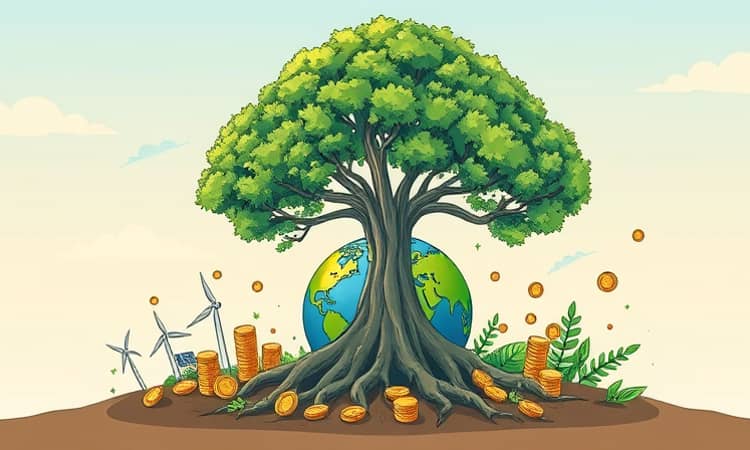
In a world of fleeting trends and volatile markets, the concept of evergreen investing offers a beacon of stability and purpose, merging financial growth with lasting positive impact.
By focusing on sustainable wealth cultivation, investors can build portfolios that are resilient, diversified, and aligned with environmental, social, and governance principles.
This method ensures that wealth not only grows but also contributes to a better world, creating a legacy that transcends generations.
What is Evergreen Investing?
Evergreen investing is the practice of building wealth that endures through economic cycles, climate risks, and societal changes.
It contrasts sharply with traditional approaches that often prioritize short-term gains over long-term stability.
At its core, it views investing as a perennial and regenerative process, much like an evergreen tree that stays green all year.
This philosophy integrates environmental, social, and governance (ESG) factors to ensure investments are sustainable and impactful.
By doing so, it helps preserve wealth across generations while addressing global challenges like climate transition and demographic shifts.
The Pillars of Sustainable Wealth
To cultivate sustainable wealth, several key pillars must be established and maintained.
These foundations provide the structure for financial resilience and growth.
- Generating Income Streams: Diversify sources through real estate, stocks, side hustles, and sustainable businesses.
- Reducing Expenses: Live below your means, budget effectively, and prioritize experiences over possessions.
- Managing Debt: Pay off high-interest debt using methods like the snowball approach to free capital.
- Preserving Capital: Use diversification, estate planning, and tax efficiency to protect and grow assets.
- Sustainable Investing: Align investments with ESG principles for positive impact and long-term returns.
Each pillar supports the others, creating a holistic approach to wealth management.
For instance, reducing expenses can increase savings for sustainable investments.
Sustainable Investing Strategies for 2026
As we look towards 2026, specific strategies are shaping the future of evergreen investing.
These methods blend financial performance with societal and environmental benefits.
These strategies are not mutually exclusive; they can be combined for a robust portfolio.
For example, integrating ESG factors with thematic investing in green bonds can yield both impact and growth.
Income Generation and Expense Control
Practical steps in personal finance are crucial for sustainable wealth.
Start by building multiple income streams to ensure financial stability.
- Real estate investments for rental income and appreciation.
- Stock market participation in sustainable companies.
- Side hustles or part-time jobs that align with your skills and values.
- Business ventures focused on solving environmental or social issues.
Controlling expenses is equally important to maximize investment capital.
Adopt a mindset of living below your means to avoid lifestyle creep.
- Create and stick to a detailed budget that tracks all expenditures.
- Prioritize spending on experiences and essentials over luxury items.
- Use debt payoff strategies like the avalanche or snowball methods.
- Regularly review and cut unnecessary costs to boost savings.
By balancing income and expenses, you free up resources for impactful investing.
Risk Management and Resilience
Sustainable wealth requires proactive risk management to navigate uncertainties.
Key risks include geopolitical shifts, policy changes, and climate vulnerabilities.
To mitigate these, employ tools like scenario analysis and TCFD frameworks.
Strong governance in investments can counter challenges in emerging markets.
- Geopolitical tensions: Diversify across regions and asset classes.
- Climate risks: Invest in resilient infrastructure and adaptation finance.
- Human factors: Address inequality and human rights through inclusive systems.
- Digital risks: Use AI for ESG insights and cyber resilience.
Building resilience is not just about hedging risks; it's a growth opportunity.
Markets for adaptation and clean tech are expanding rapidly.
Building a Legacy with Impact
Evergreen investing goes beyond personal gain to create a lasting legacy.
Align your capital with your conscience to make a positive societal impact.
This involves ensuring that the next generation inherits not just assets, but wisdom and values.
Estate planning with wills and trusts is essential for smooth wealth transfer.
By investing in causes you care about, you leave a mark that extends beyond financial wealth.
Practical Steps to Get Started
Embarking on the evergreen investing journey requires clear actions.
Begin by defining your financial goals and personal values.
- Set specific, measurable objectives for wealth accumulation and impact.
- Research sustainable investment options thoroughly using reliable sources.
- Build financial literacy through courses, books, or advisor consultations.
- Diversify your portfolio across industries, asset classes, and geographies.
- Engage with financial advisors who understand sustainable investing principles.
- Regularly review and adjust your strategy based on performance and new trends.
These steps empower you to take control of your financial future with purpose.
The Future of Evergreen Investing: 2026 Trends
Looking ahead to 2026, several trends will shape sustainable wealth cultivation.
Europe continues to lead with climate as a top priority, while Asia-Pacific drives energy transition.
- Sovereignty themes: Focus on defense, energy, and food resilience.
- Transition financing: Moving beyond climate to include adaptation and nature solutions.
- Infrastructure innovation: Tech-driven projects for diversification and efficiency.
- Digital resilience: Leveraging AI for ESG data analysis and decision-making.
- Growth areas: Adaptation finance, clean tech, and nature-positive investments.
With green bonds growing from €30 billion to €1.9 trillion, the momentum is undeniable.
As one European investor said, "Sustainability is not a trend—it’s a strategic imperative."
By embracing these trends, you can position your portfolio for resilience and growth.
The journey to sustainable wealth is a continuous process of learning and adapting.
Start today to cultivate an evergreen legacy that benefits both your finances and the world.