Imagine the economy as a complex organism, constantly evolving with shifts in growth, employment, and prices.
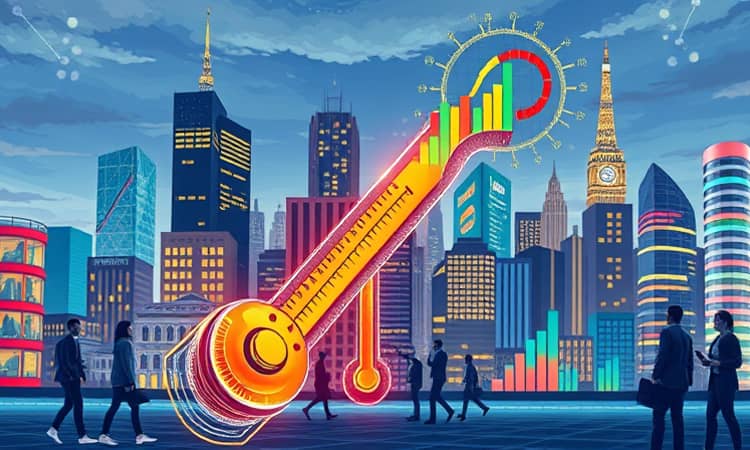
Just as a thermometer measures temperature, economic indicators provide a real-time snapshot of health, guiding us through expansions and slowdowns.
These statistical tools are essential for anyone looking to anticipate trends and safeguard their financial well-being.
Understanding the Core Concept
Economic indicators are statistical measures that evaluate performance, health, and future trends.
They act as vital signs, much like a thermometer reading the economic temperature.
By tracking these metrics, policymakers, businesses, and investors can gauge where the economy stands.
This knowledge empowers proactive decision-making in uncertain times.
Categories of Economic Indicators
Indicators are grouped into three main categories based on their timing and purpose.
- Leading indicators predict future economic activity.
- Coincident indicators reflect the current state of the economy.
- Lagging indicators confirm past trends and performance.
Each category plays a unique role in painting a comprehensive picture.
Here is a table summarizing these categories with examples and signals:
Key Indicators to Monitor Closely
Focusing on specific indicators can help you stay ahead of economic shifts.
These metrics offer deep insights into growth, stability, and risks.
- Gross Domestic Product (GDP): Measures total value of goods and services produced.
- Real GDP grew 4.3% annualized in Q3 2025.
- Forecasts suggest moderation to 1.8-2% in 2025.
GDP is a leading and coincident indicator, showing overall economic activity.
Watching it helps assess whether the economy is expanding or contracting.
- Unemployment Rate: Percentage of labor force jobless and seeking work.
- It has risen to the highest since 2021 due to federal layoffs.
- Projected to reach 4.5% in 2026 from 4% in 2024.
This lagging indicator signals weakness when high, impacting spending.
It reflects labor market health and consumer confidence levels.
- Inflation Rate: Tracks price rises for goods and services.
- Measured by CPI and PPI, affecting purchasing power.
- Recently eased but remains elevated, with real wages turning positive.
Inflation influences Federal Reserve policy and household budgets.
Monitoring it is crucial for maintaining financial stability in volatile times.
- Consumer Spending: Drives about 70% of GDP.
- It showed strong growth of 2.6% in 2025 but is slowing.
- Forecast to drop to 1.6% in 2026 due to inflation pressures.
This coincident indicator reflects demand and economic resilience.
It highlights how consumer behavior shapes broader trends.
- Interest Rates: Set by the Federal Reserve, impacting borrowing.
- They serve as a leading indicator for business and consumer decisions.
- High rates can slow investment and spending activities.
Understanding rate changes helps in planning loans and investments.
It's a key tool for anticipating economic turns.
Recent Data and Trends
As of late 2025, the economy shows mixed signals with underlying strengths.
Growth solidified in Q3 2025 with steady investment and consumer demand.
Stock markets reached record highs, indicating optimism among investors.
- The job market posted strong gains but is slowing gradually.
- Unemployment remains low but is rising, pointing to potential challenges.
- 2025 saw volatility from tariffs and the longest government shutdown.
These events created uncertainty but were offset by AI-infrastructure spending.
Consumer resilience supported a GDP growth of 1.8%, showing adaptability.
Wage-inflation dynamics have shifted, with real wages becoming positive.
For example, in November 2025, nominal wages were 3.5%, with real gains.
This marks a turnaround from negative real wages in earlier years.
The Federal Open Market Committee views the expansion as solid.
They note strong jobs and low unemployment, but inflation lacks progress.
This underscores the need for vigilant monitoring of these indicators.
Forecasts and Projections
Looking ahead to 2025-2026, multiple sources predict moderation in growth.
Economic forecasts help in preparing for potential slowdowns or opportunities.
- GDP is expected to slow to 1.5-1.9% in 2026 from 1.8-2% in 2025.
- Unemployment may rise to 4.5% by 2026, indicating labor market softening.
- Consumer spending growth is projected to decline due to inflation.
Home prices are forecast to increase at a slower pace in coming years.
Global context shows world growth around 3.2% for 2025, slightly easing.
Here is a table comparing forecasts from different organizations:
These projections highlight fragile and uneven growth patterns ahead.
Businesses and individuals should use this data for strategic planning.
Why Watching Indicators Matters
Economic indicators are not just numbers; they are tools for empowerment.
They signal policy changes, such as potential Federal Reserve rate cuts.
For businesses, they guide pricing, hiring, and investment decisions.
- High consumer confidence can lead to increased growth and opportunities.
- Leading indicators like the LEI help predict slowdowns early.
- This allows for proactive measures to mitigate risks and seize advantages.
Indicators also reveal interconnections within the economy.
For instance, high inflation can lead to rate hikes, slowing spending.
Low unemployment might create wage pressure, influencing inflation trends.
Understanding these links helps in navigating complex economic ecosystems.
Data sources include the Bureau of Labor Statistics and Federal Reserve.
Limitations exist, such as lagging data delays from funding lapses.
Projections vary based on assumptions about tariffs and policy changes.
Staying informed through reliable sources is key to accurate analysis.
Practical Steps for Using Indicators
To apply this knowledge, start by regularly tracking key metrics.
Use indicators to inform personal financial decisions and career moves.
- Monitor GDP trends to assess overall economic health.
- Watch unemployment rates for insights into job market conditions.
- Keep an eye on inflation to protect your purchasing power.
- Analyze consumer spending to gauge demand and opportunities.
- Follow interest rate changes for borrowing and investment timing.
This proactive approach can help you adapt to economic shifts.
It fosters resilience and confidence in uncertain environments.
Remember, indicators are guides, not guarantees, but they offer clarity.
By understanding the economic thermometer, you can better navigate storms.
Embrace this knowledge to build a more secure and prosperous future.