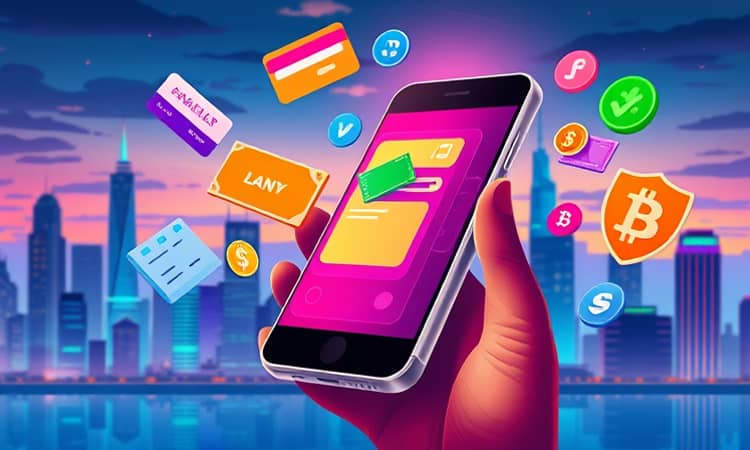
In an era where our smartphones have become extensions of ourselves, digital wallets represent the next frontier of financial convenience and security. From tap-to-pay at the corner cafe to seamless online checkout, these mobile applications are transforming how we handle money daily.
By consolidating payment methods, loyalty programs, event tickets, and even cryptocurrencies into one easy-to-use interface, digital wallets are redefining personal finance management. This article explores the mechanics, benefits, market trends, and future outlook of this revolutionary technology.
Definition and Core Concept
A digital wallet, also known as an electronic wallet, e-wallet, or mobile wallet, is a software application that stores digital versions of payment methods. Users load credit cards, debit cards, gift cards, coupons, event tickets, and cryptocurrencies into the app for instant access.
secure, contactless payments at your fingertips illustrate how digital wallets streamline payment processes, eliminating the need for physical cards or cash. These apps leverage encryption and tokenization to ensure data safety.
How Digital Wallets Work
Setting up a digital wallet involves entering card details or linking bank accounts within the app. Information is then encrypted and stored locally or in the cloud, protected by passcodes or biometric authentication.
- Near-field communication (NFC) enables tap-to-pay in stores.
- QR code scanning allows payments at kiosks and peer-to-peer transfers.
- Online checkout integration simplifies e-commerce transactions.
streamline transactions eliminating physical cards is achieved through tokenization, which replaces sensitive card details with unique codes during payments. Biometric scans further fortify security.
Market Size and Growth
The digital wallet market is experiencing rapid expansion worldwide. In 2025, global transaction value is expected to hit $8,286.39 billion, with projections soaring to $19,682.21 billion by 2030.
Between 2025 and 2030, a compound annual growth rate of 18.88% underscores the monumental shift toward digital payments. Meanwhile, the broader digital payments landscape is projected to exceed $33.5 trillion by 2030.
User Statistics and Adoption
Digital wallet adoption has climbed dramatically. In 2024, 4.3 billion people—over half the global population—used mobile wallets. By 2029, this figure is forecast to reach 5.8 billion users.
- U.S. adoption hit 57% among adults in 2024, led by Apple Pay with a 92% market share.
- Globally, 32% of point-of-sale transactions and 53% of online purchases were completed with e-wallets in 2024.
- Projections for 2030 expect digital wallets to account for 65% of online payments and 45% of POS transactions.
By integrating boarding passes, loyalty cards, and event tickets, digital wallets continue to engage users beyond mere payments.
Leading Digital Wallets and Market Share
- Apple Pay: Processes $10 trillion annually by 2025, commanding 92% share in the U.S.
- PayPal: Holds 28% of U.S. digital wallet market, with extensive PayPal-branded solutions.
- Google Pay: Captures 15% of the U.S. market, integrated across Android devices.
- Alipay & WeChat Pay: Dominate China and much of Asia with billions of users.
- Cash App & Venmo: Popular for peer-to-peer transfers and social payments.
encrypted payment information via tokenization ensures that consumers can safely switch between platforms without compromising security.
Technology and Features
Digital wallets leverage multiple technologies to deliver seamless experiences. NFC and QR code scanning support in-person payments, while tokenization and biometric authentication safeguard user data.
Additional features include budget trackers, spending analytics, offline payment modes, and integration with loyalty programs, coupons, and boarding passes. Such comprehensive financial management tools in-app elevate e-wallets beyond simple transaction platforms.
Benefits and Advantages
For consumers, digital wallets offer convenience, speed, and security. There is no need to rummage for cards or cash; payments are instantaneous. Additionally, global transactions become as simple as a tap, fostering convenient cross-border payments around the globe.
Merchants benefit from faster checkouts, reduced queues, and lower infrastructure costs. Society at large sees decreased cash dependence, improved financial inclusion, and more hygienic, contactless payments.
Trends and Drivers
Several factors propel digital wallet usage: the rapid expansion of e-commerce, soaring smartphone penetration, and heightened demand for contactless payments spurred by global health concerns. The rise of QR code payments is expected to reach $8 trillion by 2025.
Emerging trends include integration with digital currencies, including central bank digital currencies (CBDCs), and expansion of super-app models offering banking, shopping, and lifestyle services. These advances highlight the integration with digital currencies and CBDCs as a key future development.
Regional Insights
North America leads in adoption, with 85% of U.S. retailers accepting Apple Pay and a projected market value of $48.08 billion by 2025. China maintains dominance in contactless terminals, boasting 46.8 million NFC-enabled devices in 2022.
Asia-Pacific regions, buoyed by Alipay and WeChat Pay, demonstrate some of the highest transaction volumes, setting benchmarks for other markets to follow.
Future Outlook
By 2030, digital wallets are poised to become the primary payment method both online and in physical stores. Advancements in security, integration with financial services, and broadening of features will cement e-wallets as indispensable tools.
enhanced security through tokenization and biometrics and continuous innovation will drive adoption among Gen Z and millennial users, shaping the next chapter of modern money management.
In summary, digital wallets represent a powerful convergence of technology, convenience, and security. As they evolve into comprehensive financial platforms, users and businesses alike will benefit from streamlined, secure, and intuitive payment experiences that define the future of commerce.