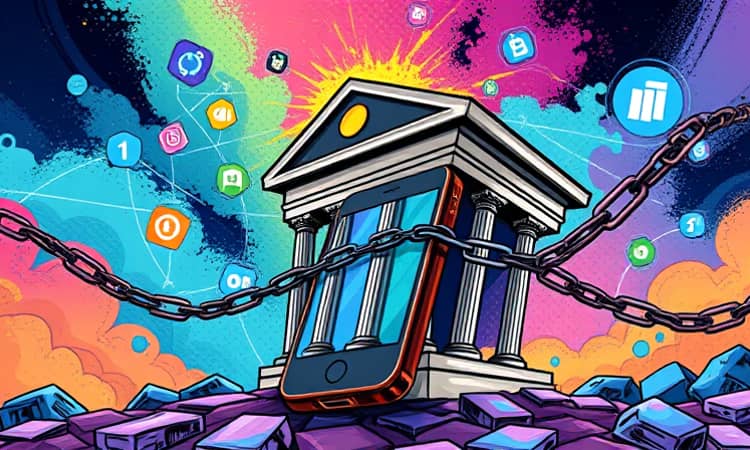
As the financial world pivots, consumers and businesses are shedding legacy branch visits in favor of nimble digital platforms. This shift, often described as a “digital divorce” from traditional banking, marks a profound transformation in how we manage money.
Market Evolution and Digital Growth
The scale of this transition is staggering. By 2025, digital banks are projected to generate $1.61 trillion net interest income, rising to $2.09 trillion by 2029 at a 6.8% CAGR. China will lead with over $528 billion in income, underscoring how global players are redefining finance.
Behind these figures lie 1.75 billion digital banking accounts processing some $1.4 trillion annually—equivalent to $2.7 million every minute. Traditional branch networks feel the impact: since 2018, the U.S. has averaged 1,646 branch closures per year, as banks redeploy capital into digital channels.
Changing Consumer Behaviors and Preferences
Consumers are increasingly content to handle all their financial needs on a screen. In the U.S., mobile apps now serve as the primary method for 54% of users, with online browsers at 22%, while branches decline to a mere 9%.
- 34% of Americans open a finance app daily.
- 36% log into online banking at least weekly.
- 78% say their go-to method is mobile or online.
Generation plays a key role. Among Gen Z, 64% primarily use a mobile app, compared to 35% of Baby Boomers. Yet 4.2% of Americans remain unbanked, reminding us that a digital-first world must still address inclusion.
Business Models and Value Propositions
At the heart of the divorce lies a clash of business models. Traditional banks merge face-to-face interactions with digital offerings, but often at the cost of higher fees and lower interest rates. Conversely, neobanks operate with no-branch, low-overhead structures, passing savings to customers through higher yields and negligible fees.
Automation and cloud infrastructure deliver cost-efficient, high-speed transaction processing, enabling digital banks to reduce operating costs by 20–40%. In turn, deposit rates can soar up to 50 times those at brick-and-mortar institutions.
- 24/7 access and instant notifications.
- Simplified onboarding in minutes.
- Integration with payment apps and accounting tools.
Risks, Challenges, and Trust
Despite the benefits, challenges remain. Security concerns persist: 42% of non-digital users cite trust issues, while 45% long for a physical branch. Both digital and traditional banks employ encryption, multi-factor authentication, and fraud monitoring, yet perception can lag behind reality.
- Cybersecurity threats and evolving fraud tactics.
- Regulatory compliance across jurisdictions.
- Potential service outages or technology failures.
Regulators worldwide are adapting. From open banking mandates in Europe to sandbox initiatives in Asia, oversight aims to balance innovation with consumer protection. As financial ecosystems converge, trust will hinge on transparency, robust insurance schemes, and clear communication.
Preparing for the Future: Ecosystems and Innovation
The final chapter of this divorce may well be remarriage—into digital ecosystems that blend finance, retail, and social platforms. Banks that once led with branches are now racing to build networked digital ecosystems and data insights that anticipate customer needs.
For consumers, the promise is seamless. Imagine managing mortgages, investments, and retirement planning within a single interface, supported by AI-driven advice and personalized rewards. Businesses will tap embedded finance to streamline payroll, lending, and cross-border transactions without ever walking into a branch.
Yet the human element endures. Relationship managers may shift roles, offering bespoke guidance via video chat or augmented reality. Branches could evolve into digital experience centers, blending community hubs with education spaces, ensuring that the social fabric of banking remains intact even as the world goes wireless.
In the end, this digital divorce is less about severing ties and more about redefining a partnership. By embracing innovation while safeguarding trust and inclusion, we can chart a path toward a financial landscape that is both efficient and empathetic—a future where every user, whether born with a smartphone or still attached to a checkbook, finds their place.