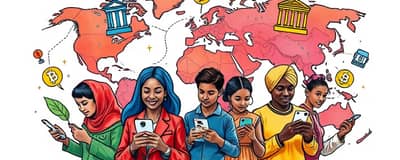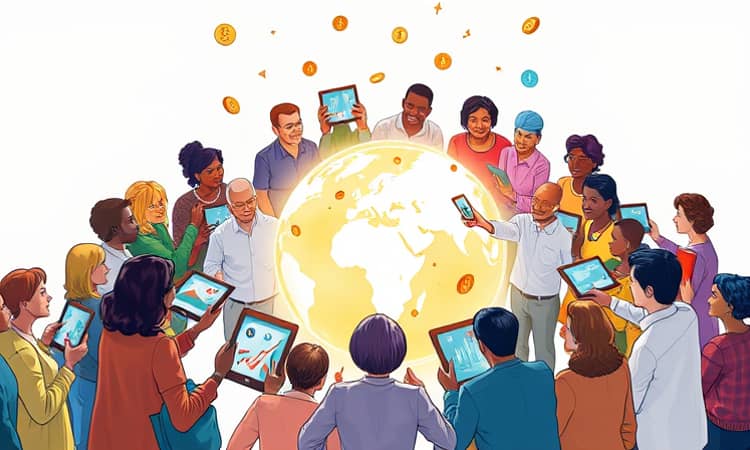
Across the globe, financial services have long been the domain of elite institutions and accredited investors. Today, technology and policy reforms are rewriting this script, ushering in a new era where anyone—regardless of income, geography, or status—can access the tools once reserved for the few.
This transformation, known as the democratization of finance, not only expands opportunities but also empowers communities to build wealth, drive growth, and enhance resilience. In this article, we explore its roots, current trends, challenges, and practical steps you can take to benefit from and contribute to this inclusive movement.
Understanding Democratization of Finance
At its core, the democratization of finance means shifting power away from institutions and toward individuals. By removing accreditation barriers and relying less on intermediaries, new platforms enable people to lend, borrow, invest, and manage funds directly.
Whether through peer-to-peer lending, equity crowdfunding, or digital wallets, this shift redefines traditional banking. It envisions a system where equal access to financial services is not a slogan, but a reality.
Regulatory and Technological Catalysts
The 2008 financial crisis proved a catalyst for change. In the United States, the Dodd-Frank Act and the JOBS Act opened the door for non-accredited investors to join equity crowdfunding, while the SEC streamlined small-business offerings — balancing capital formation with investor protection.
On the other side of the Atlantic, PSD2 ushered in open banking, allowing third parties to build innovative services on consumers’ data. According to a 2017 CGI study, 63% of consumers welcomed personalized offers derived from shared data.
- Dodd-Frank & JOBS Act: Equity crowdfunding for all.
- PSD2 Open Banking: Personalized, data-driven services.
- SEC Modernization: Faster, safer capital formation.
Driving Technologies and Trends
Fintech startups, decentralized finance (DeFi) protocols, and digital payment platforms are the engines powering this revolution. By leveraging blockchain, APIs, and mobile networks, they dismantle traditional barriers.
- Fintech and Digital Tools: Instant payments, digital accounts, rural access to services.
- Crowdfunding and P2P Lending: Over $30 billion raised in donation-based campaigns; equity platforms for retail investors.
- Decentralized Finance (DeFi): Cryptocurrencies, NFTs, and ICOs offering alternatives to bank-dominated products.
- Mobile Money Solutions: Drives savings in Sub-Saharan Africa and Latin America; account ownership in LMICs rose from 34% in 2014 to 62% in 2024.
- Private Market Access: Retail investors eye $80 trillion in alternative assets.
Global Progress and Impact
Financial inclusion has soared in the last decade. The World Bank’s Findex 2025 reports 79% of adults with accounts, up from 62% in 2014. In low- and middle-income countries, account ownership jumped 20 points to 75%.
The Principal Global Financial Inclusion Index 2025 scored 49.4/100, with 20 markets improving and 19 declining. Government support rose globally, while Gulf states like the UAE (+3.9) and Saudi Arabia (+1.8) lead on digital services. Yet some regions face stagnation and widening gender gaps—Pakistan trails by 30 points between men and women.
Challenges and Roadblocks
Despite rapid gains, obstacles remain. Economic headwinds have stalled small-business funding, and quality of services often lags behind access. In markets like Mexico and Colombia, high account ownership coexists with limited product use.
Moreover, true democratization sparks debate: Is broad access enough, or must the public also shape financial governance? As donor funding shifts, sustainability of inclusion programs demands new partnerships between governments, fintechs, and communities.
- Stagnation Risks: Credit access plateauing in major markets.
- Quality vs. Quantity: Services must be usable, secure, and beneficial.
- Governance Debate: From access to collective decision-making.
Practical Steps for Stakeholders
Individuals can start by educating themselves on digital tools and diversifying savings and investments via micro-investing apps or peer lending platforms. Joining community finance workshops amplifies impact.
Fintech entrepreneurs should prioritize user-friendly designs for underserved populations, invest in financial literacy modules, and collaborate with regulators to build trust.
Policymakers must balance innovation with protection—updating regulations to promote open data, streamline licensing, and ensure security standards. Public-private partnerships can fund pilot programs in remote regions.
Looking Ahead: Building an Inclusive Financial Future
The next frontier is deeper use and higher quality. Mobile ownership, digital identity solutions, and expanded credit-bureau coverage can extend services to gig workers, rural entrepreneurs, and women who remain on the margins.
By embedding financial education into school curricula and community centers, we can raise literacy, reduce defaults, and foster confidence in managing wealth. As private market access grows, unlocking the potential $80 trillion pool of retail capital will transform retirement planning, home ownership, and small-business growth.
Empowering underserved communities is not just a goal, but a necessity for resilient economies. When more people can save, borrow, and invest wisely, societies thrive with lower inequality, stronger social cohesion, and sustained innovation.
We stand at a pivotal moment. With coordinated action from citizens, startups, and governments, the dream of true financial democratization can become tomorrow’s reality. Let us seize the tools at hand—technology, regulation, and community—to build a system that leaves no one behind.