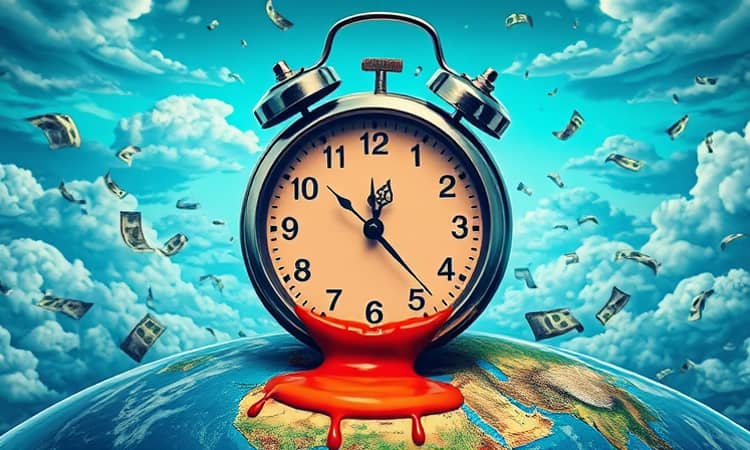
In today’s interconnected economy, the decision to delay meaningful climate action is not a distant environmental debate—it is a direct threat to personal and global finances. Each day of inaction compounds risks, driving up costs from lost productivity to damaged infrastructure. By failing to invest proactively, individuals, businesses, and governments face mounting consequences that far outweigh the initial expenses of mitigating climate change.
As studies project, allowing global temperatures to rise unchecked could reduce cumulative economic output by up to 34% by 2100, jeopardizing livelihoods and savings worldwide. This article explores the profound impacts of inertia, charting the hidden costs of delay and highlighting the compelling financial rationale for urgent, decisive action.
The Inaction Paradox
The choice between immediate investment and future expenses often appears daunting. However, research shows that dedicating just 1% to 2% of global GDP to mitigation and adaptation measures could limit warming to 2°C, capping economic damages at 2% to 4%. In stark contrast, doing nothing would incur net costs equivalent to 11% to 27% of cumulative GDP—the net cost of inaction that outstrips three times global healthcare spending.
Moreover, the return on early investment is compelling. Every dollar allocated to mitigation can yield five to fourteen times the original investment by century’s end. Thus, the path of least resistance is far costlier, turning short-term hesitation into a long-term financial burden for future generations.
Accelerating Costs of Climate Damage
Climate-related damages have surged dramatically over recent decades, illustrating the accelerating price of inaction. Since 2000, extreme weather and related events have exacted over $3.6 trillion in losses globally. Between 2014 and 2023 alone, the world endured more than $2 trillion in damages, with a tenfold increase in affected populations.
- Average annual loss rose from $450 billion (2000–2004) to over $1 trillion (2020–2024).
- Hurricane Helene in 2024 caused an estimated $100+ billion in damages.
- Extreme weather events affected 1.6 billion people between 2014 and 2023.
These figures underscore an unsettling trend: costs are not plateauing but escalating, fueled by more frequent and severe storms, wildfires, and floods that show no signs of abating.
Sectoral and Business-Specific Risks
No industry is immune to climate threats. Unprepared companies face both physical and transition risks that can erode profitability. Infrastructure-intensive sectors could see 5% to 25% of their 2050 EBITDA wiped out by unmitigated hazards, while carbon pricing under a “well below 2°C” scenario might equate to an additional 50% cost on earnings.
Fashion companies, for example, risk bottom-line hits of up to 34% by 2030 and 67% by 2040 due to rising carbon costs, raw material prices, and energy expenditures—highlighting the urgent need for strategic risk management.
Hidden Productivity Losses
Beyond direct physical damage, productivity loss as primary driver represents a pervasive but often overlooked cost. Heat stress alone could reduce global working hours by 2% by 2030, while weeks with prolonged high temperatures have already cut factory output by up to 8%, translating to $80 billion in annual lost wages.
- Labor productivity declines with extreme heat, especially in construction and agriculture.
- Agricultural yields can drop by up to 10% during severe weather events.
- Infrastructure damage diverts resources from productive investments.
- Ecosystem services collapse, affecting fisheries and pollination.
These hidden losses erode earning potential, disrupt supply chains, and exacerbate economic inequality, imposing far-reaching consequences beyond immediate repair costs.
Investing in Our Future: Timing and Returns
The window for impactful climate investment is narrowing. To keep warming below 2°C, mitigation spending must grow ninefold and adaptation measures thirteenfold by 2050, with 60% of total required funding deployed before then. Delays push a staggering 95% of potential damages into the latter half of this century, compounding financial losses.
Yet the incentives are clear: allocating roughly 3% of GDP towards climate action today can yield an overall tenfold return by 2100. This combination of immediate risk reduction and long-term gains makes climate investment one of the most compelling opportunities for both public and private stakeholders.
Health, Social, and Insurance Implications
Financial risks extend well beyond balance sheets. Climate change exacerbates health challenges, increasing mortality rates and burdening healthcare systems. Rising temperatures correlate with higher violent crime rates and hinder children’s learning, disproportionately affecting marginalized communities.
Insurance premiums are projected to surge by 50% by 2030, reaching $200–$250 billion annually. As coverage retreats from high-risk zones, properties face devaluation or become uninsurable, threatening personal wealth and community stability.
A Call to Action
Each stakeholder—whether an individual investor, corporate leader, or policymaker—plays a critical role in reversing the tide of inaction. The financial logic is unassailable: early, decisive measures save trillions in lost output, secure livelihoods, and protect future prosperity.
- Conduct a comprehensive risk assessment and quantify exposure.
- Allocate dedicated budgets for mitigation and adaptation strategies.
- Champion sustainable practices and pursue low-carbon technologies.
- Collaborate with governments and communities to share resources.
Ultimately, embracing proactive climate solutions is not just an environmental imperative—it is a financial necessity. By acting today, we safeguard our economies, protect vulnerable populations, and ensure a resilient future for generations to come.