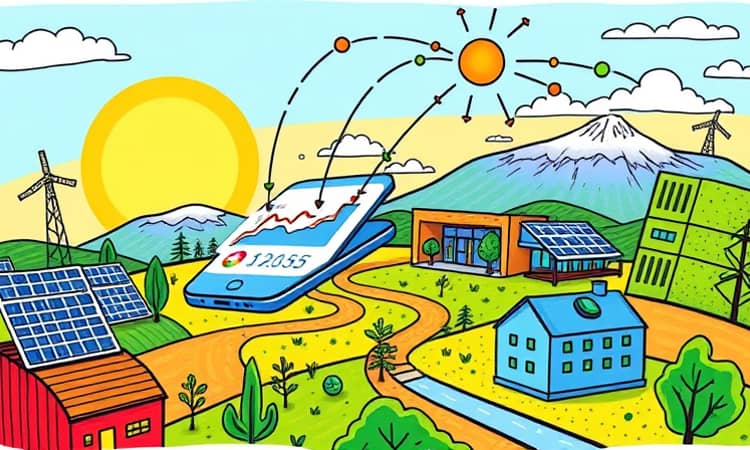
Imagine a world where every community has access to clean energy, digital connectivity, and resilient infrastructure, all funded through smart, collaborative finance.
Blended finance makes this vision possible by strategically leveraging catalytic capital from public or philanthropic sources to de-risk high-impact projects.
It bridges the gap between ambitious sustainable goals and commercial viability, transforming how we invest in our future.
Understanding the Core of Blended Finance
Blended finance is not a single tool but a dynamic structuring approach that brings diverse investors together.
Public and philanthropic entities provide concessional funds to mitigate risks, making ventures attractive to private sector players seeking returns.
This method addresses critical barriers like high perceived and real risks in developing economies.
By aligning investments with the Sustainable Development Goals (SDGs), it mobilizes capital for initiatives that might otherwise be overlooked.
The essence lies in its ability to crowd-in private finance without distorting markets, ensuring that every dollar works harder for impact.
Key Principles for Effective Implementation
To maximize success, blended finance transactions adhere to rigorous principles that guide their design and execution.
These principles ensure that strategic use of capital drives sustainable outcomes while maintaining financial integrity.
- Rationale for addressing market barriers: Focus on high-impact areas where commercial finance is absent.
- Crowding-in private capital with minimal subsidy: Avoid market distortion by using only necessary concessionality.
- Commercial sustainability for long-term viability: Ensure projects can thrive without ongoing support.
- Reinforcing and not disrupting local markets: Foster healthy economic environments.
- High standards of governance and transparency: Uphold ethical practices and accountability.
Adhering to these principles, as championed by institutions like the IFC, is crucial for achieving scalable and replicable models.
Instruments That Power Progress
A variety of financial instruments are employed in blended finance to tailor solutions to specific project needs.
These tools lower costs, provide protection, and absorb losses, making investments more palatable for private actors.
- Grants and first-loss capital de-risk early stages, turning ideas into investment-ready opportunities.
- Debt instruments like low-interest loans reduce the weighted cost of capital for sustainable ventures.
- Guarantees and equity investments shield private investors, encouraging their participation in risky sectors.
- Performance-based structures tie financial rewards to measurable outcomes, enhancing accountability and impact.
To illustrate their applications, here is a table showcasing common blended finance instruments:
This flexibility allows blended finance to adapt to diverse contexts, from digital innovations to physical infrastructure.
Scale and Impact of Blended Finance
The blended finance market has mobilized over $213 billion historically, addressing critical gaps in sustainable development.
Yet, this represents only a fraction of the $2.5 trillion annual SDG financing gap, underscoring both progress and the urgent need for scaling.
Deal sizes vary widely, with a median around $65 million, reflecting the tailored nature of transactions.
- Funds constitute the largest share of deals, but diversification into new structures is growing.
- Initiatives like the Convergence database track progress, building evidence to attract more investors.
- Historical data shows a range from small-scale projects to multi-billion dollar commitments.
Experts describe it as a game-changing initiative for risky areas, proving models that unlock commercial markets and inspire further investment.
Digital Meets Physical: Real-World Applications
Blended finance excels in integrating digital technologies with physical infrastructure to solve pressing global challenges.
In digital equity, it combines grants with private loans to expand broadband access in underserved communities, fostering inclusion.
For climate adaptation, public-private blends leverage mobile money and AI for participatory planning and monitoring, enhancing resilience.
- Digital equity projects in rural areas: Use catalytic capital to lower risks for fiber networks, enabling last-mile connectivity.
- Climate resilience efforts in Africa: Employ blended finance to reduce capital costs for local initiatives in countries like Kenya and Mali.
- Sustainable development sectors globally: Include affordable housing, low-carbon tech, and nature conservation, where blends attract diverse investors.
These applications demonstrate how blending finance can transform communities by bridging digital divides and building tangible assets.
Stakeholders Driving the Movement
Successful blended finance relies on collaboration among a wide range of actors, each bringing unique strengths to the table.
- Public entities like governments and development finance institutions provide catalytic capital and policy support.
- Philanthropic organizations focus on impact over returns, funding early-stage viability and innovation.
- Private investors seek commercial opportunities with de-risked profiles, drawn by improved risk-return ratios.
- Local communities and microfinance agents act as ground-level catalysts, ensuring projects meet real needs.
This collective effort underscores the importance of partnership in achieving sustainable development goals.
Challenges and Pathways to Scale
Despite its potential, blended finance faces significant hurdles that must be addressed to achieve greater impact.
Limited scale relative to global needs highlights the gap between current mobilization and targets for net-zero and SDGs.
- Data gaps in reporting and transparency make it difficult to assess additionality and avoid subsidizing viable projects.
- Ensuring that subsidies do not crowd out commercial finance requires careful design and monitoring.
- Harmonizing policies across regions can be complex, slowing down implementation and scaling.
To overcome these challenges, stakeholders must embrace innovative strategies and leverage technology.
- Diversify mechanisms to include international funds and community organizations, broadening the investor base.
- Leverage digital tools like mobile platforms for payments and education to enhance efficiency and reach.
- Foster initiatives that build evidence and share best practices, such as those led by Convergence and other databases.
By addressing these issues, blended finance can unlock unprecedented private investment flows, accelerating progress toward a sustainable future.
Conclusion: A Call to Collaborative Action
Blended finance represents a powerful synergy between digital innovation and physical development, offering a roadmap for funded sustainability.
It empowers all stakeholders to co-create solutions that are financially viable, socially impactful, and environmentally responsible.
As we look ahead, embracing this approach can help close the financing gap and build resilient, inclusive economies.
Let us harness the blend of digital and physical finance to drive collective action and shape a better world for generations to come.