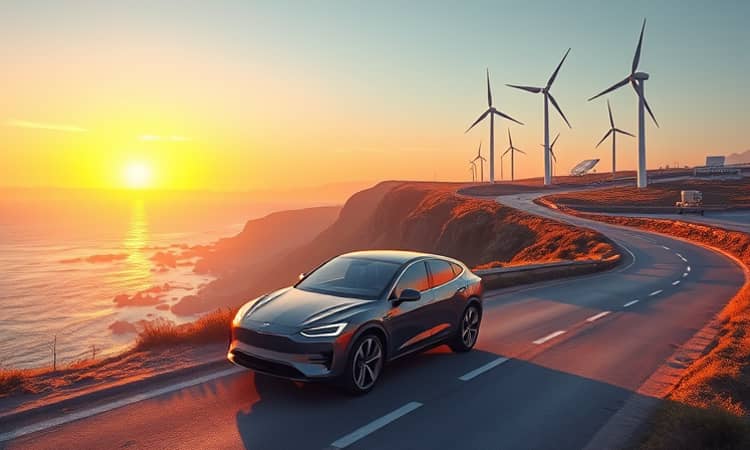
Polestar Automotive has emerged as a dynamic force in the luxury electric vehicle sector, carving a unique niche through its commitment to sustainable design, cutting-edge technology, and performance heritage. As Geely and Volvo catalyze its growth, investors face a landscape of rapidly evolving product launches, global expansion, and financial pressures.
This article navigates Polestar’s history, product pipeline, financial journey, market positioning, and future catalysts. By weaving narrative with data, we offer you practical insights to inform strategic investment decisions in this high-growth EV disruptor.
About Polestar: Heritage and Growth
Originating in 1996 as Flash Engineering and later rebranded Polestar Racing, the company was acquired by Volvo in 2015 and repositioned as an EV brand in 2017. Its racing division, Cyan Racing, bolsters Polestar’s performance pedigree. Headquartered in Torslanda, Sweden, Polestar operates an asset-light production model, outsourcing manufacturing to Volvo and Geely facilities across China, the US, South Korea, and an upcoming Slovakian plant. A new 80,000 m² headquarters in Gothenburg underscores its ambitions.
Strategic brand pillars define Polestar’s identity and investment narrative. These pillars unite design, innovation, and global reach behind a singular purpose: creating desirable vehicles that respect the planet.
- Design for sustainability – focus on recycled cabin materials
- Minimalist Scandinavian aesthetic embedded in every model
- Leading technological innovation in powertrains and UX
- Global reach and network growth across strategic markets
2026 Product Pipeline: Driving Future Growth
Polestar’s forthcoming lineup positions it to capture investor attention and consumer demand. The Polestar 4, a digital-driver focused crossover built in South Korea, launches in December 2025 with a $10,000 Clean Vehicle Incentive. The Polestar 5 grand tourer and Polestar 6 roadster, arriving in 2026, promise to reignite the brand’s performance DNA.
Meanwhile, the existing Polestar 2 compact SUV and Polestar 3 electric SUV remain core revenue drivers. Despite strong retail momentum, Polestar 3 underperformance led to a $739 million impairment in Q2 2025, highlighting the high-stakes nature of volume and margin execution.
Financial Performance: Revenue Growth Amid Losses
Since its 2022 Nasdaq listing (PSNY), Polestar has delivered rapid top-line growth while absorbing significant operating losses. Revenue surged from $610 million in 2020 to $2.444 billion in 2022, before a slight dip to $2.379 billion in 2023. Net losses have ranged from $198 million in 2019 to $1.195 billion in 2023.
In the first nine months of 2025, revenue climbed 49% to $2.2 billion and retail sales rose 36% to over 44,000 vehicles, led by European markets. Yet net losses expanded to $1.6 billion, driven by the Polestar 3 write-down, pricing pressure, tariffs, and inventory adjustments. Q3 2025 alone saw revenue of $748 million (+36% YoY) but a net loss of $365 million and a negative gross margin of 6%.
Liquidity remains resilient with $995 million in cash at September 2025, supplemented by a $200 million equity injection from PSD Investment. Covenant compliance and Geely backing support ongoing operations.
Market Position and Strategic Outlook
Polestar’s growth hinges on its ability to scale effectively, leverage its brand pillars, and navigate macro-headwinds. Europe accounts for 70% of sales, with expanding presence in North America and NAPAC. Dealer integration via Volvo’s network has accelerated retail locations, averaging five new showrooms per month in Q2 2025.
- Rising sales volumes up 36% in first nine months 2025
- Expanding dealer network across key regions
- New models launching Polestar 4/5/6 in 2026
- Carbon credits revenue boosting cash flow
- Ongoing negative gross margins due to pricing pressures
- Tariffs and trade barriers especially US-China
- Resale value guarantees impacting profitability
- Scale disadvantage versus larger EV peers
Future Catalysts and Investor Takeaways
Key catalysts include the December 2025 launch of Polestar 4, the 2026 deliveries of Polestar 5 and 6, and the operational ramp-up of the Slovakian factory. Cost discipline efforts have already reduced SG&A expenses, and CEO Michael Lohscheller emphasizes inventory management and optimized marketing.
Investors should monitor quarterly delivery trends, margin improvements, and tariff developments in North America. The sustainability narrative, underpinned by recycled materials and carbon-neutral targets, may unlock additional premium valuations and carbon-credit streams.
While Polestar remains loss-making today, its strategic product roadmap and Geely’s financial support suggest an inflection point could be within reach. Balancing risk and reward will be crucial as the EV market intensifies competition and price dynamics evolve.
Polestar stands at a crossroads: poised to leverage its racing heritage and design ethos to become a leader in luxury EVs, but challenged by scale, margins, and external headwinds. For investors with a long-term horizon and an appetite for high-growth automotive innovators, Polestar offers a compelling, if complex, opportunity.