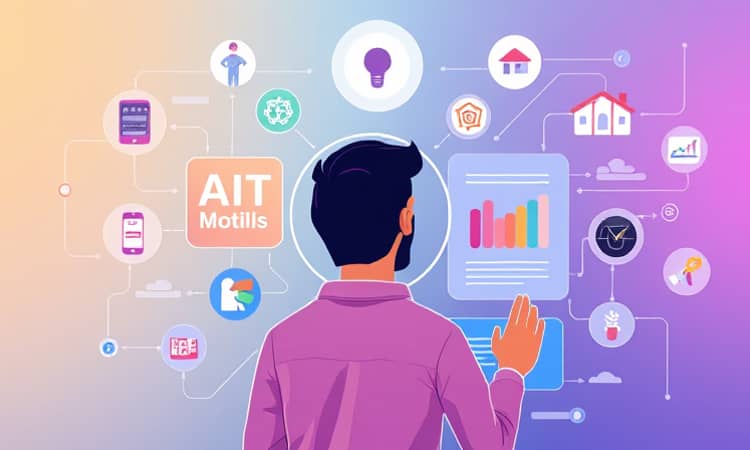
The insurance industry is undergoing a profound transformation, shifting from a reactive, one-size-fits-all approach to a proactive, data-driven model.
In 2025, technologies like AI and IoT are enabling hyper-personalized insurance products that adapt to individual lives in real-time.
This evolution promises not just better coverage but a fundamental rethinking of protection, blending human oversight with cutting-edge innovation.
Imagine a world where your insurance policy evolves with your daily habits, anticipating risks before they occur.
That future is here, driven by digital advancements that prioritize customer needs.
The Evolution of Digital Insurance
Insurance has long been tied to standardized policies that often fail to reflect personal circumstances.
Today, the move is toward hybrid models that integrate technology with human expertise.
This shift is powered by a desire for more intuitive and adaptive solutions.
Consumers now demand experiences that are seamless and tailored, not paper-heavy and generic.
The journey from reactive to proactive insurance marks a new era of customer-centricity.
Key Technologies Driving Personalization
Several innovations are at the forefront of this change, each enhancing how insurance is delivered.
Hyper-X combines AI, IoT, and synthetic data to create real-time risk profiles.
It allows policies to adjust based on behavior, environment, and life changes.
Ensureverse embeds insurance into daily life through always-on platforms.
This enables seamless integration, such as usage-based pricing for auto or health policies.
AI-ssurance leverages generative AI for tasks like underwriting and claims processing.
It offers dynamic pricing and automated decision-making, speeding up services.
Wearables and big data provide continuous insights for predictive care.
Technologies like Amazon Bedrock aid in document understanding, ensuring compliance.
Key technologies include:
- Hyper-X for adaptive risk assessment.
- Ensureverse for embedded protection.
- AI-ssurance for automated underwriting.
- Wearables and IoT devices for data collection.
- Machine learning for customer support and fraud detection.
These tools work together to craft policies that are uniquely suited to each individual.
Transforming the Underwriting Process
Underwriting is seeing significant automation, making it faster and more accurate.
AI streamlines application review by prefilling data from public records.
It flags complex cases for human agents, ensuring a balanced approach.
Risk assessment now uses predictive models and scenario simulations.
This enhances fraud detection capabilities through pattern recognition.
Property valuation benefits from satellite imagery for structural analysis.
Decision justification is improved with contextual AI that aligns with insurer guidelines.
Performance metrics show dramatic improvements:
- Standard policies processed in 12.4 minutes with 99.3% accuracy.
- Complex policy processing time reduced by 31%.
- Quote processing times cut by up to 89%.
- Approximately 25% of P&C insurers are testing AI underwriting.
The human-AI hybrid model ensures that routine tasks are automated.
This allows professionals to focus on strategic relationships and nuanced cases.
Benefits for Customers
Personalization brings tangible advantages to policyholders, enhancing their experience.
Tailored premiums and coverage are based on real-time data and individual behavior.
Speed and transparency mean instant quotes and clear policy information.
Proactive risk management anticipates needs, such as health insights from wearables.
Examples include Allianz using generative AI for faster decisions.
Embedded insurance in smart homes offers continuous protection.
Customer benefits include:
- Customized policies that reflect personal lifestyles.
- Faster service with minimal waiting times.
- Predictive alerts for potential risks.
- Enhanced trust through intuitive interfaces.
- Cost savings from usage-based models.
This shift empowers consumers, making insurance more relevant and accessible.
Industry Adoption and Statistics
The adoption of these technologies is accelerating across the insurance sector.
Investments are focused on AI, big data, and cloud infrastructure.
Operational gains include reduced administrative costs and improved efficiency.
Here is a snapshot of industry trends in 2025:
These stats highlight a growing commitment to tech-driven transformation.
Insurers are recognizing the value of data in creating competitive offerings.
Regulatory and Ethical Considerations
As technology advances, regulatory frameworks must evolve to ensure fairness.
The EU AI Act mandates risk assessments and transparency in AI systems.
Challenges include algorithmic bias and the threat of deepfake fraud.
Ethical considerations are crucial to prevent exclusion and build trust.
Strategies involve embedding guidelines in AI prompts for compliance.
Key regulatory aspects include:
- Adherence to laws like the Digital Operational Resilience Act.
- Implementing robust guardrails for algorithmic fairness.
- Ensuring data privacy and cybersecurity measures.
- Balancing innovation with ethical standards.
Addressing these issues is essential for sustainable growth.
Challenges and Strategic Priorities
Despite progress, hurdles remain that require careful navigation.
Emerging risks, such as bias and deepfakes, pose new threats.
Industry challenges include data fragmentation and manual processes.
Strategic priorities focus on hybrid engagement and cybersecurity.
Future outlook emphasizes AI as a foundational tool for growth.
Challenges to overcome:
- Managing ethical dilemmas in data usage.
- Adapting to rapid regulatory changes.
- Integrating legacy systems with modern tech.
- Educating consumers on new insurance models.
- Fostering collaboration between tech and traditional teams.
By addressing these, insurers can unlock the full potential of personalization.
Conclusion
The fusion of technology and insurance is creating a new paradigm of protection.
Personalized policies, driven by AI and data, offer unprecedented customization.
This journey requires balancing innovation with ethics and human touch.
As we look ahead, the focus remains on enhancing lives through smart risk management.
Embrace this change, and discover how tailored insurance can safeguard your future.