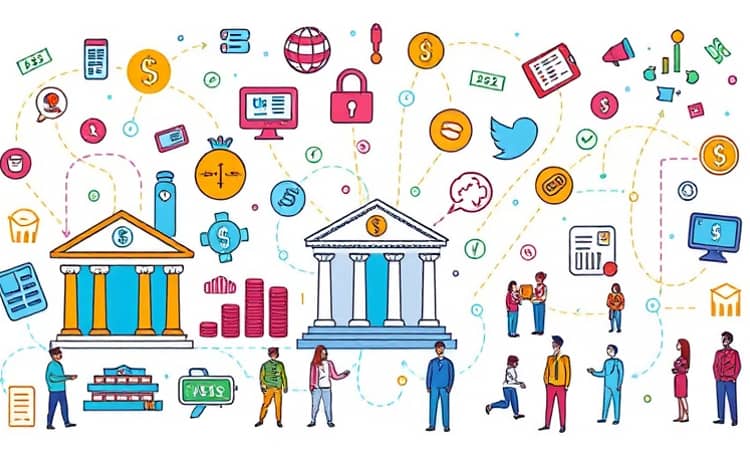
As we move deeper into the digital era, financial services are transforming at an unprecedented pace. Open banking stands at the forefront of this revolution, reshaping how consumers and businesses interact with their money. By enabling secure data sharing via modern APIs, open banking promises more personalization, efficiency, and control. This article dives into the mechanisms, benefits, regulations, and future developments that make open banking a game-changer for 2025 and beyond.
Understanding Open Banking
At its core, open banking is the practice that allows consumers to securely share banking, transactional, and financial data with authorized third-party providers. These providers—fintech firms, merchants, and digital platforms—access data through standardized APIs (application programming interfaces), ensuring consumer consent and data security at every step.
This system covers a broad scope of information:
- Account data: holder name, account type, currency, opening date, transaction history
- Product data: financial product types, interest rates, fees, terms
- Payment initiation: fund transfers, direct debits, bill payments
Key Participants in the Open Banking Ecosystem
Open banking thrives on collaboration among diverse stakeholders, each driving innovation and value.
- Fintech Companies: Develop innovative financial apps such as budgeting tools, automated savings, and buy-now-pay-later services.
- Banks: Leverage data insights to deliver personalized lending, tailored investment advice, and improved customer experiences.
- Merchants and Platforms: Simplify payment processes, reduce transaction fees, and enhance loyalty programs.
- Consumers: Aggregate multiple accounts into unified dashboards and exercise granular control over data sharing permissions.
Unlocking Value: Benefits for All
Open banking creates a win-win scenario. Stakeholders across the board enjoy enhanced agility, customer-centric solutions, and competitive differentiation.
For Consumers:
- real-time account aggregation across institutions gives a holistic financial view.
- Explicit consent and revocable permissions increase control over personal data.
- Personalized budgeting advice and tailored product recommendations.
- Faster credit checks reduce loan approval times significantly.
For Businesses:
- Streamlined payment flows and automated reconciliation improve operational efficiency.
- Enhanced customer profiles facilitate precise risk assessments and lending decisions.
- New entrants can challenge incumbents, driving down fees and fostering innovation.
Ensuring Safety: Regulation and Security
Robust regulation and rigorous security protocols underpin trust in open banking. Key frameworks around the globe set the standards.
Security measures are non-negotiable. Financial institutions and fintechs must employ encryption, tokenization and multi-factor authentication, and regular vulnerability testing. Compliance with standards such as ISO 27001, PCI DSS, and the FTC Safeguards Rule ensures ongoing data protection and consumer trust.
Real-World Applications and Trends
Across industries, open banking unlocks a host of transformative use cases:
- Aggregated Dashboards: Customers view all accounts—checking, savings, credit cards—in one interface.
- AI-powered Budgeting: Machine learning analyzes spending patterns to suggest savings strategies.
- Streamlined Lending: Real-time financial data accelerates credit scoring and loan disbursement.
- Account-to-Account Payments: Direct transfers bypass traditional card networks, lowering costs.
Market adoption continues its rapid ascent. As of 2024, millions of consumers and thousands of apps leverage open banking platforms. By 2025, experts predict expansion into insurance, pensions, and investment services—ushering in a broader “open finance” era.
Challenges and the Road Ahead
Despite its promise, open banking faces hurdles. Consumer skepticism remains due to data privacy fears and unfamiliarity. Technical challenges persist, with inconsistent API standards and varying levels of regional interoperability.
Regulatory alignment is still a work in progress. While the EU and UK lead with established frameworks, many jurisdictions are finalizing legislation. The CFPB’s 2024 rule introduces a staggered compliance schedule by April 2026, urging financial institutions to upgrade systems and processes.
Looking forward, open banking will evolve in three key directions:
- Open Finance: Extending data sharing to insurance, pensions, and wealth management.
- Artificial Intelligence: Delivering hyper-personalized financial advice and fraud detection.
- Global Interoperability: Harmonizing standards to enable cross-border data flows.
To fully harness these opportunities, stakeholders must collaborate on standards, invest in robust security, and educate consumers on the tangible benefits of sharing data under strict consent protocols.
Open banking is more than a technological advancement—it represents a shift toward customer-centric financial ecosystems, where individuals hold the keys to their data and institutions innovate around real needs. By understanding the mechanisms, embracing regulations, and exploring new use cases, everyone can unlock the transformative potential of their financial information.
As open banking continues its global rollout, now is the moment to explore, adopt, and advocate for solutions that empower people, drive competition, and foster financial inclusion. The future of finance is open, connected, and data-driven—and the journey has only just begun.