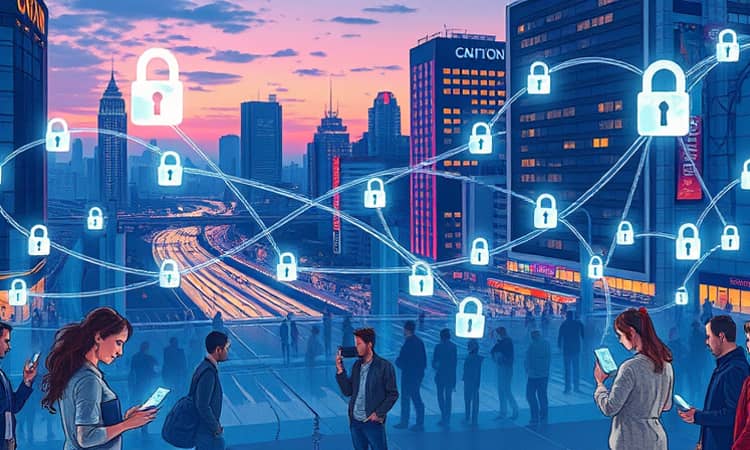
In an age where time is precious and every click counts, the concept of invisible payments has emerged as a revolutionary force. These seamless transactions unfold in the background, freeing users from the burden of manual entry and constant verification. By embedding financial processes into everyday actions—whether stepping out of a ride-share or walking past a smart shelf—this innovation redefines convenience. Yet, as we unlock new levels of efficiency, we must also weave robust security into this invisible layer. This article explores how modern systems blend seamless user experiences without visible friction with intelligent safeguards to protect digital commerce.
Imagine a world where your purchases are processed effortlessly as you go about your day, where security measures become an imperceptible shield rather than an obstacle. This vision drives pioneers in finance and technology to collaborate, harnessing AI and IoT to build trust beneath the surface of each transaction. The journey toward this future involves challenges, from regulatory compliance to fraud prevention, but the rewards are profound. By embracing invisible security, businesses and consumers alike can experience unprecedented freedom—purchasing, sharing, and collaborating in a truly frictionless environment.
The Emergence of Invisible Payments
Invisible payments refer to transactions that are authorized without explicit user prompts. After an initial setup—linking credit cards or digital wallets—payments trigger automatically through contextual cues. For instance, tapping your phone at a checkout kiosk or exiting a frictionless store initiates a charge in the background. This approach eliminates visible “Pay” buttons, replacing them with automated processes that rely on pre-stored credentials. As digital wallets, 5G connectivity, and smart devices proliferate, invisible payments become more attainable, promising a retail landscape where speed and simplicity reign supreme.
The rise of this model is fueled by consumer demand for swift, unobtrusive interactions and by businesses seeking to reduce cart abandonment. Companies such as Uber and Amazon Go lead the charge, showcasing how silent transactions can reshape commerce. With each completed ride or unencumbered shopping experience, these pioneers demonstrate that payments can be both invisible and secure. However, ensuring that this convenience does not compromise protection requires a subtle, intelligent layer of defense that operates in parallel with every exchange.
Embedding Security in the Background
At the core of invisible security lies real-time risk analysis in milliseconds. Using risk-based authentication (RBA), systems continuously evaluate transaction context: device data, user behavior, and purchase history. Low-risk events flow through without interruption, while anomalies trigger discreet challenges—an OTP prompt or biometric check. This dynamic approach balances user freedom with protection, deploying friction only when necessary. By integrating machine learning and behavioral biometrics, modern platforms forge a security fabric that is as invisible as the payments themselves.
Key signals feed into this protective mesh. Device fingerprinting captures OS versions, network addresses, and hardware parameters, while behavioral biometrics monitor typing patterns and navigation habits. Transactional data—frequency, value, location—adds another dimension. All these inputs converge in an orchestration engine that decides, in milliseconds, whether to allow, challenge, or block a transaction. The result is an adaptive fortress, one that strengthens with each interaction and guards against evolving threats.
Real-World Transformations
Across industries, invisible security is revolutionizing the way we shop, travel, and manage finances. In cashierless stores, cameras and shelf sensors track items you pick, charging your account as you leave. Ride-hailing apps finalize payment the moment your trip ends, requiring no additional steps. Financial services are embedding loans, insurance, and payments into third-party apps, anticipating needs based on geolocation and spending patterns. These applications illustrate an essential truth: when security is thoughtfully embedded, it becomes an empowering force rather than an impediment.
- Amazon Go: Sensor-driven checkout-free retail.
- Uber: Automatic billing on trip completion.
- Embedded Finance: Pre-approved microloans in budgeting apps.
- Geolocation Insurance: Instant coverage triggered by travel.
Benefits Across the Ecosystem
Invisible security delivers tangible gains for users, merchants, and enterprises. Consumers enjoy effortless transaction experiences with zero delays, freeing mental bandwidth for creativity and connection. Merchants see reduced cart abandonment and fewer input errors, translating to higher revenues and customer satisfaction. Enterprises benefit from consolidated fraud platforms that cut costs and streamline compliance with regulations like PSD2. As friction melts away, collaboration flourishes, spawning new services that were once constrained by traditional payment barriers.
- Customers: Faster checkouts and personalized offers.
- Merchants: Lower abandonment and operational costs.
- Enterprises: Unified risk management and compliance automation.
- Developers: APIs for seamless integration and innovation.
- Society: Expanded financial inclusion through embedded services.
Balancing Risks and Regulations
Despite its advantages, invisible security must navigate fraud vectors like session hijacking, device spoofing, and malware attacks. False positives can frustrate loyal customers, while false negatives leave doors open to attackers. The complexity of multiple anti-fraud tools can introduce hidden costs, and regulations demand strong customer authentication without visible friction. Organizations must design for automated fraud detection and prevention that is transparent, reversible, and aligned with evolving standards, ensuring accountability and trust at every layer.
Looking Ahead: The Future of Invisible Security
The path forward points to even deeper integration, where payments and security become indistinguishable from daily life. Advances in passkeys, continuous authentication, and edge computing will drive a new era of unobtrusive financial empowerment for all. Stakeholders must collaborate to build open, interoperable platforms that serve users without compromise. By embracing invisible security today, we lay the foundation for a digital ecosystem where transactions are as natural and secure as breathing—visible only when they must be, and invisible when they should be.