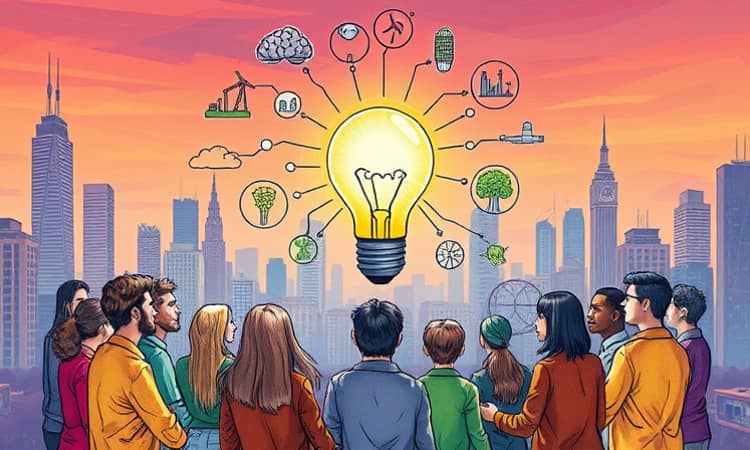
In a world hungry for progress, innovation incubation stands as the catalyst for transformative breakthroughs that shape our future.
These programs, spanning corporate, university, and government initiatives, nurture startups through strategic funding and mentorship.
By fostering high-ROI areas like AI and clean energy, they bridge ideas to scalable businesses, ensuring that tomorrow's solutions emerge today.
This journey is not just about investment; it's about cultivating resilience in the face of economic shifts.
As we delve into the data and stories, you'll see how innovation incubation fuels global change.
The Rising Tide of Innovation Budgets
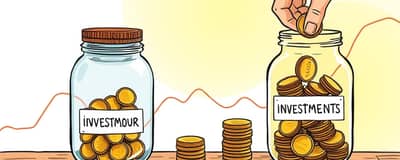
Despite economic caution, innovation spending is on the rise.
In 2025, businesses are allocating an average of 6.6% of revenue to innovation, up from previous years.
This reflects a commitment to long-term growth and adaptation.
Global venture capital deals have seen declines, but budgets remain resilient.
For instance, over one-third of companies now spend 8% or more on innovation.
This trend underscores a shift towards quick-integration technologies that offer immediate returns.
To visualize these trends, here are key statistics from recent years.
These numbers highlight a strategic focus on future-proofing through sustained investment.
Even with VC contractions, sectors like AI and clean energy are driving growth.
Priority Sectors Driving Investment
Innovation incubation zeroes in on high-impact areas that promise significant returns.
The concentration is shifting towards sectors that can scale rapidly and address global challenges.
Artificial intelligence leads the charge, dominating venture capital with unprecedented funding.
Clean energy and sustainability are also top priorities, tied to national net-zero goals.
- AI: Soaring investment beyond hype, with examples like Reflection AI's $2B Series B.
- Clean Energy: Focus on renewables, carbon capture, and storage, supported by UK funding over £1.2B.
- Cybersecurity: Fast-growing area due to high ROI and increasing digital threats.
- Other Sectors: HealthTech, FinTech, Biotech, and Mobility are also key players.
This sectoral focus ensures that incubation programs are aligned with market demands.
Diversification efforts have reconcentrated post-2023, emphasizing software and tech.
Models of Incubation: From Intrapreneurship to Hybrid
Different approaches to incubation cater to varied needs and resources.
Understanding these models can help entrepreneurs choose the right path.
Corporate incubators leverage internal talent through initiatives like Google's 20% time.
University programs, such as USF SII, support student-led startups with mentorship and space.
- Internal (Intrapreneurship): Encourages employee ideas with tolerance for failure.
- Hybrid Models: Combine internal and external efforts, like Airbus BizLab.
- University-Based: Foster academic innovation, e.g., UC Davis Inventopia.
- Energy-Focused: Specialized programs like NREL Wells Fargo IN2 for scalable tech.
- Other Types: Include BASF Chemovator for sustainability solutions.
Key success factors across these models are crucial for effectiveness.
- Structured programs and mentorship provide guidance.
- Office space and funding remove logistical barriers.
- Executive buy-in and failure tolerance foster creativity.
- Strategic alignment ensures relevance to broader goals.
These elements create an environment where ideas can flourish and scale.
Success Stories: From Ideas to Impact
Real-world examples illustrate the tangible outcomes of innovation incubation.
These stories inspire by showing how small beginnings lead to massive impact.
Google's 20% rule birthed Gmail, revolutionizing communication globally.
Deutsche Telekom's UQBATE program generated hundreds of ideas from employees.
To capture these successes, here is a table of notable incubators and their results.
These cases demonstrate that incubation can turn visions into reality.
Historical icons like Post-it Notes and PlayStation also stem from intrapreneurial efforts.
Challenges and Resilience in a Shifting Landscape
Innovation incubation faces hurdles, but resilience keeps it moving forward.
Declining venture capital deals and economic uncertainties pose risks.
However, programs adapt by focusing on scalability and quick ROI.
- VC deals have decreased for three consecutive years, making early-stage scaling harder.
- Sector reconcentration towards software requires agile strategies.
- Funding gaps, especially for female founders and non-US incubators, need attention.
Despite this, innovation budgets are increasing, showing a commitment to long-term vision.
National priorities, such as net-zero initiatives, drive sustained investment.
Events and ecosystems foster collaboration, mitigating some challenges.
The Future Outlook: 2025 and Beyond
Looking ahead, innovation incubation is set for an uneven but promising recovery.
Projections for 2025 indicate growth driven by AI and infrastructure.
Mega-deals, like Reflection AI's $2B Series B, will dominate the landscape.
Software share of funding hits historic peaks, emphasizing tech integration.
- 2025 may see the lowest growth since 2010, but AI and clean energy will lead.
- Diversity trends are positive, with female-founded startups raising $29.6B in 2023.
- New US businesses reached 5.5 million in 2023, indicating entrepreneurial vigor.
Future incubators will likely emphasize hybrid models and sustainability.
By embracing these trends, we can ensure that innovation continues to thrive.
The path forward requires balancing caution with bold investment in potential.