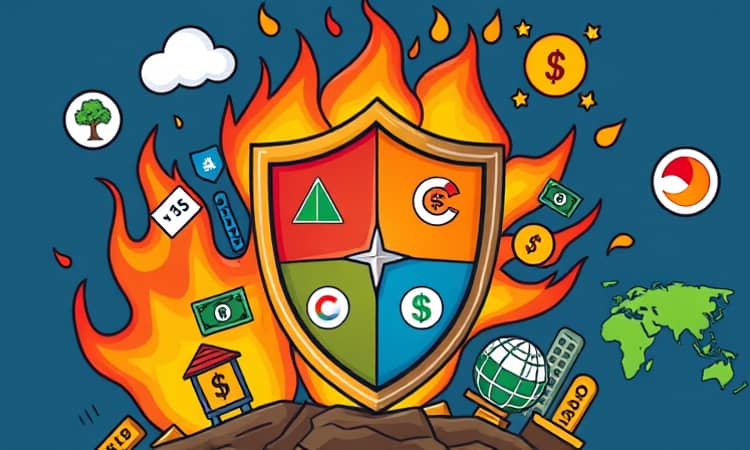
In today's economic landscape, the silent erosion of purchasing power is a stark reality that every investor must face head-on.
Rising inflation rates threaten to undermine long-term financial security if left unaddressed.
Understanding how to protect your portfolio is crucial for navigating these turbulent times with confidence and resilience.
The US inflation rate for 2026 averages 2.92%, up from 2.40% in 2025.
This increase signals a persistent challenge for wealth preservation.
Your dollar's value is subtly shrinking, demanding proactive measures to safeguard your assets.
Inflation drivers include tariffs and post-COVID economic adjustments.
After peaking at 9% in 2022, it is slowly moving toward the Federal Reserve's 2% target.
Yet, risks of rebound loom, making vigilance essential.
The Current Inflation Landscape
Projections from institutions like OECD and Bank of America highlight ongoing pressures.
Consumer expectations are at multidecade highs, sustaining inflationary forces.
This table summarizes key inflation metrics to illustrate the tangible effects.
These numbers reveal a gradual but steady decline in real value.
For investors, this translates to potential losses if strategies are not adjusted.
CPI data releases, like in January 2026, offer critical insights for planning.
How Inflation Erodes Your Wealth
Inflation quietly diminishes the value of fixed-income investments and cash holdings.
Retirees face higher lifestyle costs as withdrawals may not keep pace.
The purchasing power loss means your dollar buys 99.01% of its 2025 value in 2026.
This erosion affects all aspects of financial health.
- Decline in real returns for stocks and bonds.
- Increased vulnerability during stagflation periods.
- Higher expenses outpacing wage growth.
- Risk of poor timing from overreactions.
Focusing on long-term income and growth is key to mitigating these impacts.
Avoiding hasty decisions based on short-term data can prevent costly mistakes.
Core Assets for Inflation Protection
Diversification is the cornerstone of building a resilient investment portfolio.
No single asset guarantees short-term outperformance, but a blend offers security.
Here are the core recommended assets for effective protection.
- Treasury Inflation-Protected Securities (TIPS): Adjust with CPI for a direct hedge.
- Stocks and Equities: Provide long-term growth via price pass-through.
- Real Estate and Real Assets: Appreciate with inflation, such as infrastructure.
- Commodities and Precious Metals: Hedge in high-inflation scenarios.
- International Stocks: Add global diversification to spread risk.
Each asset plays a unique role in mitigating the impacts of rising prices.
Integrating them requires careful consideration of your time horizon.
Strategic Approaches to Portfolio Construction
Beyond core assets, additional strategies enhance protection.
A well-constructed portfolio considers personal circumstances and goals.
This table outlines practical steps to fortify your investments.
Tailoring strategies to your risk tolerance is essential for success.
Professional advice can help navigate complex scenarios.
Scenario-Specific Protections
Different inflation environments require tailored approaches.
Adapting your portfolio to economic shifts ensures comprehensive coverage.
- For growth-oriented inflation, focus on infrastructure and real estate.
- In stagflation scenarios, commodities and gold offer stability.
- During aggressive rate responses, floating-rate fixed income mitigates risk.
These strategies help navigate varied economic conditions with confidence.
Consumer expectations and forecasters' insights guide proactive adjustments.
Building Your Inflation-Proof Portfolio
Start by assessing your current assets and financial goals.
Incorporate assets that generate both income and growth to combat erosion.
Avoid the temptation to make hasty changes based on fleeting news.
Regular reviews and adjustments keep your strategy relevant.
- Set clear long-term financial objectives.
- Monitor inflation trends and economic indicators.
- Seek professional guidance for complex decisions.
- Stay disciplined and patient in your approach.
With persistence, you can turn inflation from a threat into an opportunity.
Building resilience requires a commitment to continuous learning.
Looking Ahead: The Future of Inflation
Projections vary, but preparedness is always rewarding.
The Federal Reserve forecasts 2.4% inflation in 2026, yet uncertainties remain.
Institutions like J.P. Morgan and Trading Economics offer diverse outlooks.
By staying proactive, you can safeguard your wealth for years to come.
Inflation may grip the economy, but with knowledge and action, your portfolio can thrive.
Embrace these strategies to build a future free from financial fear.