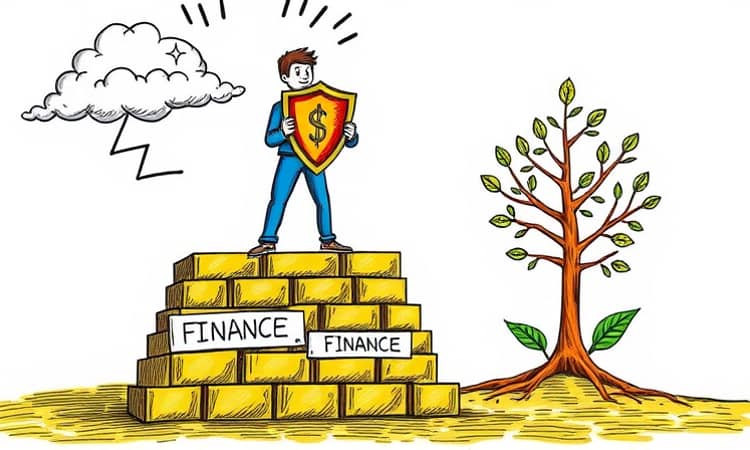
As we approach 2026, the financial landscape is poised for significant shifts, with inflation pressure and interest rate fluctuations creating uncertainty.
Geopolitical dynamics and market volatility add complexity, making it essential to adopt a resilient mindset.
Embracing future-proof fundamentals that emphasize resilience is the key to navigating these challenges successfully.
This approach involves proactive planning, diversification, and adaptability to safeguard your financial future.
By focusing on core pillars like goal-setting and holistic well-being, you can build a foundation that withstands economic storms.
Let's explore how to fortify your finances against the uncertainties ahead and create a life of stability and growth.
The journey to resilience begins with understanding the economic context for 2026.
Persistent inflation and potential Fed rate cuts of 100 basis points require strategic adjustments.
Diversification into public and private markets, along with real estate investments, can enhance portfolio stability.
Moreover, tax-efficient strategies and downside risk management are crucial for long-term planning.
With these insights, you can start crafting a personalized resilience plan that aligns with your aspirations.
Goal Setting and Review: The Foundation of Resilience
Revisiting your personal and financial goals is the first step towards building resilience.
Ask yourself if your savings targets or spending habits have changed in light of recent events.
Are you comfortable with your current timelines for retirement, education, or other life events?
Establishing a structured decision-making framework can help align your cash flows and balance sheet.
Tools like Wealth Plan Plus can assist in assessing risk exposure and ensuring your goals are realistic and measurable.
For instance, setting a goal to save $200 per month provides a clear and achievable target.
Before moving forward, it's wise to look back at your 2025 performance to learn from past successes and challenges.
- Revisit personal and financial goals regularly to ensure they align with your current situation.
- Use structured tools to create a decision-making framework for risk management.
- Set realistic, measurable goals, such as specific savings amounts or debt reduction targets.
- Review past performance to inform future planning and adjustments.
This process not only clarifies your path but also builds confidence in your financial decisions.
Budgeting and Cash Management: Your Financial Roadmap
A well-crafted budget serves as your financial roadmap, guiding you through uncertain times.
Review and adjust your budget to cut unnecessary expenses and redirect funds to savings or retirement.
Holding the right amount of cash is crucial; evaluate strategies for investing excess cash to avoid erosion by inflation.
Building flexibility with contingency funds can provide a safety net for unexpected expenses.
Pilot programs, like AI upskilling initiatives, and scalable partners can enhance your adaptability.
Reducing high-interest debt is another critical step, as it frees up cash flow and increases financial flexibility.
Many families have seen quick gains by redirecting credit card payments to emergency funds or retirement accounts.
- Adjust your budget periodically to reflect changes in income and expenses.
- Maintain an appropriate cash reserve for emergencies and opportunities.
- Implement contingency funds to handle unforeseen financial shocks.
- Focus on debt management, especially high-interest debt, to improve overall cash flow.
By mastering cash management, you create a buffer that allows you to weather financial storms.
Investment and Portfolio Resilience: Navigating Market Volatility
Focusing on portfolio resilience against inflation is essential to combat volatility and policy uncertainty.
Stay invested for the long term and align your risk tolerance with your goals and time horizon.
Rebalance your asset allocation regularly, assessing performance against market trends and interest rates.
Diversification beyond traditional assets, such as into real estate or alternative investments, can provide additional protection.
Enhance performance by considering shorter fixed income maturities and investing excess cash wisely.
Reviewing your 2025 investment performance with a professional can help tailor strategies for 2026 goals.
- Prioritize portfolio resilience through long-term investment and risk alignment.
- Rebalance assets to maintain desired exposure and adapt to market changes.
- Explore diversification into non-traditional investments for better downside protection.
- Seek professional advice to optimize performance and adjust for future objectives.
This proactive approach ensures your investments grow steadily despite market fluctuations.
Retirement and Tax-Advantaged Saving: Securing Your Future
Maximizing contributions to accounts like 401(k), IRA, HSA, FSA, and 529 plans is vital for tax efficiency.
Check IRS annual limits and tax brackets to ensure you're taking full advantage of available benefits.
Employer 401(k) matching represents free money, so aim to increase your contributions to meet or exceed match limits.
For 2026, review Roth catch-up options and be mindful of higher taxable income shifts that may affect your strategy.
Consult with your employer or plan administrator to stay updated on rule changes and opportunities.
At year-end, if you had low income in 2025, consider withdrawing from tax-deferred accounts or converting Traditional IRAs to Roth at lower brackets.
Contributing before the year-end can also help lower your taxable income for the current year.
- Maximize tax-advantaged accounts to reduce tax liability and boost savings.
- Leverage employer matches in retirement plans for additional growth.
- Stay informed about IRS updates and adjust contributions accordingly.
- Use year-end strategies to optimize tax situations based on income levels.
These steps lay a solid foundation for a comfortable and secure retirement.
Tax Planning and Annual To-Dos: Staying Ahead of Deadlines
Completing tax planning before December 31 is crucial, especially amid 2025 volatility and policy changes.
Gather documents early, including income statements, receipts, and deduction records, to streamline the process.
Note any life changes, such as marriage, home purchase, or business ventures, that could impact your tax situation.
Year-end tax planning proves valuable in past years and continues to be essential for 2026 preparedness.
By addressing tax strategies proactively, you can minimize liabilities and maximize refunds or savings.
This discipline not only saves money but also reduces stress during tax season.
- Review tax strategies annually to adapt to new regulations and personal circumstances.
- Organize financial documents early to avoid last-minute rushes and errors.
- Incorporate life changes into tax planning for accurate filings and benefits.
- Learn from past year-end planning to improve future tax efficiency.
Effective tax management is a cornerstone of financial resilience and peace of mind.
Holistic Well-Being and Personalization: Beyond Finances
Financial resilience extends beyond numbers to include mental, physical, and emotional well-being.
For employees, listening to needs via quantitative data and qualitative feedback helps personalize benefits effectively.
Allocate resources across wellness dimensions, tracking outcomes like stress reduction and productivity improvements.
Financial wellness integration reduces anxiety, so build emergency funds and update insurance regularly.
Education through webinars or financial planners builds confidence and empowers better decision-making.
This holistic approach ensures that your financial health supports overall life satisfaction and resilience.
Risk Management and Flexibility: Preparing for the Unexpected
Building an emergency fund is essential for covering unexpected expenses without derailing your finances.
Keep insurance policies up-to-date to protect against unforeseen events and liabilities.
Downside risk management involves long-term planning to mitigate potential losses in investments.
Pilot test new benefits or investment strategies before full commitment to assess their effectiveness.
Debt management simplifies your financial life and frees resources for more productive uses.
These practices enhance flexibility, allowing you to adapt quickly to changing circumstances.
- Maintain a robust emergency fund to handle financial shocks with ease.
- Regularly review and update insurance coverage for comprehensive protection.
- Implement risk management strategies to safeguard investments and assets.
- Adopt a pilot approach to test financial decisions before scaling up.
With solid risk management, you can face uncertainties with confidence and agility.
This table summarizes critical data points to guide your resilience planning effectively.
As you embark on this journey, remember that resilience is not about avoiding challenges but about thriving despite them.
By implementing these future-proof fundamentals, you can build a financial life that is robust, adaptable, and aligned with your aspirations.
Start today, take small steps, and watch your confidence and security grow over time.
The path to resilience is paved with informed decisions and consistent actions, leading to a brighter financial future.