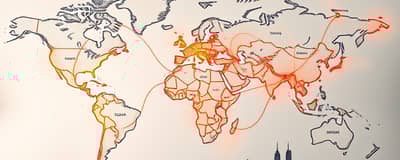
In 2026, the movement of money across borders resembles powerful ocean currents—swift, selective, and filled with energy. These financial tides carry vast resources toward AI projects, megadeals, and resilient supply chains, while diverting funds from smaller ventures. Understanding where and why capital flows is essential for businesses, investors, and policymakers seeking to harness these dynamics.
The global economy remains abundant and mobile capital, yet it is increasingly steered by factors such as geopolitics, technology imperatives, and regional realignments. Companies that navigate this environment with agility and foresight stand to capture opportunities, mitigate risks, and ride the rising waves of growth.
AI-Driven Capital Supercycle
At the forefront of today’s allocation challenge is artificial intelligence. Over the next five years, the market will require between $5 trillion and $8 trillion for data centers, high-performance chips, networks, and energy upgrades. This multitrillion-dollar infrastructure buildout is siphoning away capital that, in earlier cycles, might have funded smaller mergers or greenfield projects.
Major players—hyperscalers, sovereign wealth funds, private equity firms, and public programs—are aligning behind large-scale AI deployments. American government incentives, Saudi Arabia’s Project Transcendence, and corporate giants like Amazon, Google, Meta, Microsoft, OpenAI, and Oracle are all competing to secure their share of tomorrow’s digital backbone.
K-Shaped M&A Recovery
While total global M&A value surged 36% to around $3.5 trillion in 2025, deal volumes remained flat. A resurgence of megadeals over $5 billion drove this growth, with 111 such transactions closing—up 76% from the prior year. In contrast, nearly 47,000 smaller deals saw little change.
Well-capitalized buyers with strong balance sheets dominate this landscape. The United States accounted for more than half of global deal value despite representing less than a quarter of total volume. Selective upticks in India, Japan, and the Middle East hint at new arenas for growth, yet cross-border activity remains subdued amid geopolitical uncertainty.
Geopolitical Fragmentation and Resilience
Global trade exceeded $35 trillion in 2025, but momentum is slowing. Fragmentation and strategic decoupling have redefined supply chains, prompting firms to embrace nearshoring and diversified supply chains. Nations prioritize redundancy alongside efficiency, ensuring critical inputs—such as rare earths and semiconductors—remain under trusted control.
- Resource security: cobalt and rare earths shifting to more stable jurisdictions
- Defense-driven M&A: rising budgets reshaping industrial and tech sectors
- Tariffs and policy: US Section 232 measures on semiconductors and minerals
Regional Capital Shifts
Capital flows are increasingly regional. In the Asia-Pacific, M&A values rose 10% in 2025 and volumes grew by 3%. China saw deal volumes climb 22%, though still below 2021 levels. Emerging markets in EMEA recorded a 19% increase in deal value, with financial services megadeals doubling from 12 to 20.
South–South trade now accounts for over half of Africa’s exports, while Asian regional chains dominate high-tech manufacturing. These shifts create new corridors of investment and reshape the global financial map.
Financing Evolution and Innovation
The search for flexible, speedy capital has fueled the expansion of private credit, which now rivals traditional bank lending in agility. IPO markets have recovered, favoring companies aligned with AI and green technologies. Tokenized cross-border payment platforms are set to cover 75% of G20 transactions by mid-2026, led by China, India, Brazil, Russia, and Australia.
- Private credit: faster deal execution, tailored covenants
- Tokenization: emerging patchwork of competing networks
- Public listings: renewed appetite for technology and climate-focused offerings
Macro Backdrop and CEO Strategies
Global growth is decelerating, with forecasts ranging from 3.1% to 2.6% for 2026. Lower rates prevail, capital remains abundant, and organic expansion proves harder to achieve. Against this backdrop, 61% of CEOs anticipate improved GDP growth, and 41% plan major acquisitions in the next three years.
With recession risks near 35%, decisive leaders deploy M&A for transformative capabilities, geographic diversification, and productivity gains. These animal spirits guiding bold moves could define winners in a competitive, capital-rich era.
Practical Strategies for Businesses
- Align investment plans with AI infrastructure roadmaps to capture long-term returns.
- Prioritize resilience in supply chains through nearshoring and multiple sourcing.
- Use private credit facilities for flexible financing of strategic acquisitions.
- Explore tokenized payment systems to streamline cross-border transactions.
- Monitor regional policy shifts and incentives to identify emerging hubs of capital.
- Leverage strategic partnerships with sovereign wealth funds and hyperscalers.
- Stay adaptable: be ready to redeploy capital toward high-growth corridors.
As the tides of capital continue to ebb and flow, organizations that adopt a proactive, strategic mindset will thrive. By anticipating shifts, aligning with powerful trends, and executing with agility, businesses can steer through complexity and harness the full potential of global financial currents.