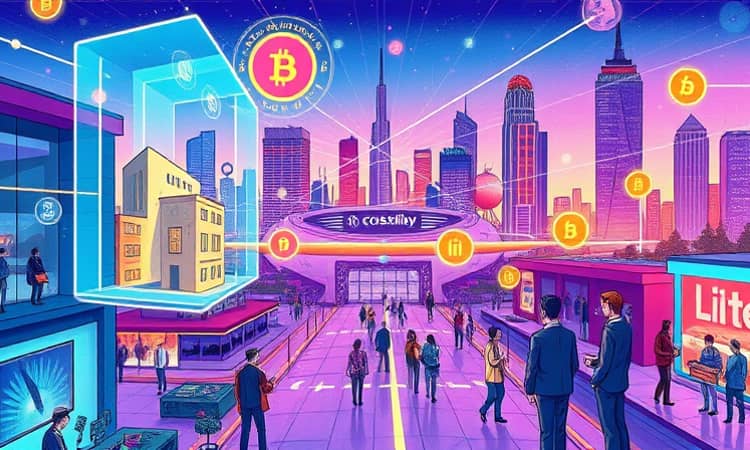
Imagine a world where financial transactions flow seamlessly, where assets once locked away become accessible to all, and where markets operate with unprecedented efficiency.
This vision is no longer a distant dream but a reality being shaped by the profound transformation driven by fintech innovations.
As we stand on the brink of 2026, exchanges and marketplaces are evolving into dynamic ecosystems, powered by cutting-edge technology that promises to redefine finance.
The journey from traditional trading floors to digital hubs is accelerating, offering a future where finance is more inclusive, resilient, and inspiring.
The Rising Tide: Market Size and Growth Projections
The global fintech market is not just growing; it is exploding with potential and promise.
Valued at $394.88 billion in 2025, this sector demonstrates immense scale and opportunity.
With a compound annual growth rate of 16.2%, it is projected to reach a staggering $1,126.64 billion by 2032.
This growth is underpinned by the tokenization of over $30 billion in assets globally, marking a significant shift towards digital ownership.
- Global fintech market valued at $394.88 billion in 2025.
- Projected to reach $1,126.64 billion by 2032 with a CAGR of 16.2%.
- Over $30 billion of assets tokenized globally, indicating early adoption and future potential.
These numbers tell a story of innovation and adoption that is reshaping the financial landscape for the better.
Core Fintech Trends Impacting Exchanges
Fintech innovations are transforming traditional exchanges into efficient, AI-driven, tokenized, and real-time marketplaces.
AI and Agentic AI Integration
Artificial intelligence is becoming the backbone of modern finance, enhancing every aspect of market interactions.
AI agents plan and execute end-to-end online transactions autonomously, from discovery to checkout.
This reduces human error and enhances speed, making markets more responsive and user-friendly.
- AI agents monitor subscriptions, predict bills, and negotiate incentives in real-time.
- Convergence with tokenization reshapes money, trust, and access across borders.
- Embedded AI agents enable autonomous finance in interoperable ecosystems.
- This unlocks new revenue streams and improves commerce accessibility for all users.
By integrating AI, exchanges can offer personalized experiences and reduce operational costs significantly.
Tokenization and Digital Assets
Tokenization is democratizing access to high-value assets that were once out of reach for many.
Tokenization expands to real estate, commodities, and private equity, enabling fractional ownership.
For example, you can own a $1,000 share in a multi-million-dollar property, breaking down barriers to investment.
- Enables fractional ownership in assets like art, homes, and agriculture.
- Smart contracts facilitate semi-liquid funds in private markets.
- Stablecoins power global money movement and tokenized payments.
- Pilots by firms like State Street integrate tokenization for faster commerce.
This trend is creating liquidity in illiquid markets and opening new opportunities for investors worldwide.
Payments and Real-Time Infrastructure
The era of delayed payments is ending, replaced by instant and real-time systems that enhance financial flows.
Instant payments mainstream in payroll, treasury, and supplier payments, improving liquidity management.
Cross-border settlements that once took days now occur in minutes, thanks to advancements like RTP and FedNow.
- Real-time payments enable self-executing flows in ERP systems for just-in-time funding.
- API integration with gig platforms facilitates mass payouts and embedded FX.
- This reduces reliance on traditional cards and improves cash flow efficiency.
- Request for Pay debuts commercially, offering real-time experiences for businesses.
By adopting these systems, exchanges can offer faster and more reliable transaction services that inspire confidence.
Embedded Finance and Open Banking
Embedded finance is bringing financial services directly into non-financial platforms, making money management seamless.
Platforms offer financial services without becoming banks, creating a bifurcated market of experts.
This allows retailers and SaaS providers to integrate payments, lending, and insurance effortlessly.
- Explosive growth via multi-rail payments and API integrations in various platforms.
- Evolves to interoperable ecosystems with AI agents and real-time rails.
- This makes financial services more accessible and convenient for end-users.
- Examples include embedded payments in e-commerce and insurance in travel apps.
Embedded finance is transforming how we interact with money in everyday contexts, fostering innovation.
Cybersecurity, Compliance, and Regulation
With great innovation comes the need for robust security and compliance measures to protect users and markets.
Cybersecurity bolstered for competitive edge as AI-powered attacks on transactions increase.
Real-time AML monitoring and sanctions screening are essential to maintain trust and integrity in markets.
- AML and KYC are table stakes for fintechs seeking partnerships with sponsor banks.
- Quantum-safe systems are being developed to protect tokenization transactions.
- Compliance costs are collapsing through automation, thanks to AI integration.
- This ensures that markets remain secure and resilient against emerging threats.
By prioritizing cybersecurity, exchanges can build a foundation of trust that empowers users to engage freely.
Market Shifts and Business Models
The fintech landscape is witnessing a shift in business models and market dynamics towards sustainability.
Neobank era slows as infrastructure platforms gain prominence in the ecosystem.
Prediction markets are emerging as tools for forecasting and providing real-time investor insights.
- Capital intensity rises, demanding speed, resilience, and results over mere tools.
- Fintechs provide infrastructure for payments and risk management in prediction markets.
- This shift emphasizes profitability and long-term sustainability over rapid growth.
- Examples include partnerships between fintechs and traditional financial institutions.
These changes are paving the way for more stable and innovative marketplaces that benefit everyone.
Investor Activity, M&A, and Exits in 2026
The investment climate in fintech is becoming increasingly vibrant as we approach 2026, with exciting opportunities ahead.
Exit markets heat up after a rebound in 2025, with a strong pipeline of profitable firms ready for action.
IPOs and mergers and acquisitions are expected to continue, driven by consolidation for market share and product breadth.
Sponsor banks are demanding robust AML and compliance controls, making due diligence critical for success.
Capital intensity is rising, with AI and market forces pushing for faster and more resilient solutions that deliver results.
For instance, the financial services market cap in India is around $1.3 trillion, highlighting regional opportunities for growth.
This activity signals confidence in the fintech sector and its potential to drive positive change in markets.
Key Examples and Use Cases
To bring these trends to life, let's explore some practical examples that illustrate their impact on exchanges.
These examples show how innovations are being applied in real-world scenarios to enhance marketplaces and inspire new approaches.
Broader Context and Future Outlook
2026 is set to be a pivotal year for fintech and the evolution of exchanges, marking a turning point in financial history.
Clarity and confidence emerge post-uncertainty, with a focus on moving from pilots to production for tangible results.
Profitability and resilience are taking precedence over unchecked growth, leading to more sustainable and impactful models.
Regulatory tailwinds in blockchain-friendly environments are supporting the adoption of new technologies, fostering innovation.
Globally, from US regulations like the GENIUS Act to EU directives like MiCA, the framework is evolving to embrace change.
Over 15 trends converge, including AI compliance, tokenized assets, and open banking, creating a rich tapestry of opportunity.
This broader context sets the stage for a future where exchanges are not just places to trade but ecosystems of possibility.
As we look ahead, the potential for positive change is immense, driven by technology and human ingenuity.
By embracing fintech trends, we can build marketplaces that are more efficient, accessible, and fair for all participants.
This requires a commitment to innovation, compliance, and user-centric design that puts people first.
Let us seize this moment to shape a financial future that benefits everyone, fostering growth and empowerment.
The evolution of exchanges is underway, and it promises to redefine how we think about money and markets in profound ways.
With determination and collaboration, we can unlock new possibilities and create a world where finance serves all, inspiring generations to come.