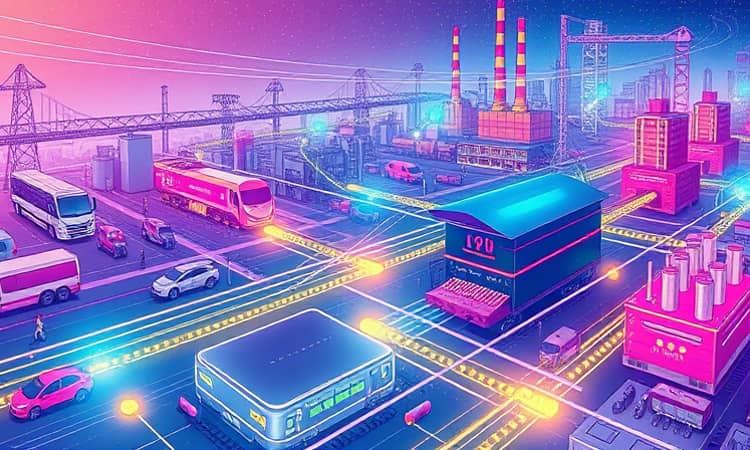
In an era where milliseconds can determine success or failure, organizations are turning to edge computing to gain speed, efficiency, and resilience. By shifting processing power closer to where data is generated, businesses can unlock a new wave of innovation across industries.
This article explores how edge computing works, its transformative benefits, real-world use cases, and the future outlook of this distributed computing paradigm near the data source.
What is Edge Computing and How is it Different from Cloud Computing?
Edge computing is a model of IT architecture where data is processed close to its origin—whether that’s IoT sensors, smart cameras, or local gateways—rather than being sent to centralized cloud servers. This approach reduces latency between data generation and actionable insights, making it indispensable for applications that cannot tolerate delay.
By contrast, traditional cloud computing centralizes data processing in remote data centers, offering high scalability and deep analytics but often at the cost of increased delays and bandwidth usage. Edge computing and cloud computing are therefore complementary: edge handles real-time, mission-critical tasks, while cloud platforms support large-scale analysis and storage.
How Edge Computing Works: Architecture and Technology
An edge architecture typically consists of three layers: edge devices, edge gateways or servers, and cloud integration platforms. Edge devices capture raw data through sensors, cameras, or specialized hardware. This information is preprocessed locally, enabling rapid decision-making without the round trip to distant servers.
Middleware and orchestration platforms—often leveraging containerization and frameworks like Kubernetes—manage and secure distributed deployments. In hybrid deployments combining edge and cloud, time-sensitive tasks run at the edge while complex analytics and historical data storage remain in the cloud.
Key components include:
- Edge devices: IoT sensors, smart cameras, routers, micro data centers.
- Edge platforms: Orchestration tools, security suites, and management dashboards.
- Connectivity fabrics: Protocols and networks ensuring reliable data transfer between edge and cloud.
Key Benefits
Organizations adopt edge computing to capitalize on a host of tangible benefits:
- Reduced latency: Enables split-second reactions for autonomous vehicles and industrial automation.
- Bandwidth efficiency: Sends only processed insights to the cloud, lowering data transfer costs.
- Enhanced security and privacy controls: Keeps sensitive data on-premises or within secure local networks.
- Greater reliability: Maintains critical functionality even during network outages.
- Cost savings: Cuts down on expensive cloud storage and repeated data transmissions.
Industry Use Cases
Edge computing is revolutionizing multiple sectors by delivering intelligence where it matters most:
- Autonomous vehicles: Real-time sensor fusion for obstacle avoidance and route optimization.
- Industrial IoT: Automated quality checks and predictive maintenance in smart factories.
- Healthcare: Remote patient monitoring and real-time diagnostics in telemedicine.
- Smart cities: Traffic signal control, public safety surveillance, environmental monitoring.
- Retail: Personalized in-store experiences and automated checkout solutions.
- Gaming and media: Low-latency streaming and immersive AR/VR environments.
- Agriculture: Precision farming and livestock health tracking in remote fields.
Edge Computing and AI
The convergence of AI and edge computing—commonly called Edge AI—pushes machine learning models directly onto devices, enabling real-time, on-device inferencing and analytics. This approach minimizes data movement, preserves privacy, and accelerates intelligent automation.
Leading platforms such as Google Edge TPU and AWS Wavelength demonstrate how hardware-software co-design can deliver powerful inference capabilities in mission-critical and latency-sensitive environments.
Numbers, Market Growth, and Trends
Analysts predict that by 2025, 75% of enterprise data will be processed at the edge, up from just 10% in 2018. This surge is driven by the explosion of IoT devices—estimated in the tens of billions of devices globally—and the growing demand for instantaneous data insights.
CIOs are allocating a significant portion of their AI budgets to edge solutions, recognizing that edge computing can slash latency to under five milliseconds compared to typical cloud delays of 20 to 40 milliseconds.
Challenges and Limitations
Despite its promise, edge computing faces hurdles:
Security at the edge can be complex, as distributed devices require consistent update mechanisms and hardened defenses. Managing a fleet of heterogeneous hardware and software across geographies introduces orchestration challenges. Additionally, the limited compute and storage capacity of edge nodes means applications must be highly optimized.
The Future of Edge Computing
Moving forward, standardization efforts will streamline interoperability, while emerging chips and frameworks will empower more sophisticated on-device AI. As regulations around data sovereignty evolve, edge computing will play a pivotal role in compliance, enabling organizations to localize processing in line with regional policies.
Major cloud providers integrating edge offerings into their ecosystems will further accelerate adoption, paving the way for transformative business models and decentralized architectures.
Conclusion and Key Takeaways
Edge computing brings processing closer to the source, delivering unparalleled speed, resilience, and security. By leveraging both edge and cloud, organizations can build agile, intelligent systems ready for the demands of tomorrow.
- Process data locally for near-zero latency.
- Optimize bandwidth and reduce operational costs.
- Strengthen privacy by keeping sensitive data on-site.
- Blend edge and cloud for balanced analytics and storage.
- Prepare for a future defined by decentralized intelligence.