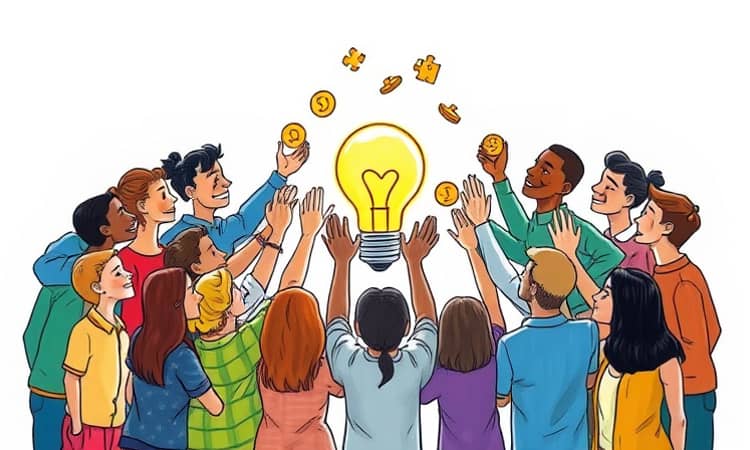
Imagine a world where your boldest ideas don't languish on a shelf due to lack of funds.
Crowdfunding has revolutionized how we bring dreams to life, offering a democratized path to capital for anyone with a compelling story.
This guide explores how this alternative funding model can help you bypass traditional barriers and achieve your goals.
By tapping into global networks, you can transform aspirations into tangible projects that resonate with backers worldwide.
The journey begins with understanding the landscape and leveraging its power effectively.
The Global Crowdfunding Landscape
Data reveals a dynamic and growing market, with estimates varying based on methodology.
For instance, Statista projects a transaction value of $1.05 billion in 2025, showing steady growth.
In contrast, broader analyses like Fortune Business Insights estimate $1.83 billion, highlighting a compound annual growth rate (CAGR) of 13.5%.
This diversity in numbers underscores the model's rapid expansion and adaptability across sectors.
Regional dominance plays a key role, with North America holding a 40-41% share in 2024.
Europe is emerging as a growth hub, expected to surge from $558 million to $1.43 billion by 2030.
Here's a snapshot of key market size estimates for context:
These figures illustrate the transformative potential of community-driven funding in today's economy.
Digitalization and social media have been pivotal drivers, accelerating adoption post-COVID-19.
For example, donation-based campaigns saw a surge for medical aid and social causes during the pandemic.
This trend highlights how crowdfunding adapts to societal needs, making it more relevant than ever.
Understanding the Different Models
Crowdfunding isn't a one-size-fits-all approach; it offers diverse models tailored to various goals.
Each type serves unique purposes, allowing you to choose the best fit for your project.
- Reward-based: Backers receive products or perks, ideal for creative and business ventures.
- Donation-based: Pure giving for charitable causes, dominating 37% of the market in 2024.
- Equity-based: Offers shares in the project, growing in regulated environments.
- Debt-based: Involves repayable loans through peer-to-peer lending platforms.
Selecting the right model is crucial for aligning with your audience and achieving success.
For instance, Kickstarter excels in reward-based campaigns, having raised over $7.68 billion total.
This flexibility empowers creators to leverage specific funding strategies for maximum impact.
Crowdfunding vs. Traditional Funding: A Clear Comparison
When weighing options, it's essential to understand how crowdfunding stacks up against traditional methods.
This comparison highlights key differences in accessibility, risk, and growth potential.
This table shows that crowdfunding offers a more inclusive and agile approach, though it comes with its own challenges.
For example, Kickstarter data indicates that over 50% of projects may fail, emphasizing the need for strategic planning.
However, the speed and lower barriers make it an attractive alternative for many innovators.
Platforms That Make It Possible
Choosing the right platform can make or break your campaign, as each has its strengths.
Leading platforms have shaped the industry, offering tools and communities to support your journey.
- Kickstarter: Known for creative projects, with over 650,000 launched by 2024.
- Indiegogo: Features flexible funding options and major campaigns in 2024.
- GoFundMe: Dominates donation-based funding, with $25 billion raised by 2022.
These platforms provide the infrastructure to amplify your story and reach global audiences.
Success stories abound, from tech startups to social causes, demonstrating the model's versatility.
For instance, top Kickstarter campaigns have raised millions, validating ideas through public support.
This ecosystem fosters innovation by connecting dreamers with backers who believe in their vision.
Practical Tips for Launching Your Campaign
To maximize your chances of success, follow actionable strategies that resonate with backers.
Effective campaigns blend storytelling, marketing, and transparency to build trust and engagement.
- Start with a strong narrative: Craft a compelling story that highlights your mission and impact.
- Use high-quality videos: Visual content can increase engagement by up to 40%.
- Offer regular updates: Keep backers informed to maintain excitement and credibility.
- Leverage social proof: Showcase endorsements or early support to build momentum.
- Engage on social media: Use platforms to spread the word and connect with influencers.
Implementing these tips can help you overcome common pitfalls and stand out in a crowded market.
For example, campaigns with clear goals and emotional appeals often see higher funding rates.
Remember, persistence and authenticity are key to turning backers into long-term advocates.
Emerging Trends and Future Outlook
The crowdfunding landscape is evolving, with new technologies and trends shaping its future.
Staying ahead of these developments can help you adapt and thrive in a changing environment.
- Post-COVID-19 surge: Increased focus on donations for medical and social aid.
- Tech integration: AI and blockchain are enhancing transparency and trust in platforms.
- Regional growth: Asia-Pacific and Europe are poised for significant expansion by 2030.
- Sustainability focus: More campaigns align with eco-friendly and social impact goals.
These trends indicate that crowdfunding will continue to democratize innovation and funding globally.
Projections suggest the market could reach $46.4 billion by 2033, reflecting ongoing adoption.
By embracing these changes, you can position your project for long-term success and impact.
In conclusion, crowdfunding offers a powerful avenue to fund your dreams through community support.
It breaks down traditional barriers, allowing ideas to flourish with collective backing.
Start by defining your vision, choosing the right model, and engaging with passion.
Your dream is worth sharing—let crowdfunding be the catalyst that brings it to life.