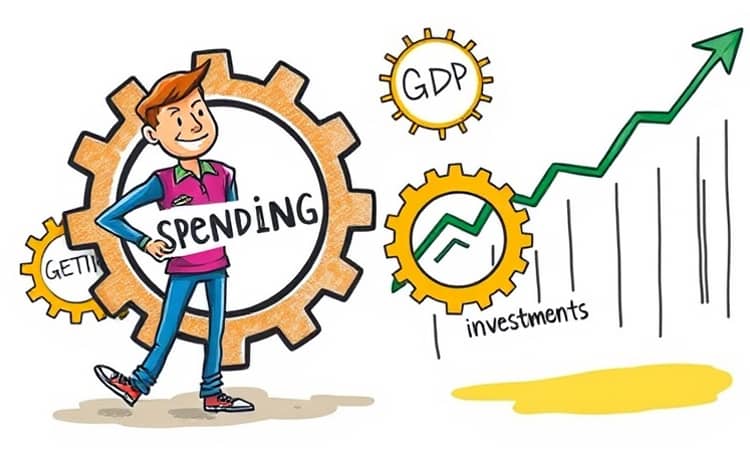
In today's fast-paced economy, consumer confidence stands as the primary driver of market expansion, shaping financial landscapes with every decision made by households and investors.
This intangible force directly influences spending habits, which underpin critical elements like GDP growth, retail sales, and business investments.
As we approach 2026, a complex interplay of optimism and caution defines the path forward, offering both challenges and opportunities for economic resilience.
The Power of Consumer Confidence
At its core, consumer confidence reflects how people feel about their financial health and the broader economic environment.
When confidence is high, individuals are more likely to spend freely, invest in assets, and take calculated risks.
This behavior fuels economic activity, creating a virtuous cycle that supports job creation and innovation.
Conversely, low confidence can lead to reduced expenditure, increased savings, and potential economic slowdowns.
Understanding this dynamic is essential for navigating the uncertainties of modern markets.
Positive Drivers Fueling Confidence in 2026
Several key factors are poised to bolster consumer confidence in the coming year.
- Artificial intelligence advancements driving efficiency and new opportunities across industries.
- Policy tailwinds such as anticipated interest rate cuts and fiscal stimulus measures.
- The resilience of upper-income consumers, who maintain spending via wealth effects.
- Investments in AI and energy infrastructure creating long-term growth prospects.
- A stable middle-aged workforce providing a consistent spending backbone.
These elements combine to offer a robust foundation for sustained economic growth, even amid global uncertainties.
By leveraging these drivers, markets can foster a more optimistic outlook.
Headwinds and Challenges to Overcome
However, significant obstacles threaten to dampen consumer sentiment and hinder progress.
- Persistent inflation, with projections showing PCE at 2.7%, above target levels.
- A softening labor market, where unemployment may rise to 4.5%, impacting wages.
- High costs for essentials like healthcare and childcare straining household budgets.
- Political discord and policy uncertainty eroding trust in economic stability.
- A spending bifurcation, with lower-income groups squeezed while upper-income thrive.
These challenges highlight the delicate balance needed to maintain confidence and prevent economic stagnation.
Addressing them requires coordinated efforts from policymakers and businesses alike.
A Deep Dive into the Data
To grasp the current state, examining key statistics provides a clear picture of consumer confidence and its economic impacts.
This data underscores the mixed economic signals present today, where growth potential meets real-world constraints.
By analyzing these metrics, consumers and investors can make more informed decisions.
Global Perspectives on Consumer Confidence
Beyond the United States, consumer sentiment varies, offering valuable insights into broader trends.
- In the UK, 56% of respondents feel financially secure, yet 58% view the economy as worsening.
- Responses include 49% cutting discretionary spending and 21% increasing second-hand purchases.
- Globally, trade realignments and AI adoption are reshaping consumer behaviors and expectations.
These trends indicate a worldwide shift towards cautious optimism, with adaptability as a key theme.
Learning from global examples can help individuals and markets prepare for similar shifts.
Implications for Markets and Practical Guidance
For investors and everyday consumers, understanding these dynamics is crucial for financial success.
Markets may experience shifts, such as increased demand for value retailers as people trade down.
Risky behaviors, like investing in cryptocurrencies, are on the rise, with 20% planning such moves.
- Focus on building an emergency fund to buffer against income shocks.
- Prioritize value and necessity in spending to manage inflation pressures.
- Stay informed on economic trends without becoming overwhelmed by negativity.
- Diversify investments to mitigate risks and capitalize on growth opportunities.
- Engage in proactive financial planning to boost personal confidence and security.
By taking these steps, you can harness the power of personal confidence to navigate economic uncertainties.
This approach not only safeguards your finances but also contributes to broader market stability.
Driving Forward with Confidence and Resilience
Consumer confidence will remain the engine driving market growth, but it requires careful nurturing and strategic action.
Embrace the positive drivers, mitigate the headwinds, and use data to guide your journey.
Together, we can steer towards a prosperous 2026 and beyond.
Remember, your confidence is a powerful tool—cultivate it wisely to fuel both personal and economic advancement.