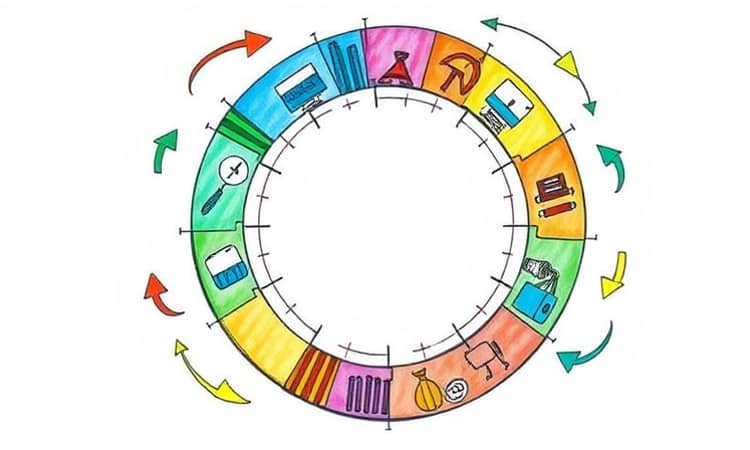
In a world defined by ups and downs, mastering the business cycle can help investors and leaders transform uncertainty into opportunity. By recognizing each phase of expansion and contraction, you gain a roadmap for timing strategic moves and safeguarding your assets.
Economic rhythms are not abstract theories—they are a real and tangible economic journey experienced by businesses, workers, and societies around the globe. When you align your decisions with these cycles, you build resilience and unlock new avenues for growth.
Understanding the Business Cycle
The business cycle traces the economy’s continuous motion between growth and decline. It comprises four stages—expansion, peak, contraction, and trough—each with distinguishing indicators like GDP trends, employment shifts, and corporate profits.
Rather than reacting to sudden market jolts, cycle-aware investors anticipate inflection points. They monitor interest rates, industrial output, and consumer confidence to determine the current phase and forecast the next.
The Four Phases Explained
Each phase offers unique challenges and opportunities. Familiarity with their traits empowers you to allocate resources and adjust strategies proactively.
- Expansion (Early-Cycle/Recovery): Economic growth accelerates, consumer confidence soars, and borrowing costs remain low. Production ramps up and corporate earnings improve steadily.
- Peak (Mid-Cycle): The economy reaches its maximum capacity. Employment rates hit highs, consumer spending peaks, and profit margins are at their most robust levels.
- Contraction (Slowdown/Late-Cycle): Growth slows down, GDP may turn negative, and unemployment begins to rise. Central banks often cut rates to stimulate activity.
- Trough (Recovery Phase): The bottom of the cycle arrives. Economic indicators stabilize and early signs of recovery—like rising industrial production—appear on the horizon.
Sector Rotation: Aligning with the Cycle
Sector rotation is a powerful tactic to maximize returns and limit losses. By shifting into industries poised to outperform in each phase, you stay ahead of the curve.
- Early-Cycle Winners: Technology, consumer discretionary, and industrials benefit from easy monetary conditions and rising demand.
- Mid-Cycle Champions: Financials, energy, and materials thrive as higher rates boost lending margins and commodity prices climb.
- Late-Cycle Defenses: Utilities, consumer staples, and high-quality bonds serve as safe havens when volatility spikes.
- Trough Phase Opportunities: Real estate, industrials, and short-term bonds gain traction as expectations of recovery drive investment.
Building a Cycle-Aware Portfolio
Long-term success hinges on diversification and timely adjustments. A balanced portfolio weaves together traditional and alternative assets, tailored to cycle dynamics.
- Non-traditional investments in downturns: real estate, commodities, private equity funds, and hedge vehicles can outperform during market stress.
- Flexible fixed-income allocations: corporate bonds, asset-backed securities, and Treasuries each play distinct roles as rates rise or fall.
- Sector-based ETFs for nimble rebalancing, allowing you to rotate exposure quickly without complex stock selection.
Timing and Tactical Adjustments
Timing is the most elusive element of cyclical investing. No two cycles are identical in length or intensity, so rigid rules can backfire.
Successful practitioners blend quantitative models with qualitative judgment. They monitor real-time economic data, watch leading indicators, and avoid being swayed by short-term market noise.
Case Studies: Learning from History
During the 2008–2009 recession, markets plunged and credit froze. Savvy investors focused on protecting capital amid despair by shifting to high-grade bonds and opportunities in distressed assets. Entrepreneurs tightened cash management, cut costs strategically, and secured flexible financing.
From 2009 to 2020, a record expansion unfolded. Low interest rates fueled hiring, capital expenditure, and M&A activity. Stakeholders who seized the moment increased production capacity, invested in technology, and expanded market share, effectively seizing the momentum of growth.
The COVID-19 contraction of 2020 was a sudden shock. Businesses scrambled to maintain liquidity, pivot operations, and accelerate digital transformation. Those that adapted swiftly with e-commerce channels and agile supply chains emerged stronger, refocusing on resilience and strength.
Operational Strategies for Businesses
Executives can harness cycle insights to optimize performance. In expansions, capitalize on easy credit and robust demand by accelerating hiring, upgrading infrastructure, and pursuing strategic acquisitions.
In downturns, shift focus to cash management, cost discipline, and value-based pricing. Diversify revenue streams through complementary products or subscription models, and leverage cost-effective digital marketing to maintain visibility.
Measuring and Anticipating Transitions
Key indicators—GDP growth, employment statistics, industrial output, and consumer spending—offer a composite view of the cycle’s pulse. Advanced signals like purchasing managers’ indices, yield curve spreads, and credit defaults provide early warnings.
Embrace a mindset of continuous monitoring. Remember that transition demands decisive action now to capture emerging opportunities and mitigate risks ahead of the pack.
Conclusion: Embracing the Rhythms of Change
Economic cycles are not adversaries but companions on the journey of growth. By aligning your strategies with each phase, you tap into the underlying rhythm that governs markets and industries.
With disciplined execution, informed decision-making, and a proactive approach, you can thrive through every cycle, unlocking long-term growth potential and building a legacy of resilience.