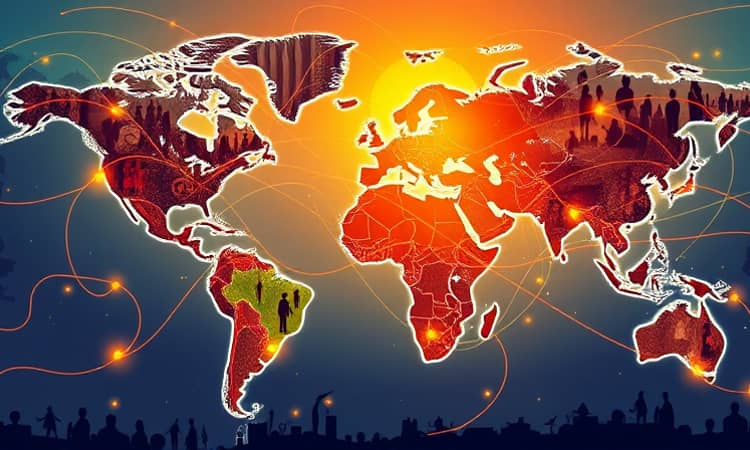
Global wealth currents shape our economies, societies, and futures. By understanding where capital flows and why, individuals and leaders can chart new paths toward shared prosperity.
Global Wealth Landscape: The Growing Divide
In today’s world, the top one percent of wealth command an astonishing share of global resources. Their fortunes continue to expand at a pace that far outstrips the rest of society.
- The top 1% control 38% of global wealth and earn 20% of global income.
- The top 10% capture 75% of global wealth and 53% of global income.
- The bottom 50% hold just 2% of global wealth while earning 8% of global income.
Since 2020, billionaire wealth has surged by 81%, with historic acceleration of wealth driven by technology, finance, and global markets. Today, 3,028 ultra-wealthy individuals own more than the bottom 95% of adults combined.
These figures reveal a staggering level of concentration that demands our attention and calls us to action.
The Intergenerational Shift: The Great Wealth Transfer
Over the next five years, Europe alone will witness a €3.5 trillion wealth transfer between generations, with 2026 marking the midpoint of this redistribution. Gen Y and Gen Z heirs are stepping into roles as active custodians of family assets.
New generations expect more than returns. They seek purposeful alignment with social values, sustainability, and transparent governance.
- Mobile-first engagement and radical transparency in financial services.
- Integration of philanthropy, education, and succession planning.
- Life-goal orchestration rather than mere product selling.
Advisors and families must collaborate to foster meaningful intergenerational dialogue and craft legacies that transcend wealth itself.
Drivers of Billionaire Creation
Across continents, the engines of ultra-wealth vary by region and sector. The United States leads with 87 new self-made billionaires in 2025, totaling $171.9 billion in fresh fortunes. Asia-Pacific and emerging markets follow closely.
- Technology and finance remain dominant, spawning the majority of new billionaires.
- AI and biotech innovations are creating unprecedented opportunities for large-scale value creation.
- Energy and natural resource sectors produce significant wealth in Russia and the Middle East.
As global markets evolve, media, entertainment, and industrial sectors also contribute to the growing ranks of ultra-wealthy individuals.
The Wealth-Management Metamorphosis
The wealth-management industry stands at a turning point. After years of experimentation, 2026 heralds an era of grounded realism and accountability rather than unchecked growth.
Key transformations include:
AI-driven personalization at scale is no longer confined to secretarial tasks. Intelligent chatbots and advanced analytics now deliver tailored insights to clients of all wealth levels, democratizing access to sophisticated strategies.
Cross-border mobility transforms residency and tax planning into dynamic lifestyle choices. Destinations like Dubai, Switzerland, and Portugal compete for talent and capital by offering bespoke regulatory and financial environments.
Private markets expansion places private equity, credit, and alternative assets at the core of portfolios. Global alternatives could reach $32 trillion AUM within five years, offering yield enhancement and diversification.
Simultaneously, tokenization of real-world assets moves from concept to reality. Real estate, infrastructure, and private equity tokens unlock liquidity for traditionally illiquid holdings, broadening investment horizons.
Finally, embedded financial experiences integrate wealth services into everyday platforms—payroll, e-commerce, super-apps—making investing intuitive and immediate.
Bridging the Gap: Practical Steps for All
While data can feel overwhelming, there are concrete actions individuals, communities, and policymakers can take.
Key pathways forward:
Financial education and literacy empower individuals to build diversified portfolios, understand risk, and leverage new technologies.
Advocacy for equitable policy, such as progressive taxation and targeted social programs, can temper extreme concentration and foster inclusive growth.
Investment in sustainable innovation aligns capital with environmental and social goals, driving long-term value while addressing global challenges like climate change.
By embracing these steps, communities can transform wealth currents from forces of division into channels of shared prosperity.
Understanding the dynamics of capital movement is the first step toward shaping a fairer future. Together, we can harness the power of knowledge, technology, and policy to ensure that wealth flows not just to the few, but for the benefit of all.