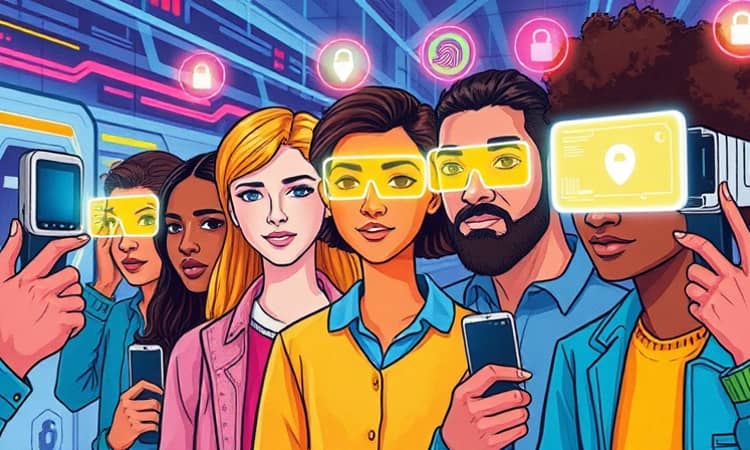
Traditional passwords are increasingly vulnerable to sophisticated attacks, social engineering schemes, and mass data breaches that compromise millions of user accounts every year. Cybercriminals exploit reused credentials, phishing emails, and brute-force techniques to bypass static defenses with alarming success rates. As digital identities become the new perimeter of enterprise security, relying solely on passwords or tokens is no longer sufficient to withstand evolving threats.
Enter bio-authentication: the security landscape’s game-changer that leverages inherent human traits to verify identity. By moving beyond what users know or possess and focusing on who they inherently are, bio-authentication offers a radical upgrade in assurance, convenience, and fraud prevention. This comprehensive article explores its principles, technologies, advantages, challenges, and future directions.
Understanding Bio-authentication
Bio-authentication, or biometric authentication, leverages unique biological and behavioral traits to verify identity. Unlike passwords or PINs, these traits cannot be easily shared, forgotten, or guessed. Systems capture distinctive data—such as fingerprint patterns, facial contours, or voice frequencies—and convert it into encrypted mathematical templates. When users attempt to authenticate, their live input is matched against stored templates, granting or denying access with precision.
There are two main phases in any biometric system: enrollment and authentication. During enrollment, the system captures raw biometric data and extracts salient features to create a template. Subsequent authentication attempts involve comparing fresh input with the enrolled template, ensuring the individual is genuine. This process underpins both physical and behavioral modalities.
- Fingerprint scanning
- Facial recognition
- Iris and retina scanning
- Palm and vein pattern analysis
- Voice recognition and typing rhythm
Technical Underpinnings
At the core of bio-authentication are capture devices and sophisticated algorithms. Sensors—such as capacitive fingerprint readers, high-definition cameras, and sensitive microphones—acquire raw data. Advanced signal processing techniques extract distinguishing features, which are then encrypted into templates. These templates, not raw images, are stored securely to minimize privacy risks.
Liveness detection adds another layer of defense. Machine learning models analyze subtle cues—skin texture, pupil dilation, or vocal inflections—to distinguish real human input from photos, masks, or recordings. This deters presentation attacks, deepfake attempts, and other spoofing tactics that aim to deceive biometric systems.
Advantages Over Traditional Methods
Bio-authentication delivers numerous benefits compared to passwords and static tokens. It provides enhanced security and user convenience, reducing reliance on memory and streamlining access across devices and platforms. Additionally, it ties actions to real individuals, bolstering accountability and forensic traceability in case of incidents.
- Reduced credential theft and phishing risks
- Faster login flows with minimal user friction
- Lower support costs by eliminating password resets
- Higher assurance of user identity and non-repudiation
Challenges and Ethical Considerations
Despite clear advantages, bio-authentication faces hurdles. Privacy advocates warn against the centralized storage of sensitive biometric data, which, if breached, cannot be ‘reset’ like a password. Unauthorized tracking and surveillance concerns loom large when face recognition cameras proliferate in public and private spaces without explicit consent.
Accuracy can also vary across demographics. Studies reveal higher false rejection rates for older adults or individuals with certain skin tones. Environmental factors—wet fingers, low light, background noise—can degrade sensor performance, leading to user frustration and potential lockouts.
Regulatory frameworks such as GDPR and FERPA classify biometric information as highly sensitive, mandating strict consent, storage, and processing rules. Organizations must navigate these requirements carefully, balancing security gains against legal obligations and ethical responsibilities.
Implementation Best Practices
To maximize security and user trust, organizations should adopt decentralized, on-device storage of biometric templates whenever feasible. This approach minimizes the attack surface by keeping raw data off central servers. End-to-end encryption and regular security audits ensure that data remains confidential and tamper-proof.
- Use multimodal systems combining two or more traits
- Implement liveness detection as a baseline feature
- Offer clear user consent and opt-out alternatives
- Maintain transparent privacy policies and data retention schedules
Engage stakeholders early to address accessibility concerns. Provide alternative authentication methods for users unable or unwilling to use biometrics. Conduct thorough bias testing and performance evaluations across diverse populations to ensure fairness and inclusivity.
Future Trends in Bio-authentication
The next frontier in biometric security lies in continuous behavioral monitoring and adaptive risk analysis. Rather than one-time checks, systems will passively monitor typing patterns, gait, and device interactions throughout a session, detecting anomalies in real time to prevent account takeover or session hijacking.
Edge computing will shift data processing from the cloud to local devices, reducing latency and enhancing privacy. Blockchain-enabled decentralized identity solutions and zero-knowledge proofs will allow users to verify attributes without revealing raw biometric data. These innovations promise to strengthen security while preserving user autonomy.
Conclusion
As cyber threats grow in complexity, traditional methods struggle to keep pace. Bio-authentication stands poised to become the definitive security upgrade, securing identities with unparalleled precision while delivering ease of use for millions of users worldwide. By understanding its principles, addressing privacy and bias challenges, and embracing emerging trends, organizations and individuals can chart a course toward a safer, more convenient digital future.
Investing in robust biometric systems today paves the way for resilient defenses tomorrow—transforming how we protect, verify, and trust in the digital age.