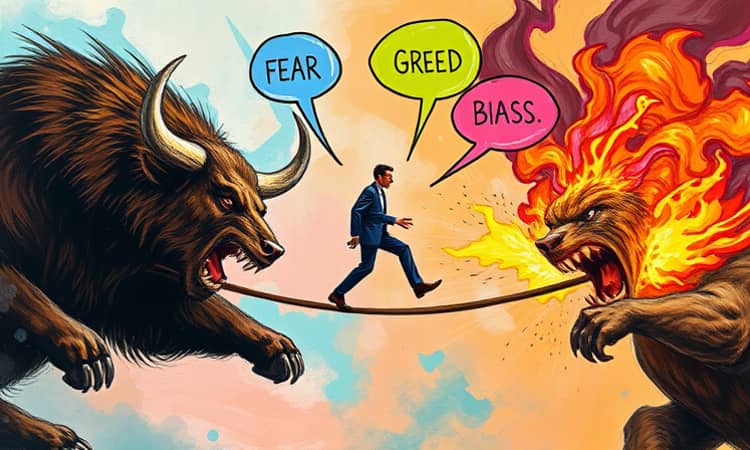
Behavioral finance uncovers the hidden forces driving our choices, revealing how emotions and cognitive errors can shape market outcomes in unexpected ways. By understanding these psychological underpinnings, traders gain an invaluable edge—turning mental pitfalls into opportunities for growth and resilience.
Understanding the Emotional Drivers
Two primal feelings—fear and greed—sit at the heart of every market swing. When panic grips a room full of traders, charts tumble. Conversely, hope-fueled euphoria can send prices soaring beyond reason.
Another powerful force is loss aversion, the tendency to experience the pain of losses more intensely than gains. This bias pushes traders to hold onto losing positions, imagining a comeback that rarely materializes.
- Fear: Paralyzes decision-making, prompting hasty exits or missed opportunities.
- Greed: Drives overleverage and impulsive trades, chasing returns at unsustainable risk.
- Loss aversion: Encourages hanging on to loser positions instead of cutting losses.
Recognizing these emotions as natural responses allows traders to pause and apply measured strategies before acting on instinct alone.
Recognizing Key Cognitive Biases
Beyond basic emotions lie cognitive biases—systematic patterns of deviation from rational thought. These mental shortcuts can warp perception, making even seasoned investors vulnerable.
Consider the bias of confirmation, where one seeks information that validates preexisting beliefs while dismissing contrary evidence. In a bull market, confirmation bias can blind traders to warning signs of a downturn.
By cataloguing these biases and mapping their impact, traders can implement deliberate checks—turning blind spots into stages for disciplined action.
Strategies for Managing Trading Psychology
Practical techniques exist to transform emotional volatility into structured decision-making. A key step is crafting a well-defined trading plan with specific entry and exit points. This blueprint acts as a shield against spur-of-the-moment impulses.
Automation also plays a critical role. Setting stop-loss and take-profit orders before execution removes immediate emotional influence, ensuring trades follow objective criteria rather than mood swings.
- Create well-defined trading plans with clear rules and targets.
- Automate decision-making processes through preset orders.
- Actively seek opposing viewpoints to challenge your thesis.
- Use checklists before every trade to verify criteria.
These methods cultivate a disciplined approach, so traders act on strategy instead of sentiment.
Building a Sustainable Financial Mindset
Long-term success in trading hinges not on isolated wins but on enduring psychological strength. Embracing a growth mindset helps traders view mistakes as lessons rather than failures.
Moreover, rigorous risk management—where one risks only a small percentage of capital per trade—serves as a psychological tool. Knowing that no single position can devastate an account instills calm and objectivity.
- Develop emotional awareness through journaling and reflection.
- Cultivate discipline and patience to wait for high-probability setups.
- Treat trades as business decisions governed by data and process.
Over time, these habits form a durable mindset, where discipline outlasts fleeting market trends and emotional storms.
Embracing Behavioral Finance for Lasting Growth
Behavioral finance does more than explain irrational patterns; it empowers traders to preempt them. By acknowledging the interplay of psychology and markets, individuals can shift from reactive to proactive strategies.
Research shows that traders with heightened emotional reactivity often underperform. Conversely, those who master their impulses achieve more consistent results. This transformation hinges on self-awareness and deliberate practice—skills that extend beyond charts into every area of life.
As you integrate these insights, remember that the greatest trading edge resides in the mind. Cultivating emotional resilience, disciplined routines, and intellectual humility builds a foundation for sustainable success.
In the ever-evolving arena of financial markets, your mindset becomes the ultimate asset. Embrace the lessons of behavioral finance, and let psychological mastery guide you toward wiser, more fulfilling trading decisions.